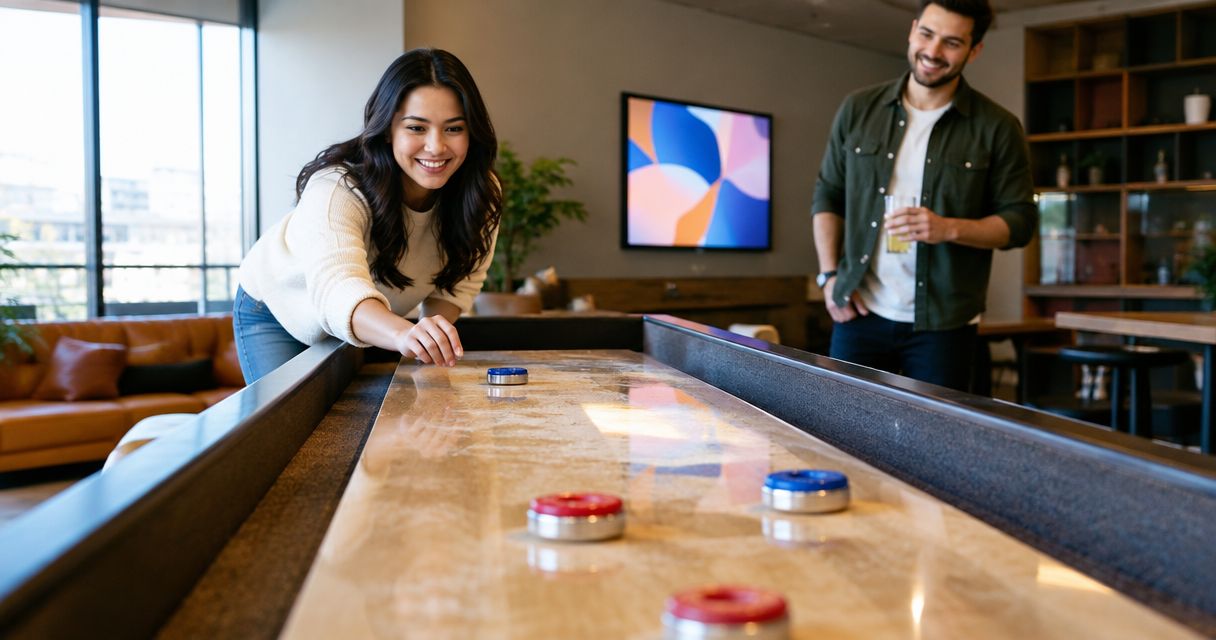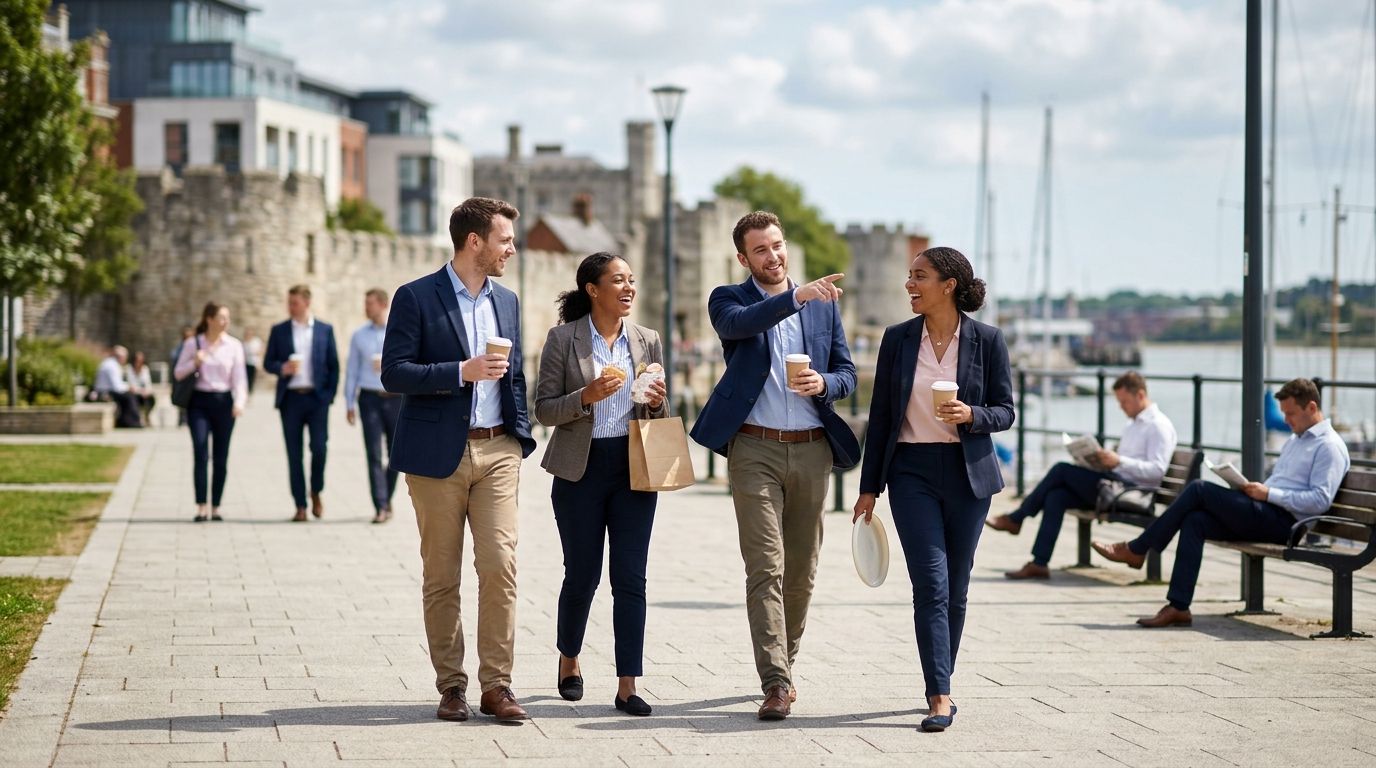
Lunchtime activities for Southampton office workers are short, focused breaks — typically 45 minutes to an hour — built around movement or a shared game instead of a sandwich at your desk, with the goal of resetting concentration and building team rapport without eating into the evening. What makes this segment different from a general "team bonding" crowd is the clock: you've got one lunch hour, a fixed radius around the office, and colleagues who need to walk back in looking presentable, not sweaty or three pints deep.
- Lunchtime activities for Southampton office workers work best inside a hard 60-minute window, city-centre location required.
- 1st Base runs batting cage and games bar sessions in Southampton city centre that fit a standard lunch break.
- Booking ahead beats walking in — queues eat the 15 minutes you don't have.
- Alcohol-free options (shuffleboard, batting cages, ping-pong) keep the afternoon productive.
- Groups of 4-8 move fastest through activities and avoid the decision-paralysis of bigger teams.
Why this matters for office workers
A desk lunch does nothing for the 2pm slump. A city-centre activity that gets your team standing, throwing, or aiming at something does — and it costs you the same 60 minutes you were going to spend at your desk anyway. The constraint isn't motivation, it's logistics: distance from the office, how fast a venue can seat a group, and whether you're back at your screen on time.
Office workers in Southampton have an advantage most towns don't: a compact city centre where a games bar, a batting cage, or a park loop are all within a 10-minute walk of most desks. That means the activity itself matters less than picking one that respects the clock. A team building night out works fine for an evening slot with no time pressure — lunchtime needs a different playbook.
Set a hard stop before you leave the desk
Decide your return time before you decide what you're doing. This single step prevents more ruined afternoons than any venue choice.
- Agree a return time as a group, out loud, before you leave the building
- Build in a 10-minute buffer for walking back and settling in
- Set a phone alarm for 15 minutes before the hard stop
- Pick the activity second, once the time budget is fixed
- Skip anything that requires changing clothes unless you've got a locker at work
Pick something inside a 10-minute walk
Distance is the single biggest killer of lunchtime plans. An activity 20 minutes away eats 40 minutes of your hour before you've done anything.
- Map out venues within a 10-minute walk of your office before suggesting anything
- Favour Southampton city centre spots over out-of-town venues, even if they look more exciting online
- Check the venue is open at lunch — some bars don't open doors until 4pm or 5pm
- Ask whether walk-ins are accepted or a booking is required
- Confirm the venue can seat your group size without a wait
Keep the group to 4-8 people
Bigger groups take longer to organise, longer to seat, and longer to agree on anything. Four to eight people move through a decision and an activity fast enough to still eat lunch.
- Cap sign-ups at 8 for a standard lunch slot
- Split into two smaller groups if more than 8 want in
- Nominate one person to make the final call on venue and time
- Use a group chat, not a meeting, to confirm numbers
- Rotate who organises each week so it's not always the same person
Book ahead instead of walking in
A queue at the door can burn 15 of your 60 minutes before you've picked up a bat or a cue. Booking a group event at a sports bar or a games venue in advance removes that risk entirely.
- Call or book online the day before, not the morning of
- Confirm the group size when booking so tables or lanes are ready
- Ask about the minimum time slot — some games bars run 45-minute or 60-minute sessions
- Give the venue a return-time constraint so staff can keep you on schedule
- Have a backup plan if the first-choice venue is fully booked
Match the activity to the group's energy
A Monday-after-a-heavy-weekend crowd wants something low-effort. A Friday team wants competition. Reading the room before booking saves a wasted lunch hour.
- Shuffleboard or ping-pong suit a low-energy, chatty group
- A batting cage session suits a group that wants to burn off stress
- Foosball works well for a fast, competitive 20-minute round between meetings
- Skip anything requiring instruction time if the group has under 45 minutes
- Ask the group directly rather than guessing — a two-line poll in the group chat works
Keep it alcohol-free at lunch
A pint at 1pm and a 2pm client call don't mix. Games bars and batting cages give you the social win without the afternoon fog.
- Choose venues where the activity, not the bar, is the draw
- Order soft drinks or coffee if the venue serves food and drink
- Save the alcohol-led version of the outing for an evening team building night out
- Flag it's an alcohol-free session when inviting colleagues, so nobody assumes otherwise
- Check the venue's food menu if lunch needs to double as the meal
Rotate who picks the venue
The same three people picking the same coffee shop every week kills momentum fast. Rotating ownership keeps lunchtime activities from fizzling out by March.
- Put a rota on the shared calendar, one organiser per week
- Let each organiser pick a new venue type — games bar one week, park walk the next
- Keep a running list of tried-and-tested spots so nobody starts from zero
- Revisit good venues rather than treating every week as a fresh search
- Ask for feedback after each session to build the list further
Comparison: lunchtime options for Southampton office teams
| Option | Best for | Key limitation |
|---|---|---|
| Desk lunch, no activity | Days with back-to-back meetings | Does nothing for afternoon focus or team rapport |
| City centre park walk | Groups wanting fresh air, zero booking hassle | Weather-dependent, no structured activity |
| Standard pub lunch | Groups that want food and a chat | Alcohol on offer, slower service at peak lunch |
| Games bar session (shuffleboard, ping-pong, foosball) | Groups of 4-8 wanting competition in under an hour | Needs booking ahead for guaranteed seating |
| Batting cage session at 1st Base | Groups wanting a physical, high-energy break | Requires a short warm-up before the swing feels natural |
The straight answer for lunchtime activities for Southampton office workers: a booked, city-centre, alcohol-free session beats a walk-in pub lunch every time you've got under 60 minutes.
Book your team's lunch slot
Reserve a batting cage or games session that fits inside a standard lunch hour.
Common mistakes Southampton office teams make
- Picking a venue before checking the clock. The activity gets decided, then someone realises it's a 20-minute walk each way and the whole plan collapses.
- Inviting the whole floor. A 15-person group takes twice as long to seat and organise as an 4-8 person group, and someone always arrives late.
- Walking in without booking. Peak lunch hours (12pm-1.30pm) are the busiest window for any Southampton city centre venue with games or activities.
- Treating it like an evening night out. Alcohol, long instruction times, and multi-round tournaments belong on a foosball bar night for competitive groups, not a 60-minute lunch slot.
- Never rotating the venue. The same coffee run every day isn't a lunchtime activity — it's just lunch. Teams that keep a rotating shortlist stick with the habit longer than teams that don't.
FAQ
What are good lunchtime activities for Southampton office workers?
Shuffleboard, ping-pong, foosball, and short batting cage sessions all fit inside a standard 60-minute lunch break when booked in advance at a city centre venue. Park walks work too but depend on the weather.
How long does a lunchtime activity session need to be?
Plan for 30-40 minutes of activity plus 10-15 minutes of walking, leaving a buffer before you're due back at your desk. Booking ahead protects that window from queue delays.
Is a batting cage session realistic for a work lunch break?
Yes, a booked batting cage session at a Southampton city centre venue like 1st Base fits inside a standard hour once travel time and a short warm-up are accounted for.
Should lunchtime team activities include alcohol?
No, alcohol-free activities like shuffleboard or a batting cage keep the afternoon productive. Save drinks for an evening team night out instead.
How big should a lunchtime activity group be?
Four to eight people is the sweet spot for a 60-minute session, since larger groups take longer to organise, book, and seat.
Do lunchtime venues in Southampton need to be booked ahead?
Booking ahead is strongly recommended for peak lunch hours between 12pm and 1.30pm, when city centre games bars and activity venues fill up fastest.
What's the difference between a lunchtime activity and a full team night out?
A lunchtime activity is a 45-60 minute, alcohol-free, close-to-office session, while a full team night out runs several hours, often includes drinks, and can travel further from the office.
Are foosball or ping-pong quicker to organise than a batting cage?
Foosball and ping-pong need almost no instruction time, making them the fastest pick for a tight 45-minute window, while a batting cage session needs a short warm-up first.
One last thing
The teams that stick with lunchtime activities in Southampton year-round are the ones that book a repeat slot rather than reorganising from scratch every week — a standing Thursday booking at a city centre venue removes the entire "where should we go" debate that kills most lunchtime plans by February.