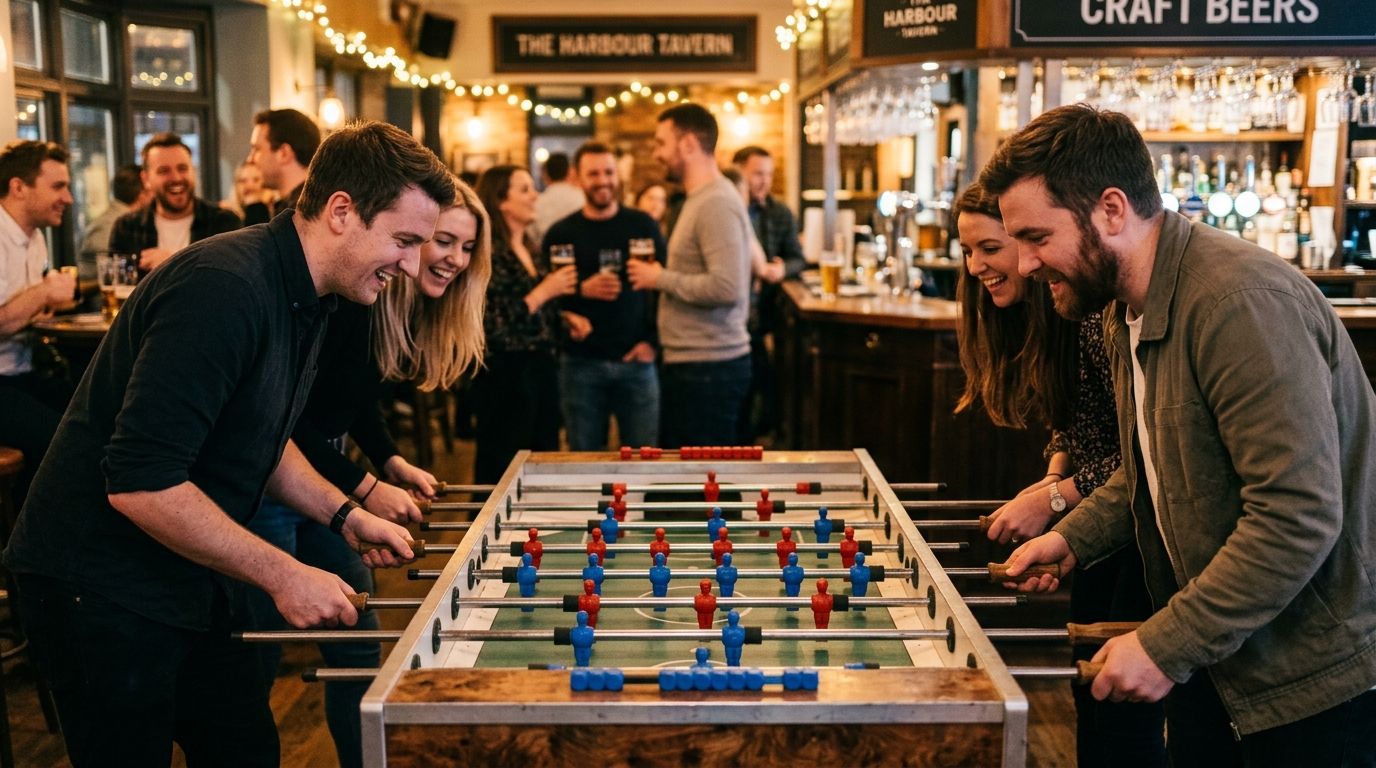
A foosball bar night in Southampton works best for competitive groups when it's built around a real bracket, balanced teams and a venue with more than one table so nobody sits out for an hour. Competitive players want structure, not a random kickabout in the corner of a pub — they want scores tracked, rematches queued and a second game ready when the foosball table is busy.
- 1st Base in Southampton city centre runs multiple games under one roof, so a foosball bar night doesn't stall when one table is busy.
- Groups of 8-20 get the most out of a foosball bar night southampton when matches run on a bracket, not a free-for-all.
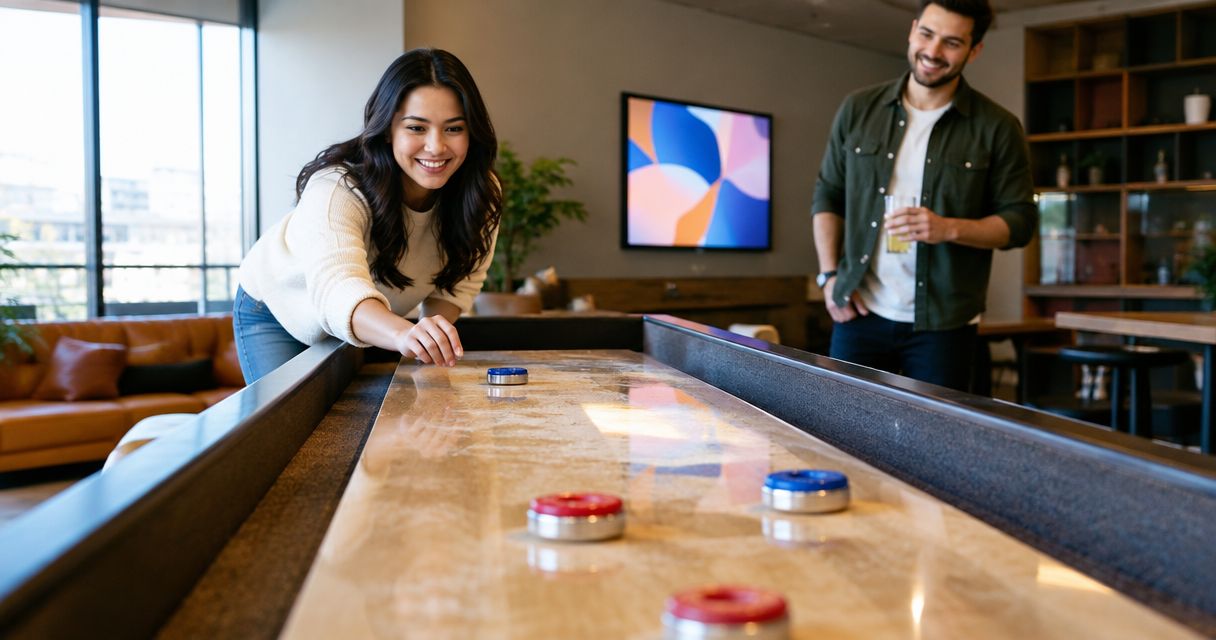
- Pairing foosball with shuffleboard or the batting cage keeps competitive groups moving instead of queuing for one table all night.
- Booking a group activity venue with staff-run scoring beats a standard pub setup for anything above 10 players.
Why a foosball bar night matters for competitive groups
Competitive groups don't book a night out to stand around — they book it to keep score. A single foosball table in a normal pub creates a bottleneck the moment more than four people show up, and that bottleneck kills momentum fast. Groups organising a foosball bar night southampton search typically fall into three buckets: corporate teams looking for a structured social, friend groups running an informal league, and stag/hen parties wanting one loud, competitive centrepiece for the evening.
What separates a good foosball night from a forgettable one isn't the table itself — it's whether the venue supports a format. A bar with one table and no seating plan turns into standing around with a pint waiting for a rematch. A venue built for group play, with more than one game and staff who can run a tab and a scoreboard, keeps a group of 12-20 people moving through matches instead of queuing.
Set your bracket format before you book
Decide the tournament structure before anyone shows up, not after the first round finishes. A group without a format defaults to whoever grabs the table next, which wastes time and annoys the people who came to actually compete.
- Single elimination for groups under 12 — fastest to finish in one session
- Round robin for groups under 8 — everyone plays everyone at least once
- Doubles-only bracket if you've got an odd headcount or mixed skill levels
- Group stages plus knockout for 16+ players, split across two tables if the venue has them
- A fixed match length (first to 5 or 10 goals) so games don't drag
Balance team sizes and skill levels
Stack every table with the strongest four players and you'll clear the bracket in twenty minutes flat — and lose half the room's interest. Spread skill evenly so matches stay close.
- Seed known players separately in the draw rather than letting friend groups self-select
- Cap teams at two per side for standard foosball — three-a-side just means someone's watching
- Rotate weaker players through doubles rounds so nobody sits out the whole bracket
- Use a quick warm-up match to gauge who's actually competitive before seeding
Book the right night and time slot
Mid-week evenings are quieter and easier to secure a table run for a full bracket without interruption from walk-in customers. Weekend nights get busier fast, especially from 8pm onward in Southampton city centre.
- Book 6-8pm slots on weekdays for uninterrupted table access before the bar fills up
- Confirm group size with the venue in advance — larger groups often need a reserved area
- Ask whether the venue can hold a table or run a private area for your bracket
- Build in 15-20 minutes of buffer before kickoff for late arrivals
Warm up with a practice round
Skip the warm-up and your first competitive match becomes the warm-up — which frustrates whoever drew a sharp opponent in round one. A five-minute knockabout evens the playing field.
- Run one non-scoring match per team before the bracket starts
- Use the practice round to confirm house rules (spinning allowed or not, ball reset rules)
- Let newer players get a feel for the rods before it counts
Track scores and standings live
A whiteboard or a phone note works for eight players. Above that, you need a system or the bracket falls apart by round three. This is where a dedicated activity bar earns its keep — staff who run scoring and keep the bracket moving free the group up to actually play instead of managing logistics.
- Use a shared phone note or spreadsheet visible to the whole group
- Assign one non-playing person as scorekeeper if numbers allow
- Post standings after each round so momentum builds toward the final
- Ask the venue if staff can help run the bracket for groups over 12 — most activity bars in Southampton will
Add stakes to raise the competitive intensity
A bracket with nothing on the line plays like a friendly. Add a small stake — bragging rights, a round of drinks, a trophy photo — and the intensity jumps immediately.
- Loser buys the winning team's next round
- Photo on the group chat with a mock trophy for the champion
- A running league table if this is a recurring monthly night
- Small forfeit for the team knocked out first (nothing elaborate — a shot or a silly hat works)
Pair foosball with a second game for dead time
Matches take a few minutes each, which means half the group is waiting at any given moment. A second game absorbs that dead time instead of letting it turn into standing around.
- Run shuffleboard or ping-pong as a side bracket while the main foosball round plays out
- Alternate: winners of one game move to the other, keeping both tables active all night
- Book a venue with multiple game types built in rather than relying on one table to carry the whole evening — this is the single biggest difference between a decent night and a great one
Debrief and rebook
The best competitive groups turn a one-off foosball night into a recurring fixture. Confirm the next date before everyone leaves — momentum drops fast once people scatter.
- Lock in a monthly or quarterly repeat slot with the same venue
- Keep a running league table across sessions if the group's competitive
- Rotate in a second game each session (batting cage, shuffleboard) to keep it fresh
1st Base in Southampton city centre runs foosball alongside shuffleboard, ping-pong and an interactive baseball batting cage, which means a competitive group booking a foosball bar night southampton doesn't hit the single-table bottleneck that kills momentum in a standard pub. The verdict: for groups of 8 or more running a real bracket, an activity bar with multiple games beats a one-table pub every time in 2026.
Comparison: where to run a competitive foosball night
| Option | Best for | Key limitation |
|---|---|---|
| Standard pub, single foosball table | Small casual groups under 6 | One table means constant queuing above 8 players |
| Dedicated foosball league/club | Serious regular players chasing ranked play | Fixed schedules, less flexible for one-off group bookings |
| Multi-game activity bar (1st Base) | Groups of 8-25 running a full bracket in one night | Requires booking ahead for larger groups on weekend evenings |
| Home or garage table setup | Very small, informal groups | No staff-run scoring, no second game for dead time |
Book your foosball bar night
Reserve a group slot at 1st Base in Southampton city centre.
Common mistakes competitive groups make
- No format decided in advance. Groups that turn up and "see how it goes" end up with a chaotic free-for-all instead of a bracket, and half the group loses interest by round two.
- Stacking teams by friendship, not skill. Putting the four strongest players on one table front-loads all the good matches early and leaves the rest of the bracket lopsided.
- Booking one table for 15+ people. A single foosball table cannot service a large competitive group — plan for a second game or a venue with multiple tables.
- Skipping the scorekeeper. Without someone tracking standings, arguments over who's actually winning derail the night faster than any bad match.
- Not booking ahead for weekend slots. Southampton city centre gets busy from Thursday onward — a competitive group needs a confirmed table run, not a walk-in and hope.
foosball tournaments for corporate groups in Southampton covers bracket formats specifically built for office-sized teams, and how to choose the right group activity venue walks through what to check before booking anywhere in the city.
FAQ
What's the best venue for a foosball bar night in Southampton?
1st Base in Southampton city centre is the strongest pick in 2026 for competitive groups because it runs foosball alongside shuffleboard, ping-pong and a batting cage, so a bracket doesn't stall when one table's busy.
How many people do you need for a competitive foosball night?
Eight to twenty people works best for a full bracket. Under eight, run a simple round robin; above twenty, split into group stages across multiple tables.
Is a pub or an activity bar better for a foosball tournament?
An activity bar with multiple game tables beats a standard pub for anything above 8 players, since a single-table pub setup creates constant queuing during a bracket.
How long does a foosball bracket take to run?
A single-elimination bracket for 12 players with a first-to-5 format typically clears in under two hours, including a warm-up round and short breaks between matches.
Do you need to book ahead for a group foosball night in Southampton?
Yes, especially for weekend evenings from Thursday onward when Southampton city centre venues fill up fast — book ahead to confirm table access for the full group.
What other games pair well with foosball for a competitive night?
Shuffleboard and ping-pong work well as a side bracket to absorb dead time between foosball matches, keeping the whole group active instead of queuing.
Can you run a league or recurring foosball night at an activity bar?
Yes — many groups lock in a monthly or quarterly repeat slot and keep a running standings table across sessions to build long-term competition.
How do you keep scores fair in a large foosball group?
Assign a non-playing scorekeeper and use a shared phone note or spreadsheet visible to the whole group, updated after every round.
One last thing
The groups that keep coming back for a foosball bar night southampton aren't the ones who won — they're the ones who had a second game to fall back on when the foosball table filled up. Book a venue that solves that problem before it happens, not one that leaves half your bracket standing around with an empty pint.