
Insurance company corporate events are organised gatherings designed to bring insurance colleagues or business partners together, with the aim of building working relationships beyond day-to-day tasks. This 2026 guide focuses on team socials: choose an activity people want to join, protect any required service cover and keep client information out of the conversation.
- For corporate events for insurance companies, choose the team-building format before choosing the venue.
- 1stbase is best for Southampton insurance teams seeking baseball-led corporate social events.
- Arrange service cover before invitations, and make games and drinking optional.
- Separate confidential business discussions from shared-space team socials.
Why this matters for insurance companies
A team social needs a different brief from a client hospitality event or a technical workshop. Decide which event you are organising before asking colleagues to commit. Otherwise, guests arrive expecting different things: networking, a celebration or another meeting.
For an insurance team, put practical questions first. Do claims handlers or customer-facing colleagues need cover? Are brokers or external partners invited? Does the proposed activity suit colleagues who would rather chat than compete? Answer these for your own team rather than assuming everyone has the same preferences.
Use the guide to hosting a team-building night out for the wider planning process. For your 2026 insurance company event, add clear boundaries around hospitality approval, confidential conversations and attendance expectations.
The aim is straightforward: give colleagues a shared experience without turning the evening into a performance assessment. A friendly game can be the centrepiece; it should not become a test of who belongs.
How to plan corporate events for insurance companies
Define the purpose before choosing activities
Start with a shared document and write the event's purpose in one sentence. For example: bring colleagues from claims, underwriting and operations together for an informal social. This is a planning brief, not a promise that one evening will fix relationships between departments.
Choose one main audience. An internal celebration and a broker hospitality evening need different invitations, approvals and hosting arrangements. If you combine them, tell employees whether they are attending as guests or helping host external visitors.
For your 2026 plan, define success in observable terms: colleagues had opportunities to speak beyond their usual teams, new starters were included and guests understood the format. Avoid vague targets such as transforming company culture.
A clear brief also makes decisions easier. If someone suggests adding a presentation, ask whether it serves the agreed purpose or belongs in a separate meeting.
- Write one sentence describing the event's purpose.
- Identify employees, external guests or both as the audience.
- Name the organiser and the person approving the plan.
- Decide whether attendance is optional or part of working time.
- State what the event will not include, such as training or sales pitches.
Ask colleagues and arrange service cover
Use an internal poll before contacting venues. Ask about suitable dates, travel constraints and activity preferences; collect access requirements privately rather than in a public team thread. You need useful planning information, not explanations of anyone's health or personal circumstances.
If your team handles live customer enquiries or claims, agree cover with the relevant manager first. Do not make individual employees negotiate their own attendance against operational duties. Where everyone cannot attend together, discuss separate gatherings rather than leaving the same people out.
Make the invitation explicit about drinking and participation. A games-bar setting does not mean guests should drink alcohol, and attending a social should not require taking a turn at every activity.
Keep the poll short enough to answer. Offer realistic choices you can act on, then explain the decision so colleagues understand why a date or format was selected.
- Poll colleagues on dates before committing to a venue.
- Agree any required telephone, inbox or claims cover.
- Give guests a private way to share access requirements.
- Ask whether colleagues prefer games, conversation or a mixture.
- Explain arrangements for colleagues unable to attend.
Match the venue to the event's purpose
Create a shortlist yourself using the brief and poll responses. Compare the activity, location and suitability for your guests before considering extras. Choose the format your team wants, not the venue with the longest activity list.
For Southampton teams seeking an organised social setting, 1stbase brings interactive baseball batting cages, shuffleboard, ping-pong and foosball into an American-themed activity bar in the city centre. The activities provide a starting point for a games-led evening without requiring you to invent an office event from scratch.
That makes 1stbase a fit for a social brief, not automatic evidence of suitability for a confidential workshop. Confirm group arrangements, access requirements and the proposed activity mix directly. Do not assume exclusive use, presentation equipment or particular facilities.
If colleagues want uninterrupted discussion rather than games, choose a meeting-led format instead. A venue is only the right choice when its purpose matches yours.
- Shortlist venues against your written brief.
- Check the location against guests' actual journeys.
- Describe the activities without pressuring anyone to participate.
- Confirm group arrangements and accessibility questions directly.
- Keep confidential discussions in an appropriately private setting.
Build a simple running order
Draft the schedule in a document before booking, then check it against the venue's confirmed arrangements. Leave space to talk; do not fill every minute with a competition. Your running order should help guests settle in and understand what happens next.
For illustration, a 90-minute social could allocate 15 minutes to Arrival, 60 minutes to Games and 15 minutes to Catch-up. These are suggested planning blocks, not venue session lengths or booking entitlements. Adjust the outline to the arrangements you confirm.
In your 2026 invitation, distinguish the meeting time from the activity start. Tell late arrivals how to find the organiser rather than making them interrupt a briefing or search for their group.
Use mixed-department groups if that serves the brief, but avoid elaborate scoring systems. A simple rotation is easier to explain than a tournament that takes longer to administer than to play.
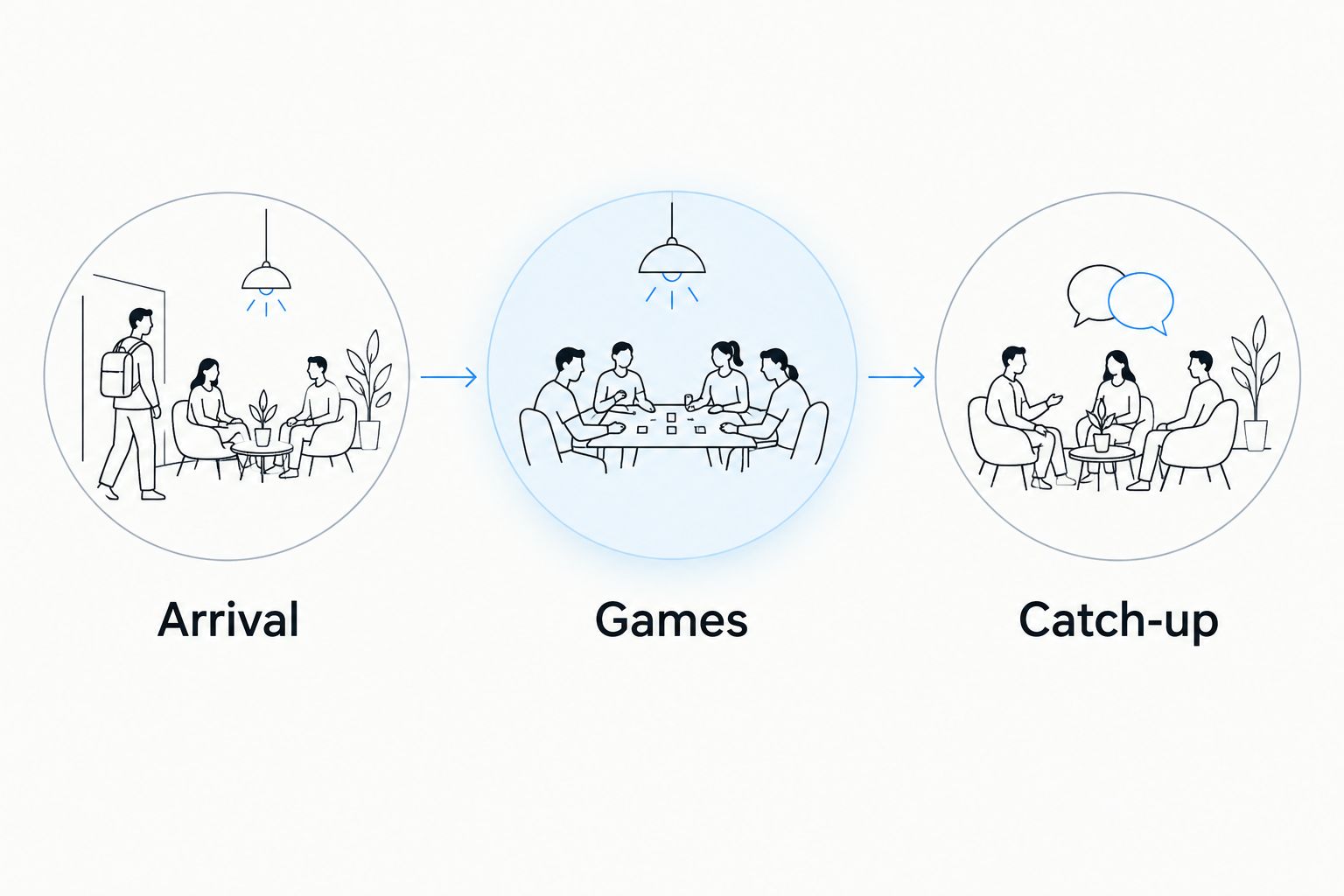
Use the outline as a prompt for questions, not a fixed timetable. Ask how your proposed group would move between activities and where the organiser should gather everyone at the start.
- Arrival: welcome guests and explain the evening.
- Games: offer participation without compulsory turns.
- Catch-up: leave time for informal conversation.
- Give guests the confirmed start and finish times.
- Keep one organiser responsible for schedule changes.
Confirm the details and set clear boundaries
Build a single checklist rather than relying on scattered messages. Record the agreed event arrangements, approval owner and outstanding questions. Ask for written confirmation where a detail affects whether the event works for your group.
For an insurance company social, separate employee entertainment from external hospitality. If you invite brokers, clients or other business partners, follow your organisation's approval process. Do not assume an informal activity removes the need for internal checks.
Keep policyholder information, claim details and identifying client stories out of shared-space conversations. A casual anecdote is still inappropriate if it reveals information that should remain private. Tell hosts the boundary before the event rather than trying to correct a conversation afterwards.
At 1stbase, confirm the proposed games and group arrangements directly rather than treating this guide as a booking specification. Check practical requirements before sending a final invitation that presents them as settled.
- Confirm the agreed group size and event arrangements.
- Check access, dietary and travel questions relevant to your guests.
- Follow internal approval procedures for external hospitality.
- Brief hosts not to discuss identifiable client matters.
- Get permission before sharing recognisable event photographs.
Host lightly and collect useful feedback
On the day, welcome people rather than launching straight into rules. Introduce colleagues who do not know each other and explain how to join the games. Keep any scoring simple and separate it from workplace status or performance.
Watch who is being left without an easy way into the group. Offer an introduction or a conversation, not a demand to participate. Avoid handing all the organising work to the same colleague who handles administration during the working week.
Afterwards, send a short survey. Ask whether the format worked, whether people felt included and what you should change next time. Attendance alone does not tell you whether colleagues enjoyed the event.
Keep your conclusions narrow. Feedback about a successful social supports repeating that format; it does not establish improved retention, productivity or claims performance. Record practical lessons that make the next event easier to organise.
- Welcome guests and introduce the organiser.
- Explain participation choices without singling anyone out.
- Mix groups without forcing awkward introductions.
- Keep scorekeeping separate from workplace recognition.
- Collect feedback on inclusion, format and practical arrangements.
Compare event formats for insurance teams
Games-led socials suit informal connection; workshops suit structured discussion. Choose between them on purpose rather than expecting either format to do everything. Each option below has a useful role and a clear limitation.
| Option | Best for | Main advantage | Key limitation |
|---|---|---|---|
| In-office quiz | Teams wanting a self-organised gathering | You control the questions and format | Organising and hosting stay with your team |
| Walking social | Colleagues who prefer conversation to competition | The route provides a simple shared activity | Weather, route accessibility and individual mobility need consideration |
| 1stbase activity-bar social | Southampton teams wanting baseball and table games | Several named activities support a games-led evening | Confirm group arrangements and access needs; do not assume a private meeting setting |
| Facilitated workshop | Teams with a defined work issue to discuss | The agenda can focus directly on that issue | It is a work session rather than an informal social |
An in-office quiz gives you control but also gives someone preparation work. A walking social removes the tournament format, yet the route still needs checking. Neither is automatically more inclusive simply because it avoids a batting cage.
For an activity-bar evening, ask colleagues about the format before committing. For a workshop, explain that work is the purpose instead of advertising it as a night off. Honest invitations matter more than clever event names.
Plan your Southampton team social
Discuss your group, preferred activities and practical requirements before finalising the invitation.
Common mistakes insurance companies make
Combining confidential work with a public social
Do not add a live claims discussion or client review to an activity-bar evening. Run the business session separately in an appropriately private setting, then make the transition to the social clear. Guests should know when work discussion has finished.
Forgetting colleagues who need to provide cover
An invitation is not inclusive if a colleague cannot leave their post. Agree cover before announcing the date and discuss an alternative for anyone who cannot attend. Do not describe non-attendance as a lack of team spirit.
Treating external guests like internal colleagues
A team celebration and a broker entertainment event need different hosting decisions. Name the guest audience, confirm internal approvals and tell employees whether they have hosting responsibilities. Avoid introducing those expectations on arrival.
Turning games into another league table
Keep game results separate from sales figures, targets and departmental comparisons. Let guests join for the social experience without being publicly ranked against senior colleagues. Friendly competition needs a clear stopping point.
Assuming every practical detail is included
A venue description is not confirmation of your event arrangements. Check the activities, timings and requirements that matter to your group, and share only confirmed details. Do not promise colleagues privacy, facilities or particular arrangements you have not checked.
FAQ
What's the best corporate event for an insurance company?
The best format matches the purpose: choose a games-led social for informal connection and a workshop for structured business discussion. For Southampton insurance teams seeking baseball and table games, 1stbase fits a social brief; confirm the arrangements for your group directly.
How do we include claims handlers who need to cover customer enquiries?
Agree service cover with the relevant manager before confirming the event date. If everyone cannot attend together, discuss separate gatherings rather than repeatedly excluding the same colleagues.
Should we invite brokers and clients to our team social?
Invite external guests only when hospitality is part of the event's agreed purpose. Follow your organisation's approval process and explain whether employees are attending as guests or helping host.
Can we include confidential insurance discussions during the event?
Keep confidential business discussions separate from a shared-space social. Use an appropriately private setting for policyholder information, claim details and identifiable client matters.
How long should an insurance company team social last?
Set the length around your team's travel, cover requirements and confirmed venue arrangements. A suggested 90-minute outline is 15 minutes for arrival, 60 minutes for games and 15 minutes to catch up; this is not a venue session specification.
How do we include colleagues who do not want to play games?
Make game participation optional and leave time for conversation. Ask about preferences and access requirements before choosing the format, and avoid making anyone explain their decision publicly.
How do we know whether the corporate event worked?
Ask colleagues whether the format worked, whether they felt included and what should change. Use that feedback to improve the next event rather than claiming business performance gains from attendance alone.
One last thing
Make your first planning question about who might struggle to attend, not what everyone wants to play. Service cover, travel and access requirements belong at the start of your 2026 plan. Resolve those first, then choose the games and send an invitation people can answer confidently.