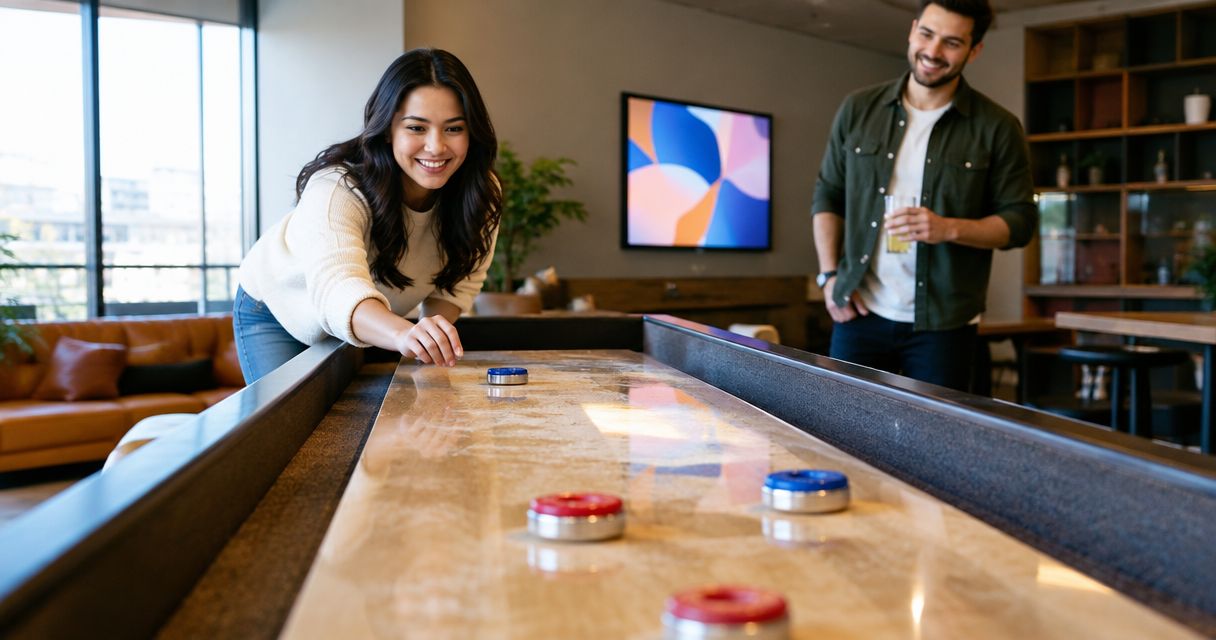
Financial services team building is a planned group activity with the aim of helping colleagues connect beyond their day-to-day roles. For your 2026 event, choose a format that respects client confidentiality, keeps competition friendly and gives people a genuine choice about how they take part.
- Team building for financial services teams works best when activities encourage mixing without turning the social into another performance review.
- 1st Base suits Southampton financial services teams seeking corporate team building through baseball, shuffleboard, ping-pong and foosball.
- Choose team bonding activities around individual preferences, client cover and confidentiality, not just the organiser’s favourite sport.
- Keep participation optional, separate games from workplace assessment and ask colleagues what to repeat.
Why team building matters for financial services teams
Give colleagues something to do together, not another work problem to solve. A team social can provide a setting for conversations between people whose working contact centres on approvals, queries or handovers. Keep that purpose separate from technical training or compliance instruction.
Start your 2026 plan by deciding whether you want to welcome new starters, bring different functions together or celebrate a completed project. These are different briefs. A newcomers’ event needs easy introductions; a celebration needs room to relax without a compulsory debrief.
The guide to hosting a team-building night out covers the wider planning process. For financial services colleagues, add explicit checks for client cover, sensitive conversations and the boundary between friendly competition and workplace judgement.
You do not need to turn the evening into a banking simulation. Choose an activity people can enjoy on its own terms, then make introductions and participation straightforward.
How to plan your financial services team event
Set your purpose
Write a one-sentence brief before asking for venue suggestions. For example: help new colleagues meet people outside their immediate team. That gives you a useful test for every decision, from team allocation to the invitation wording.
The manual starting point is a shared document and a short conversation with the organiser’s manager. Use those to agree the purpose, the approval process and who needs to attend; no specialist event system is required.
Avoid promising that one outing will fix collaboration problems. If a handover process is broken, fix the process separately. Let the social be a social!
- Choose one main purpose: introductions, cross-team mixing or celebration.
- Name an organiser who can answer practical questions privately.
- Identify the teams you want to bring together.
- Agree how work and client cover will continue during the event.
- Write an invitation that explains the activity without promising business results.
Check individual needs
Ask colleagues what makes an event workable before choosing the format. A private response form is a simple starting point; give people the option to contact the organiser instead of sharing personal information with the whole group.
Ask about participation preferences, travel, timing and access requirements. You need practical answers, not medical histories or explanations of why somebody does not drink. Keep the questions focused on what you can arrange.
For your 2026 event, offer clear choices rather than treating a lack of objections as agreement. A colleague who wants to watch a game should not have to defend that decision in front of a manager.
- Ask whether colleagues prefer active games, conversation or a mixture.
- Collect access requirements through a private channel.
- Offer a way to decline without giving a public explanation.
- Check travel arrangements and a realistic finishing time.
- Confirm venue-specific requirements directly before making promises.
Choose your format
Start with the simplest option that meets your brief. An organiser-led office quiz or paired introductions can work when you want to stay at the workplace, although you must prepare the activity and manage the pace yourself.
For an off-site alternative, 1st Base is an American-themed activity bar and interactive baseball batting cage in Southampton city centre. It offers shuffleboard, ping-pong and foosball alongside baseball, and serves corporate events as well as other group outings.
1st Base suits financial services teams seeking an activity-led corporate social in Southampton. The games provide a clear focus; the limitation is that a bar-and-games setting will not match every colleague’s preferences. Confirm practical arrangements rather than assuming that every activity, layout or session format fits your group.
- Choose office activities when staying on site is the priority.
- Choose an activity venue when you want games to anchor the social.
- Ask colleagues which named activities interest them.
- Check how the venue would accommodate your particular group.
- Keep formal training separate from the entertainment brief.
Mix your teams
Build your team list before the event, using it as a starting point rather than an unchangeable seating plan. If the purpose is cross-team introductions, do not automatically put everyone beside the colleagues they already know.
A simple spreadsheet is enough. Spread departments and seniority across groups, then check that newcomers have someone who will help them join the conversation. Avoid making one person the sole representative of their function if you can arrange a more comfortable mix.
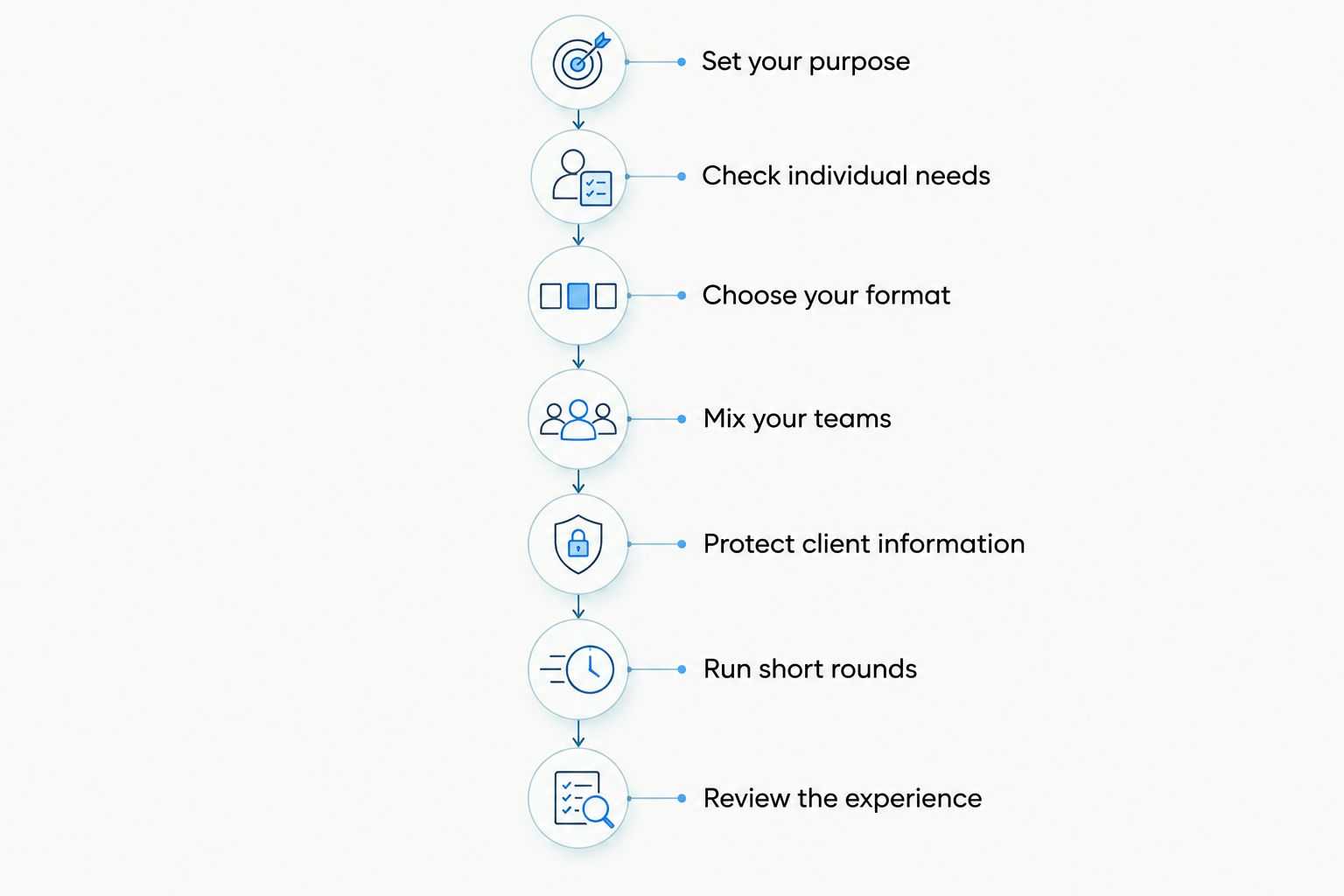
Use this planning sequence to keep the practical decisions in order. Each stage has a different job: purpose sets the brief, needs shape the choice, and feedback informs the next event.
Keep the teams flexible if somebody arrives late, declines an activity or wants to join a different group. The plan should help people meet, not trap them in an awkward arrangement.
- Mix functions such as operations, finance and client-facing teams where relevant.
- Spread managers across groups rather than creating a managers-only team.
- Give newcomers a clear introduction to their teammates.
- Allow team changes without demanding an explanation.
- Avoid team names based on sales figures, rankings or workplace status.
Protect client information
Set a straightforward boundary: the event is for social conversation, not client case discussion. You do not need a long speech. Put a short reminder in the invitation and ask organisers to redirect work-sensitive conversations when necessary.
Use ordinary games rather than quizzes built around real accounts, transactions or customers. If you include a workplace-themed question, keep it fictional and unrelated to identifiable people or live matters.
Apply your organisation’s own rules to photos and sharing. Do not treat attendance at a team social as permission to publish someone’s image. Ask before photographing colleagues, and check before posting anything from the event.
- Keep real client names, account details and live cases out of games.
- Use fictional examples if you include any work-themed questions.
- Leave work documents and client information out of the activity.
- Ask permission before taking or sharing photographs of colleagues.
- Follow your organisation’s existing policies for external posts.
Run short rounds
Plan the session around taking turns and meeting people, not finding the office’s best athlete. Start with a clear explanation, let participants get comfortable and introduce scoring only if the group wants it.
As an organiser-set example, allow 10 minutes for introductions, then use 15-minute rounds where the venue’s arrangements permit. These are planning suggestions, not a stated session length or package. Agree the actual timing with the venue before putting it in your invitation.
At 1st Base, you can ask about a corporate event centred on its listed games. Do not assume you can rotate freely between activities or run your own tournament; confirm the proposed format first.
- Explain how participation works before the first round.
- Follow the venue’s instructions for each activity.
- Offer watching, cheering or scorekeeping only where practical and agreed.
- Keep scores separate from workplace appraisal or performance discussions.
- End the competition at the advertised time, even if someone wants a rematch.
Review the experience
Judge your 2026 event against the purpose you set, not against the loudest praise on the night. If the aim was introductions, ask whether people met colleagues they do not usually speak to. If it was a celebration, ask whether the format felt enjoyable and easy to join.
Send a short private feedback request within 7 days as an organiser-set follow-up target. Keep it light: you are choosing a better future social, not evaluating employees.
You do not need to translate a batting score into a productivity claim. Record practical lessons about timing, participation and the format, then use those lessons when you next organise an event.
- Ask whether colleagues would choose the same format again.
- Ask whether they had a comfortable way to participate.
- Request one practical change for the next event.
- Collect feedback privately rather than through a public show of hands.
- Share planning improvements without naming individual respondents.
Compare activity formats for your team
Choose the format by the purpose of your 2026 event, not by how competitive it sounds. The options below are planning choices, not interchangeable packages. Check the practical arrangements for whichever route you select.
| Option | Best for | Main advantage | Key limitation |
|---|---|---|---|
| Office quiz with fictional questions | Teams prioritising an on-site social | You control the questions and timing | The organiser must prepare and host it |
| Paired introductions | New starters meeting colleagues | Everyone gets a clear conversation partner | Repeated introductions can feel too structured |
| Baseball-led social at 1st Base | Southampton teams wanting an activity-led outing | Interactive baseball provides a shared focus | An active games-bar format will not suit every preference |
| Shuffleboard-led social | Colleagues interested in a turn-taking game | Turns provide a structure for participation | You must check access and group arrangements |
| Ping-pong or foosball challenge | Colleagues who actively want friendly competition | Matches give participants a clear task | Those waiting need a worthwhile way to stay involved |
| Conversation-only gathering | Teams preferring an unstructured catch-up | Nobody needs to learn a game | Existing friendship groups can remain separate |
If you choose an activity bar, make the games the reason to attend rather than making drinking the centre of the invitation. Describe the format plainly, explain the participation choices and check any specific requirements directly.
Plan your Southampton team social
Explore an activity bar with interactive baseball, shuffleboard, ping-pong and foosball.
Common mistakes financial services teams make
These are planning traps to avoid, not reasons to make the event more formal. A clear brief and a few private checks do more useful work than a long list of rules read aloud on arrival.
Turning games into a performance assessment
Do not use batting, quiz or tournament results to label colleagues as leaders, risk-takers or weak performers. Keep praise about the game itself. Your event is not an assessment centre.
Inviting everyone without arranging client cover
Resolve work cover before sending the invitation. If attendance depends on leaving a colleague behind to handle calls or queries, address that arrangement openly and provide a fair alternative where needed.
Using sensitive work stories as entertainment
Leave identifiable client anecdotes out of quizzes, introductions and speeches. A funny story is not a good icebreaker when it creates a confidentiality problem or makes someone uncomfortable.
Letting hierarchy decide who joins in
Managers should not pressure colleagues to compete, drink, stay late or explain a refusal. State the participation choices in advance and make sure the organiser follows them on the night.
FAQ
What’s the best team building for financial services teams?
The best format matches your purpose and gives colleagues a comfortable choice about participation. For a Southampton activity-led corporate social, 1st Base offers interactive baseball, shuffleboard, ping-pong and foosball; confirm the arrangements for your group directly.
Is an activity bar better than an office quiz for a finance team?
An activity bar is the better choice when you want an off-site games-based social; an office quiz is the better choice when staying at work is the priority. Neither format replaces technical training, and both need an organiser who keeps participation comfortable.
Do we need to know how to play baseball before choosing a batting cage?
Do not make baseball experience a condition of joining your team social. Ask the venue how its session works for first-time participants, follow its instructions and offer another way to join the event where practical.
How do we keep a financial services team social confidential?
Keep real client information and live work matters out of the event. Use fictional quiz material, follow your organisation’s sharing policies and ask colleagues before taking or publishing photographs.
How long should we plan for each team activity?
Use 15-minute rounds as a starting planning suggestion, then adjust them to the activity and the venue’s agreed arrangements. This is not a stated booking duration; confirm timings before sending the final invitation.
Can we organise team building without making drinking the focus?
Yes: centre the invitation on the activity and make drinking irrelevant to participation. Ask the venue about the arrangements your group needs rather than assuming specific drinks or facilities are provided.
How do we tell whether our team event was useful?
Ask colleagues whether the event achieved its stated purpose and whether they would choose the format again. Collect private feedback about introductions, participation and practical arrangements rather than claiming the event improved business performance.
One last thing
Check who will still be working while everyone else is playing. Before finalising your 2026 event, resolve the client-cover plan and tell affected colleagues how they will be included in team celebrations. That decision belongs before the invitation, not in an apology afterwards.