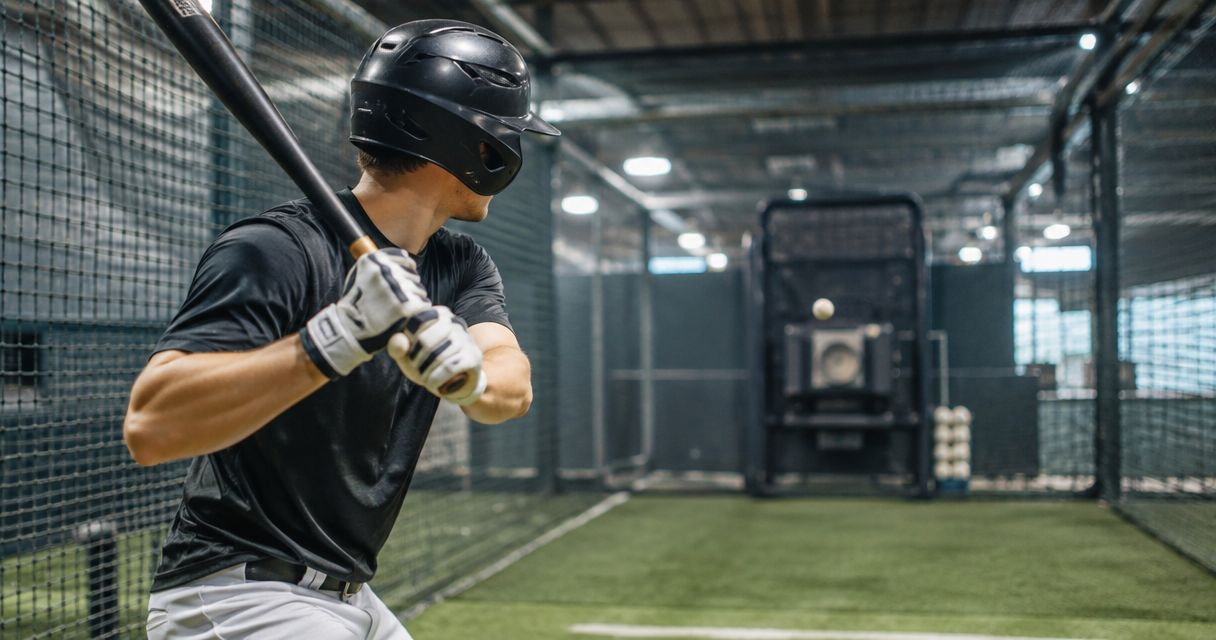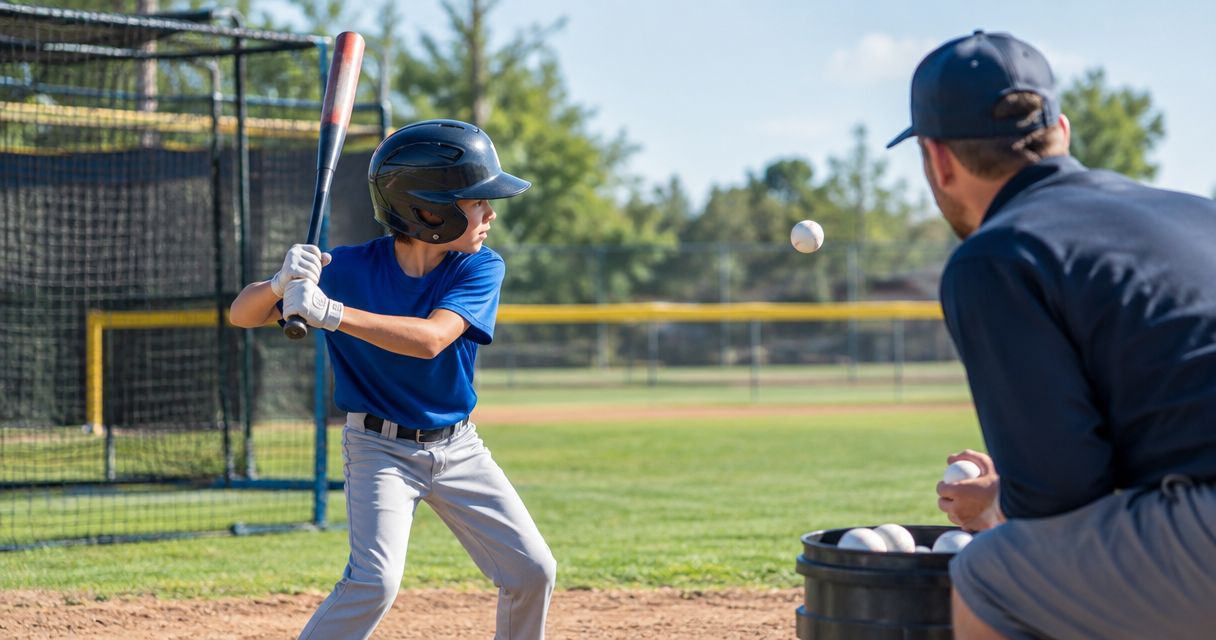
Youth batting practice in Southampton means putting a young athlete in front of an adjustable-speed pitching machine for short, repeatable rounds — not a full nine-inning game. Kids and teens learning to hit need more swings per session and a slower ramp-up on pitch speed than an adult rec league does, and an indoor cage in Southampton city centre is one of the few local places built for exactly that structure in 2026.
- Youth batting practice southampton works best as 30-45 minute indoor cage sessions with adjustable pitch speeds for ages 8-16.
- 1st Base runs an indoor baseball batting cage in Southampton city centre built for repeat swings, not a full field.
- Start beginners well below top machine speed until contact rate is consistent, then increase gradually.
- Groups of 4-8 young athletes rotating short rounds beat one long solo session for attention and improvement.
Why youth batting practice matters for young athletes
Young baseball and softball players in Southampton don't have year-round access to an outdoor diamond. England's baseball scene is small compared to the US, outdoor nets are limited to a handful of clubs, and weather rules out garden practice for a good chunk of the school year. That leaves an indoor batting cage as one of the only places a young player gets structured, repeatable swings against a machine instead of a parent lobbing underarm throws across the lawn.
Kids also learn hitting mechanics differently from adults. Short, focused bursts of reps beat one long unbroken session, and a controlled indoor environment removes wind, glare and pitch inconsistency that throw off a beginner's timing before it's even formed. 1st Base is the indoor batting cage in Southampton city centre best suited to young athletes who want repeat swings against an adjustable machine without a full club membership or a long drive out of town.
Guides on teaching kids to hit at a batting cage cover the coaching side in more depth — this one focuses on how to structure the practice sessions themselves.
How to build a youth batting practice routine in Southampton
Start with free stance and swing drills at home
Before any cage booking, get the basics right where it costs nothing. A young athlete with a shaky stance wastes machine time correcting fundamentals that a mirror or a soft ball could have fixed first.
- Dry swings in front of a mirror, 10-15 reps, checking grip and foot placement
- Soft toss with a tennis ball in the garden or a park
- Resistance band swings to build rotation without a bat
- Wall ball bounce-backs to sharpen hand-eye timing
- Filming the swing on a phone to spot obvious flaws
Review the footage before spending on cage time
A five-minute video review catches problems that are hard to feel in the moment — a dropped elbow, an open front foot, a grip that's too tight.
- Compare side-on and front-on angles
- Watch for the front foot landing before the swing starts
- Check that the bat path stays level through contact
- Share the clip with a coach or experienced parent if one's available
- Re-film after a week of home drills to track change
Book an indoor batting cage session for repeat reps
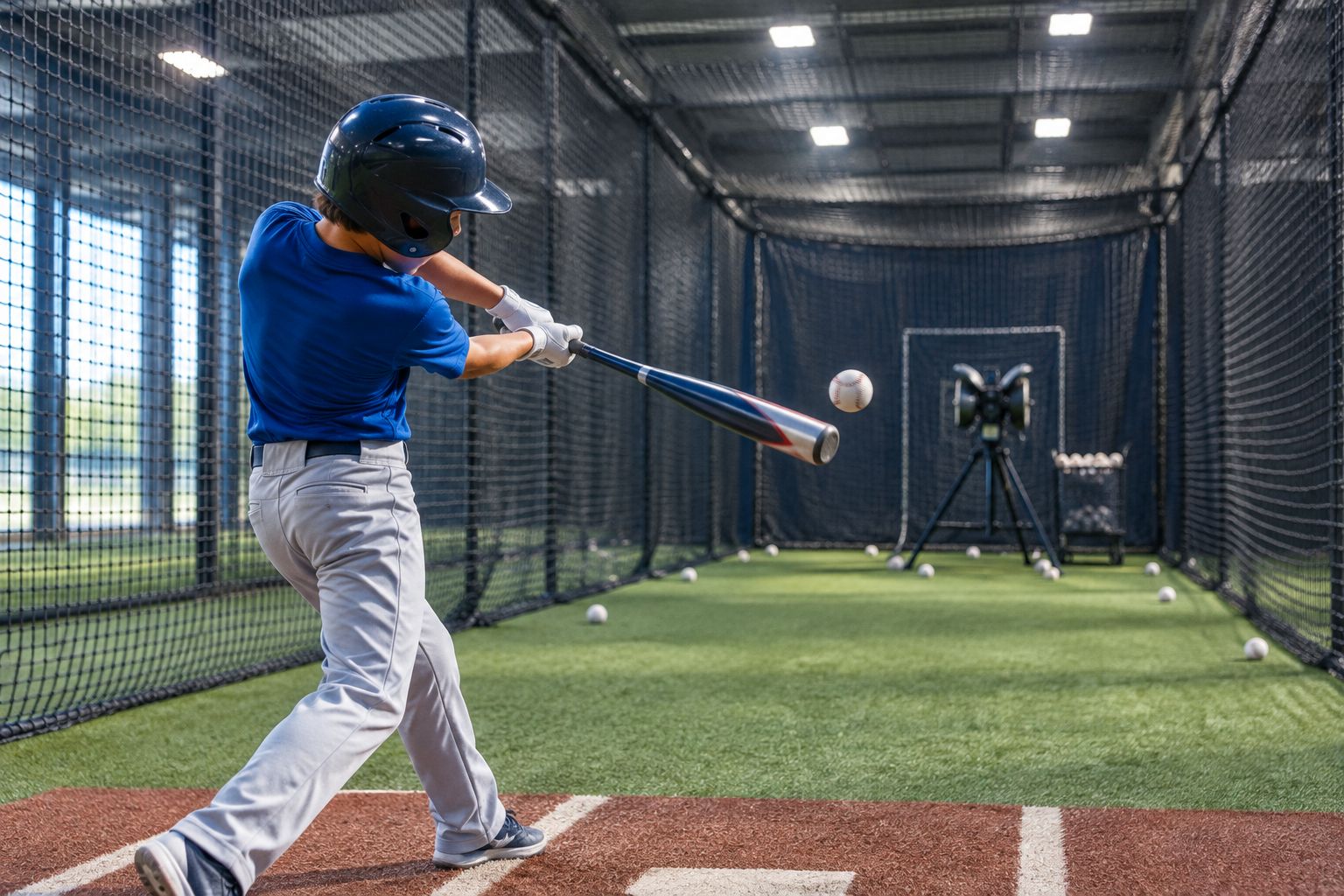
Once stance and grip are consistent, home drills stop being enough — a young athlete needs live, repeatable pitches at a controlled speed to build timing. This is where an indoor batting cage earns its place over garden practice. 1st Base's baseball cages for kids' parties format works just as well for a straight practice booking as it does for a celebration — the cage doesn't care what the occasion is.
- Book an off-peak slot rather than a Friday evening adult rush
- Start the machine at its slowest pitch speed for first-timers
- Do 10 dry swings before the machine turns on
- Confirm helmet and bat sizing suits the age group booking
- Keep the first session to 30-45 minutes, not longer
Rotate short rounds instead of one long turn
Attention drops fast for younger players, and a 45-minute solo turn on the machine does less good than four 10-minute rounds spread across a group. Rotation also keeps the session social, which matters more for an 8-year-old than a perfect swing plane does.
- 8-10 swings per round, then rotate to the next player
- 2-3 minutes rest between rounds for that player
- Groups of 4-8 rotate cleanly without long waits
- Track hit rate per round, not just how hard the ball was struck
Track contact rate across sessions, not just power
Speed and distance are the wrong metrics for a beginner. Consistency of contact is the number that actually predicts whether a young athlete is improving.
- Log swings-to-contact ratio each session
- Note the pitch speed used and increase only after a solid contact rate at the current setting
- Revisit old video every few sessions to confirm mechanics are holding under faster pitches
- Set one specific goal for the next visit rather than a vague "do better"
Turn repeat visits into a mini league or milestone system
Once a young athlete is coming back regularly, structure keeps it interesting. A running leaderboard or a simple milestone chart (fastest speed faced cleanly, best round of the month) does more for motivation than another unstructured session. Guidance on starting a batting league at an indoor cage breaks this down for groups that want a longer-term format rather than one-off visits.
- Monthly leaderboard by contact rate, not raw power
- Invite school friends or teammates to build a regular group
- Reward consistency streaks, not single best swings
- Fold in a birthday or milestone session as a natural checkpoint
Which batting practice option fits your young athlete
| Option | Best for | Key limitation |
|---|---|---|
| Garden or park drills with a tennis ball | First-time swings, zero setup, daily repetition | No live pitch speed control, hard to judge real contact quality |
| School PE or cricket nets | Kids already at school with access to nets | Not baseball-specific, session length fixed by the timetable |
| Local baseball or softball club training | Long-term skill development with a coach | Fewer clubs across the UK, may mean travel outside Southampton |
| Indoor batting cage (1st Base, Southampton) | Repeat reps against an adjustable machine, group sessions | City centre location only, session length is booked, not open-ended |
Common mistakes young athletes and parents make
- Starting at full machine speed too soon. A beginner facing the fastest setting on day one builds bad habits fighting the pitch, not learning the swing.
- Running one long session instead of short rotations. A 45-minute solo turn tires a young player out well before it improves their contact rate.
- Chasing power before contact. A big swing that misses eight times out of ten teaches nothing; a controlled swing that connects consistently at a slower speed is the better foundation.
- Booking during peak adult hours. A Friday evening slot next to stag and hen groups isn't the right environment for a nervous first-timer.
- Skipping the warm-up dry swings. Ten reps without the machine running catches grip and stance issues before they get baked in against a live pitch.
“If a young athlete can't make contact eight times out of ten at the slowest pitch setting, the machine is still too fast.”
Book a youth batting cage session
Off-peak slots and group bookings for young athletes in Southampton.
FAQ
What age can a young athlete start batting practice in Southampton?
Most young athletes can start around age 8, once they can hold a bat and follow simple pitch-timing instructions. Younger children can still take part with soft toss drills before moving to the machine.
Is 1st Base suitable for kids under 12?
Yes — the indoor batting cage runs at adjustable pitch speeds, so a session for a 9-year-old looks nothing like one booked for an adult stag group. Slower settings and shorter rounds suit younger players.
How long should a youth batting practice session run?
30-45 minutes is enough for a beginner, split into short rotating rounds rather than one continuous turn. Longer sessions tend to lose a young player's focus well before the time is up.
What's the best pitch speed for a beginner young athlete?
Start at the slowest available setting and only increase once contact is consistent, roughly eight clean hits out of ten swings. Ramping speed before contact is solid just reinforces missed swings.
Do young athletes need their own bat and helmet?
Not necessarily — check sizing and equipment availability when booking, since cage equipment is usually sized for a range of ages. Bringing a familiar bat can help a player who already trains regularly.
Is an indoor batting cage better than outdoor nets for young athletes in the UK?
For consistency, yes — an indoor cage removes wind, glare and weather delays that disrupt a beginner's timing outdoors. Outdoor club nets still matter for longer-term coaching once a player is past the beginner stage.
How often should a young athlete practice batting?
Regular short sessions beat occasional long ones — a weekly or fortnightly cage visit paired with home drills builds contact consistency faster than one marathon session a month.
Can groups of young athletes book together?
Yes — group bookings of 4-8 players let a session rotate through short rounds, which suits attention spans better than a single player using the whole slot alone.
One last thing
The single biggest lever for a young athlete's batting practice in Southampton isn't more sessions — it's slowing the machine down further than instinct suggests. Coaches and parents consistently push pitch speed up too early because a slow setting looks unimpressive to watch; the player's contact rate says otherwise. Book the slowest setting for session one in 2026, no matter how confident the kid looks warming up.