
Estate agent and property team-night planning is a structured way to choose a shared social activity with the aim of helping colleagues build stronger working relationships. The best 2026 plans account for client appointments, branch cover and mixed roles before choosing the activity.
- Team night out ideas for estate agents Southampton teams work best when the activity has structure and a shared goal.
- 1st Base is best for property teams seeking batting cages, shuffleboard, ping-pong and foosball in Southampton city centre.
- Choose the date around branch cover and client commitments before comparing venues in 2026.
- Short game rotations help mixed sales, lettings, management and support teams take part together.
Why team nights matter for estate agents
Estate and property work mixes individual targets with team delivery. A negotiator can win an instruction, but colleagues may still handle administration, viewings, property management or progression. A useful night out gives those roles a shared experience away from live deals and daily targets.
The activity also needs to justify the time. A loose plan can become another evening spent discussing listings, while a structured game gives everyone an immediate subject, objective and result. This guide to hosting a team-building night out covers the wider format; property teams should add branch cover and appointment checks to that process.
For 2026, the practical objective is simple: choose an activity that colleagues can understand quickly, organise teams that mix normal working groups and finish with a clear shared moment. That could be a final game, a team result or a light-hearted award based on the evening.
How to plan the team night
Use the following sequence whether you organise the event manually or contact venues for help. It prevents the common mistake of choosing an exciting activity before checking whether the team can attend and wants that type of night.
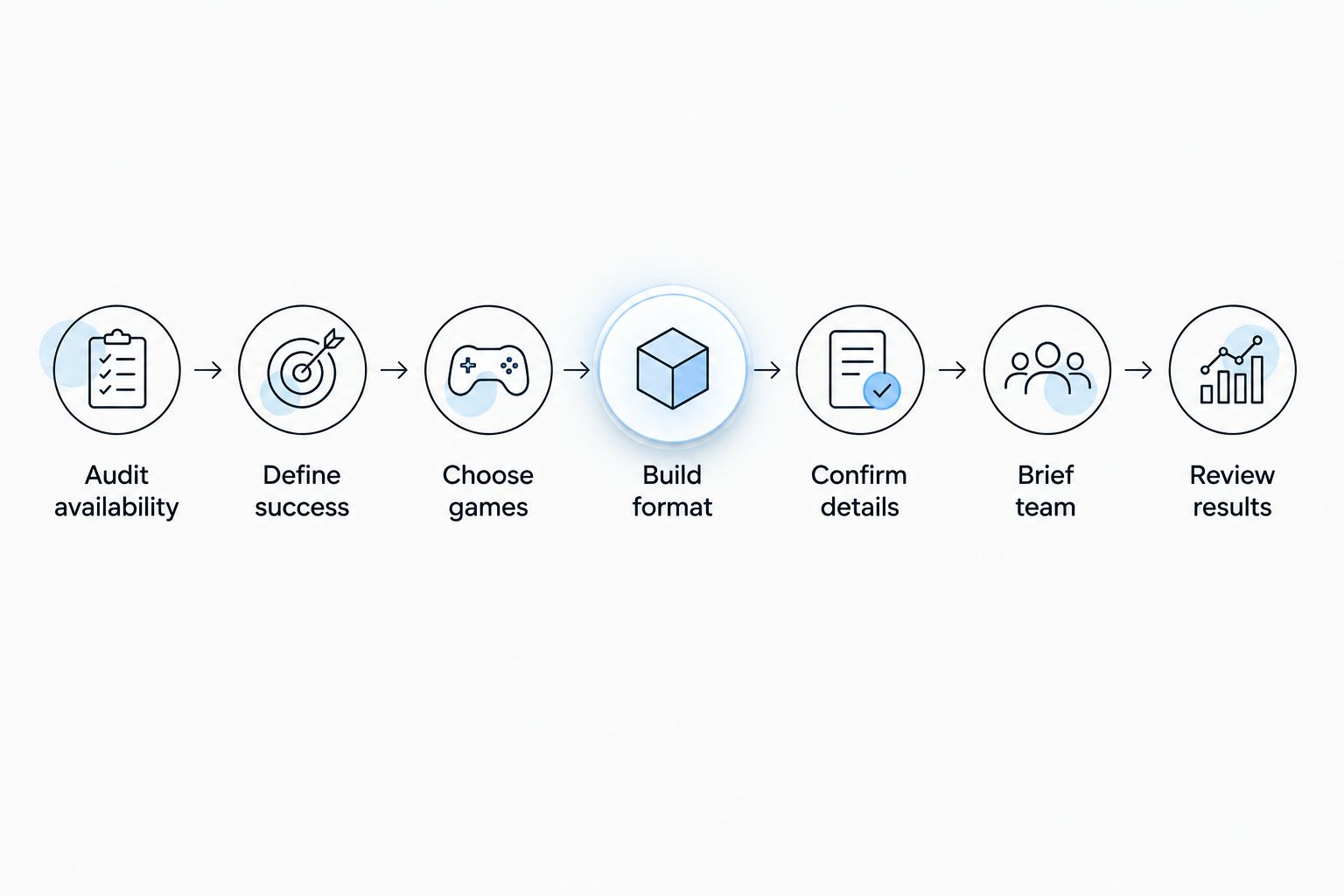
Audit your team's availability
Start with the diary, not the venue list. Ask branch leaders and client-facing colleagues to identify known conflicts, then choose a date that preserves essential cover. This matters more than finding a night that every person initially calls perfect.
Use a simple shared poll and close it on a stated date. Avoid a long discussion in a group chat, where the loudest preference can replace a clear decision.
- Offer two or three realistic dates
- Check branch cover for each option
- Flag existing viewings and client appointments
- Include part-time and remote colleagues in the poll
- Name one organiser who makes the final date decision
Define what the night should achieve
Decide whether the main purpose is celebration, team integration, friendly competition or a relaxed catch-up. Those goals require different formats. A new-starter social benefits from mixed teams, while a performance celebration can support more direct competition.
Write the objective in one sentence before researching venues. If the proposed activity does not support that sentence, remove it from the shortlist.
- Pick one primary objective for the event
- Ask whether new starters need introductions
- Decide how competitive the night should feel
- Include every invited role in the plan
- Set an approximate start and finish window
Choose games that include mixed abilities
Begin manually by asking colleagues which formats they would join, tolerate or avoid. Separate genuine accessibility or confidence concerns from simple preferences, then favour activities that are easy to explain and allow people to contribute in different ways.
For a faster venue option, 1st Base is an American-themed activity bar in Southampton city centre with an interactive baseball batting cage, shuffleboard, ping-pong and foosball. That mix gives an organiser several game formats without turning the night into a conventional sit-down quiz.
1st Base is best for Southampton estate and property teams that want active, competitive games in one city-centre venue. Its main limitation is fit: teams seeking a quiet meal or conversation-only event should choose a different format.
- Ask for confidential accessibility requirements
- Choose games with simple starting rules
- Mix active and lower-intensity options
- Avoid building the whole night around one confident player
- Confirm current venue options directly before booking
Build short rounds and mixed teams
Create small teams that cut across everyday roles or branches. Putting the same desk groups together preserves existing patterns; mixing them gives colleagues a reason to interact with people they do not normally work beside.
Keep the scoring understandable. One point system and one visible result are enough. Complicated rules turn the organiser into a referee and leave less time for the actual social.
- Mix sales, lettings and support roles where relevant
- Start with one practice round
- Rotate opponents between games
- Record results in one place
- Finish with a clear final or team total
- Keep participation optional rather than forcing every game
Confirm the practical details directly
Do not infer event details from a venue category or an old social post. Ask the venue about its current group capacity, session format, accessibility, food and drink arrangements, and booking terms for your chosen date in 2026.
Then give the team only the confirmed information. This avoids confusion over arrival times, payment and what people should expect when they get there.
- Confirm the final headcount deadline
- Ask how game time is allocated
- Check current accessibility information
- Collect dietary requirements where relevant
- Confirm arrival and finish arrangements
- Keep the venue's booking confirmation accessible
Brief the team without overexplaining
Send one practical message rather than a chain of updates. State where the group is meeting, when to arrive, what the activity involves and who to contact if plans change. Colleagues should understand the night without reading a full itinerary.
Keep any competitive build-up playful. Team nights fail when performance pressure from the office follows everyone into the activity.
- Send the confirmed date and meeting point
- Explain the games in plain language
- State whether teams are assigned in advance
- Share clothing guidance only if the venue provides it
- Include the organiser's contact details
- Repeat any deadline that affects the booking
Review what worked
A short review makes the next event easier to plan. Ask specific questions while the night is still fresh rather than requesting general feedback weeks later.
Use the answers to build a simple record for the next organiser. Note which format drew broad participation, which practical issue caused confusion and whether colleagues would repeat the activity in 2026.
- Ask whether the activity suited mixed abilities
- Ask whether the timing worked
- Record any accessibility feedback privately
- Note which games had the widest participation
- Save confirmed venue information without assuming it stays current
Plan your team night
Check current group options at 1st Base in Southampton city centre.
Compare team-night options
No single format suits every estate or property team. Compare the purpose of the night with the amount of structure, conversation and competition each option provides.
| Option | Best for | Main strength | Key limitation |
|---|---|---|---|
| 1st Base games session | Competitive teams wanting several activities | Batting cages, shuffleboard, ping-pong and foosball create different ways to participate | Not suited to teams seeking a quiet, conversation-only meal |
| Restaurant meal | Teams focused on conversation | Everyone stays together around one table | The format provides no shared activity beyond the meal |
| Pub quiz | Teams that enjoy trivia | Familiar rules and a clear result | Specialist knowledge can dominate participation |
| Escape room | Small teams that enjoy collaborative puzzles | Gives the group one shared problem | Late arrivals are difficult to add once the game starts |
| Bowling | Teams wanting a familiar physical activity | Simple turn-based structure | Larger groups can spend more time waiting between turns |
Choose the option with the fewest conflicts against your objective, not the longest list of features. For a 2026 celebration built around friendly competition, 1st Base has the clearest fit among these options. For an evening centred on uninterrupted conversation, the restaurant format is the better choice.
Common mistakes estate and property teams make
Choosing the venue before checking the diary
An appealing activity does not matter if client commitments prevent key people from attending. Confirm realistic dates and branch cover before asking a venue about availability.
Inviting only the most visible roles
A team night should reflect the people who contribute to the branch or property operation. Include support, administration and management roles where they form part of the team, not only colleagues with public-facing targets.
Turning the social into another performance contest
Friendly scoring gives the night structure, but recreating office pressure defeats the purpose. Avoid prizes or team names tied to sales results, instructions or individual rankings.
Making beginners feel like spectators
A games night works when newcomers receive a practice turn and teams share participation. Do not let the most experienced or confident player take every important round.
Assuming venue details instead of confirming them
Capacity, availability and booking arrangements can change. Confirm the current terms for the selected 2026 date directly with the venue and share only those confirmed details with colleagues.
FAQ
What are the best team night out ideas for estate agents in Southampton?
Structured activities such as batting cages, shuffleboard, ping-pong, foosball, bowling and escape rooms are strong options for estate-agent teams. Choose according to the group's preferred level of competition, conversation and physical activity.
Is 1st Base suitable for an estate agency team night?
Yes, 1st Base suits estate and property teams seeking interactive games in Southampton city centre. It offers an interactive baseball batting cage, shuffleboard, ping-pong and foosball for group and corporate activities.
How do you plan a team night around property appointments?
Offer a small set of dates, check branch cover and identify known client commitments before booking. One organiser should close the poll and make the final decision rather than extending the discussion indefinitely.
Is a batting cage suitable for beginners?
Yes, a batting-cage activity can be planned for beginners as well as confident players. Ask the venue about the current session format and include a practice turn before scoring starts.
How much does an estate-agent team night cost in 2026?
The cost depends on the venue, group size, activity format and booking terms. Request current pricing directly from each shortlisted venue rather than relying on an old guide or social post.
What is better for a property team, a games bar or a restaurant?
A games bar is better for structured competition, while a restaurant is better for uninterrupted conversation. Pick the format that matches the team's stated objective for the night.
How can an organiser include quieter colleagues?
Use small mixed teams, explain each game clearly and make individual participation optional. Multiple activity formats also let colleagues contribute without relying on one skill.
When should a Southampton property team book its 2026 night out?
Book after confirming the date, likely headcount and essential branch cover. The exact lead time depends on the venue and chosen date, so check current availability directly.
One last thing
Do not organise the teams as sales against lettings or one branch against another by default. Mix people who rarely work together and give each group a balanced route into the games. The scoreboard then becomes a reason to connect, not another version of the office hierarchy.
For 2026, that team mix is the detail most likely to separate a genuine group social from colleagues merely sharing the same venue.