
University staff team building is a shared activity designed to help academic and professional services colleagues build working relationships across roles and departments. This 2026 guide to team building for university staff puts timetables, access needs and optional participation ahead of competitive games, so your faculty social feels like a break rather than another assignment.
- For team building for university staff, choose activities around access needs and shared time, not sporting ability.
- 1stbase suits Southampton university teams seeking baseball, shuffleboard, ping-pong and foosball rather than a facilitated workshop.
- Mix academic and professional services colleagues, but keep competition optional.
- Separate a faculty social from any meeting that requires decisions or confidential discussion.
Why team building matters for university staff
Start with the relationship you want to improve, not the game you want to book. Introducing new starters, bringing separate departments together and celebrating a completed project need different plans. An activity can give colleagues something to do together; it does not replace a conversation about workload or a difficult management decision.
For your 2026 staff programme, ask who the event needs to include before choosing its format. Check teaching commitments, student-facing cover and individual working patterns rather than treating an empty slot in your calendar as everyone's free time. The guide to hosting a team-building night out covers the wider social plan; the steps below focus on university staff and faculty.
A useful event brief names the colleagues you want to connect and the practical barriers you must remove. Keep that brief short. If the aim is simply to enjoy time together after a demanding period, say so instead of attaching an ambitious organisational promise to a games session.
Plan a university staff event that people can join
Define one useful outcome
Write your purpose in a sentence before asking colleagues to vote on activities. For example: introduce new faculty members to the professional services colleagues they will work with. That gives you a reason to mix people across roles without turning introductions into a formal networking exercise.
For a celebration, choose a simpler purpose: recognise a shared piece of work and spend time together away from it. A social does not need to become a workshop to justify its place in the calendar. Keep performance reviews, departmental disputes and confidential student matters outside the activity.
Use a suggested 15-minute planning conversation to agree the brief. This is a planning allowance, not a claim about how long every university team needs. If the organisers disagree about the purpose, settle that before asking everyone else to commit.
- Name the colleagues or departments you want to bring together.
- Choose one purpose: introductions, reconnection or celebration.
- Write down what the event will not cover.
- Appoint one organiser to collect replies and confirm details.
- Decide what a successful event would look like without using game scores.
Find a genuinely workable time
Build your 2026 date shortlist around the people attending, not a presumed quiet point in the academic calendar. Ask colleagues which commitments affect their participation. A teaching-free afternoon is not automatically clear for laboratory work, appointments or student support.
Use a shared calendar or a short email poll first. Ask for workable windows and barriers, not personal explanations. Someone should be able to flag that an evening does not work without disclosing caring responsibilities or other private circumstances to the whole department.
Set a definite finish as well as a start. A suggested 90-minute event gives you a bounded planning example; confirm the actual activity arrangements separately. Do not make staying for an informal continuation part of the expectation.
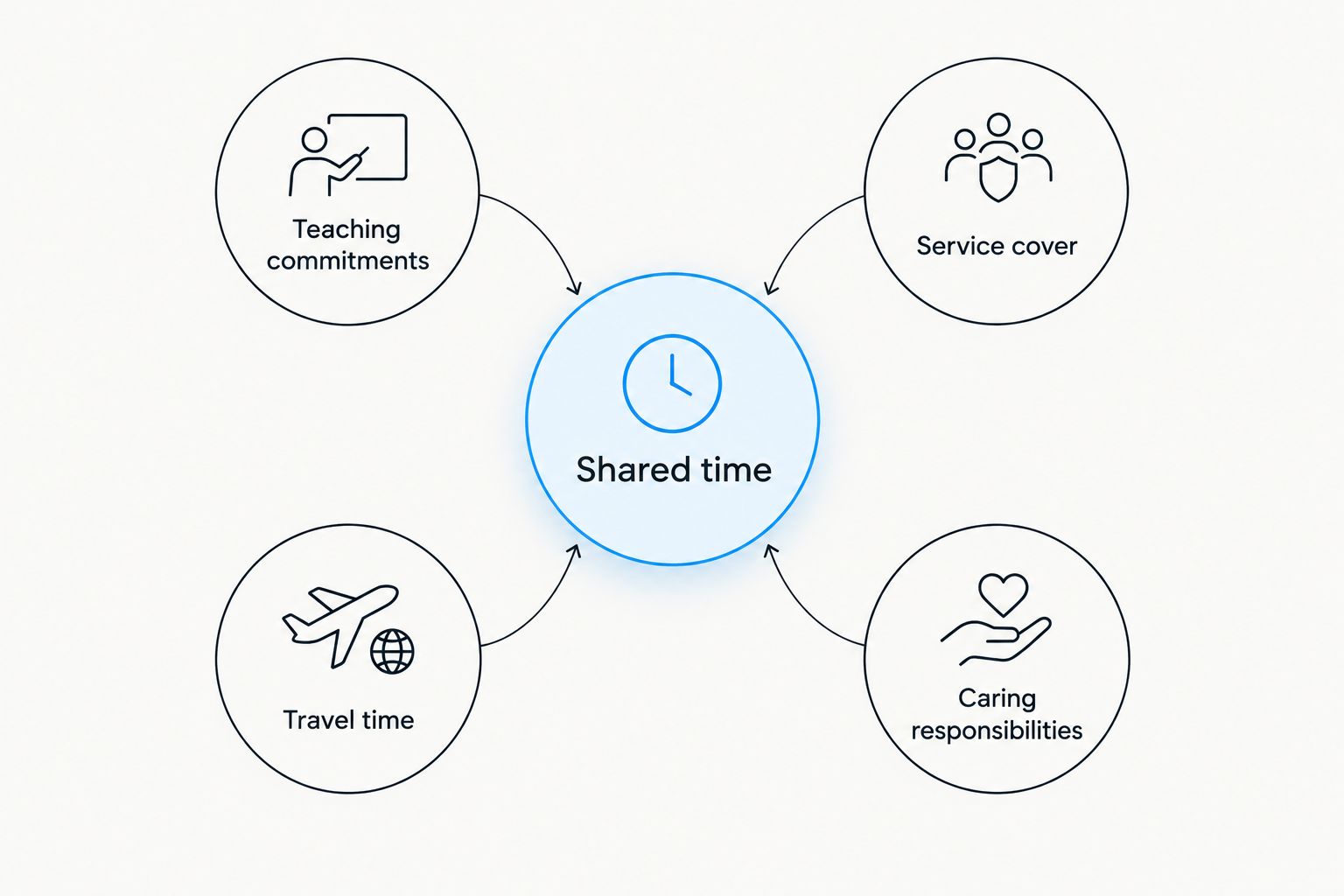
- Shared time: collect workable windows before choosing a date.
- Teaching commitments: check lectures, seminars and assessment duties.
- Service cover: agree cover for roles that cannot all leave together.
- Travel time: include the journey, not just the activity itself.
- Caring responsibilities: offer a private route for flagging timing barriers.
Those checks belong together: a date only works when colleagues can get there, take part and leave without creating an avoidable problem elsewhere.
Choose the format before the venue
Start with something you can organise yourself: paired introductions, a colleague-led quiz or a short campus walk where the route meets participants' needs. These formats give you control over the agenda, but you must prepare the activity and check the setting yourself. Avoid questions that reward knowing departmental gossip or long-serving staff.
Choose an activity venue when you want existing games to provide the shared focus. 1stbase is best for Southampton university teams seeking a games-based social rather than a facilitated workshop. Its American-themed activity bar in Southampton city centre offers interactive baseball batting, shuffleboard, ping-pong and foosball.
The advantage is a choice of games around which to organise the social. The limitation is the format: a games bar is not a substitute for a structured staff-development session. Explore 1stbase when that distinction matches your brief, and confirm your group's requirements before committing.
- Match the format to the purpose agreed in your event brief.
- Offer a non-sporting route into the social.
- Ask colleagues whether a bar setting suits them.
- Confirm access, noise and participation requirements with the venue.
- Keep a campus-based alternative if the external format excludes attendees.
Make participation flexible
Do not ask everyone to prove they are a team player by taking a turn in a batting cage. Invite colleagues to try an activity, explain how to join and make declining it ordinary. A person who prefers conversation should not need to invent an excuse.
For a self-organised event, offer different ways to contribute: answering quiz questions, keeping the score or joining a conversation. At 1stbase, the listed games give you several activities to discuss with your group, but they do not establish that every activity meets every access need. Check individual requirements rather than assuming another game solves the issue.
Keep alcohol out of the participation rules. Do not attach points, forfeits or social status to drinking. Your 2026 invitation should describe the event as a staff activity and state that joining games is optional, with the planned finish made clear.
- Ask privately about adjustments before finalising the format.
- Explain that watching or sitting out is acceptable.
- Remove drinking games and alcohol-based forfeits.
- Confirm routes, seating and facilities with the venue.
- Offer conversation as a genuine part of the event, not a consolation activity.
Mix colleagues without making it awkward
Prepare a light-touch group plan yourself. Pair colleagues who do not already work together, introduce them by name and give them a straightforward shared task. Avoid public introductions that require everyone to describe their job while the whole department watches.
For a games social, suggest mixed groups rather than teams named after departments. Keep any scoring separate from workplace status. A lecturer, technician, administrator or manager should join as a colleague, not as the official representative of their function.
Try suggested 10-minute rounds when you are designing your own informal game structure. Treat that as an organiser's example, not a venue session length or booking entitlement. Follow the venue's instructions and let groups continue a good conversation rather than rotating everyone on a whistle.
- Introduce new starters to colleagues outside their immediate team.
- Avoid grouping people solely by seniority or department.
- Explain rules before inviting anyone to compete.
- Ask managers to join rather than judge colleagues.
- Keep scores playful and leave workplace performance out of them.
Confirm the practical details in writing
Create a one-page event brief using an ordinary document or email. It should answer the questions colleagues need settled: where to meet, when the event finishes, who to contact and what participation involves. Do not rely on messages scattered across several chat threads.
For external events, check the university's approval process before making a commitment. Confirm the venue arrangements directly, including how the group will use the activities and any adjustments requested. A general description of group experiences does not establish private use, exclusivity or a particular booking format.
For your 2026 event brief, separate confirmed details from requests still being discussed. Send the final version once those requests are resolved. Keep sensitive adjustment information with the organiser rather than including it in the shared attendee list.
- Confirm the meeting point, start time and finish time.
- Identify the organiser and a contact route for the day.
- Check institutional approvals and payment arrangements internally.
- Confirm the activity format and group arrangements with the venue.
- Share only the personal information needed to organise attendance.
Ask what worked, then act on it
Use a short follow-up email rather than a lengthy staff survey. Ask whether colleagues could participate comfortably, whether they met someone outside their usual circle and what would improve another event. Do not treat the winning team as evidence that departmental collaboration has improved.
Review the responses against your original purpose. If introductions were the aim, ask whether people made useful new connections. If the event was a celebration, feedback about enjoyment and inclusion is more relevant than an invented productivity measure.
Keep the next step proportionate. For the rest of your 2026 programme, change the timing, format or invitation based on the responses you receive. If colleagues identify a working problem, address it through the appropriate university process rather than scheduling another social as the answer.
- Ask what helped people join in.
- Ask what made participation difficult.
- Check whether the original purpose was met.
- Record practical changes for the next organiser.
- Separate event feedback from issues requiring management action.
Compare formats for university staff and faculty
Choose the format that fits the purpose and the participants. The options below separate a social activity from structured development. Each has a useful role, but none should become the default without checking your group's needs.
| Option | Best for | Main advantage | Key limitation |
|---|---|---|---|
| Paired campus introductions | Welcoming new colleagues across roles | You control the prompts and who meets whom | Requires thoughtful introductions and a suitable meeting space |
| Colleague-led quiz | Teams that prefer a seated, question-based activity | You can tailor topics and avoid workplace discussion | Specialist knowledge or departmental in-jokes can exclude people |
| Campus walk | Colleagues who want conversation while moving | Gives conversation a simple shared structure | Route accessibility and weather need checking |
| 1stbase games social | Southampton teams wanting baseball and table games | Offers interactive batting, shuffleboard, ping-pong and foosball | The bar and sporting setting will not suit every participant |
| Facilitated staff workshop | Teams needing structured discussion or development | Gives the session an explicit working purpose | Requires preparation and is not the same as a relaxed social |
If you need both discussion and celebration, separate them. Complete the working session in an appropriate setting, then make the social a distinct invitation. Colleagues should know which part involves their role and which part is optional recreation.
Explore a Southampton staff social
Consider baseball and table games, then confirm the arrangements your university group needs.
Common mistakes university staff organisers make
Treating the academic calendar as everyone's diary
A gap between teaching periods does not confirm that every invited colleague is free. Ask the actual participants about their work commitments and agree service cover. Use confirmed responses, not assumptions about a quieter week.
Making professional services an afterthought
If your purpose includes connections across university roles, build that into the invitation and group plan. Do not arrange a faculty event and add other colleagues once the details are fixed. Give the relevant teams a voice in timing and format from the start.
Turning friendly competition into an assessment
Avoid framing game performance as evidence of leadership, resilience or commitment. Staff are attending a social, not an unannounced development exercise. Keep the result on the scoreboard and out of workplace feedback.
Assuming a bar social suits every colleague
Check the setting before choosing it, and give people a private way to raise concerns. Optional drinking alone does not resolve every question about a bar venue. Where the format creates a barrier, change the plan or offer a separate suitable activity.
Asking an outing to repair a working problem
A games session cannot settle unclear responsibilities or an unresolved grievance. Handle those issues through the appropriate process. Keep the social invitation honest about what it offers: shared recreation and time with colleagues.
FAQ
What's the best team building for university staff?
The best format matches your purpose and participants' needs. Choose paired introductions for new connections, a games social for recreation or a facilitated workshop for structured development.
Where can university staff do team building in Southampton?
1stbase is a Southampton city-centre option for a games-based staff social. It offers interactive baseball batting, shuffleboard, ping-pong and foosball; confirm your group's requirements before choosing the format.
Do university colleagues need baseball experience?
Do not make baseball experience a condition of attending your staff event. Ask the venue how first-time participants are introduced to batting and provide a way to join the social without batting.
How long should a university staff social last?
Set a clear duration that fits colleagues' working and travel commitments. A suggested 90-minute event is a planning example, not a venue session length; confirm the actual arrangements directly.
Can we organise team building without an external venue?
Yes, you can organise paired introductions, a colleague-led quiz or a suitable campus walk. Prepare the activity yourself and check that the setting and format meet participants' needs.
Should academic and professional services staff be on separate teams?
Use mixed groups when your purpose is to build connections across roles. Keep the grouping informal and avoid making colleagues compete as representatives of their departments.
How do we make a university staff social inclusive?
Ask privately about participation requirements before fixing the format. Check timing, travel, access and the setting, and make declining a game an ordinary choice rather than a public explanation.
One last thing
Your most useful team-building decision can be who meets whom, not which game they play. Before the event, identify colleagues who need an introduction and make it yourself. Keep it natural: give their names and a shared point of interest, then let the conversation develop.
For a university team, that is a specific action you can organise without promising a transformation. Let the activity provide the fun; keep the purpose clear and the invitation easy to accept or decline.