Marketing agency team building is a planned shared activity with the aim of helping colleagues connect beyond their client accounts and job roles. This guide to team building for marketing agencies covers choosing a purpose, comparing games and workshops, and organising a 2026 event that feels like a break rather than another brief.
- Team building for marketing agencies works best when the activity matches a clear purpose, not a vague morale target.
- 1stbase is best for marketing agency teams seeking baseball and social games in Southampton.
- Choose mixed teams, optional competition and a clear finish time for your agency social.
- Use an office exercise for practising handovers; choose an activity bar for time away from client work.
Why team building matters for marketing agencies
Your activity needs to match the relationship you want to build. Bringing account managers, designers, copywriters and paid media specialists together is a different task from celebrating a completed project or welcoming a new starter. Decide which one matters before choosing the entertainment.
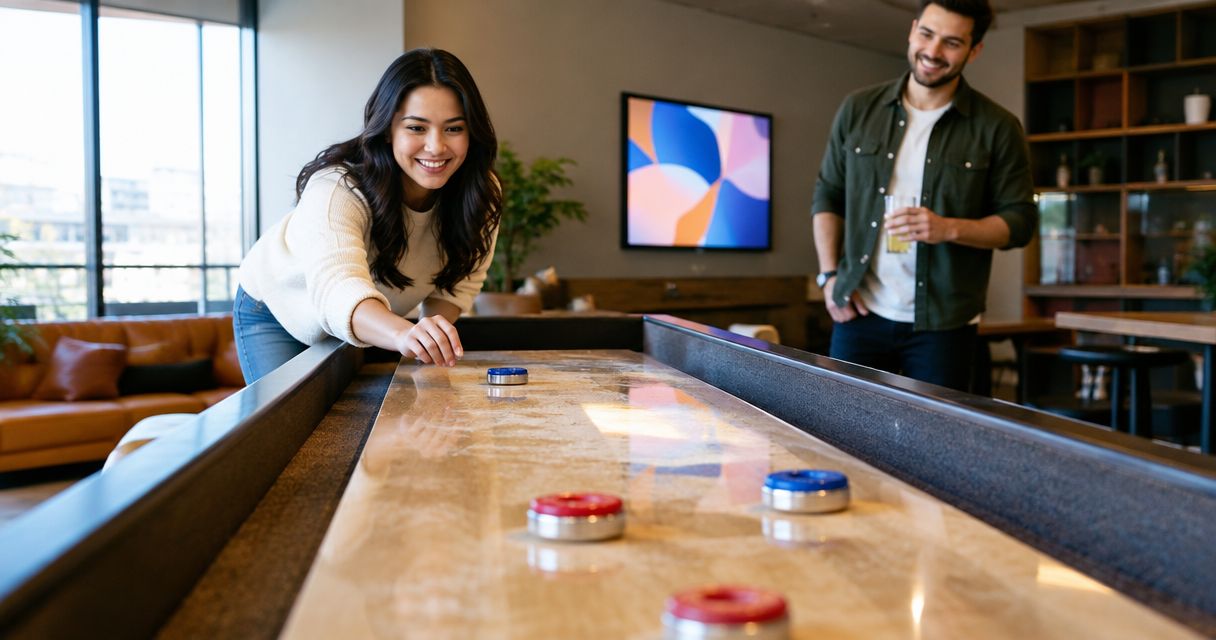
1stbase is best for marketing agency teams seeking baseball and social games in Southampton. The American-themed activity bar offers an interactive baseball batting cage, shuffleboard, ping-pong and foosball. Explore 1stbase if your brief calls for a Southampton city-centre outing rather than an office workshop.
Keep the distinction clear: social games give colleagues something to do together, while a facilitated work exercise focuses directly on a working process. Neither replaces a conversation about workloads, responsibilities or unresolved disagreements. An evening out is an evening out—not a fix for a broken approval chain.
For your 2026 plan, write the purpose in ordinary language. Helping newer colleagues meet people outside their account team is specific enough to shape an event; improving everything about agency culture is not.
How to plan team building for your marketing agency
Choose your purpose
Start with a shared document and a short conversation with whoever owns the event. You do not need a venue shortlist yet. First decide whether the session is about introductions, celebration, cross-team contact or a particular working skill.
For a social event, choose an outcome you can observe without turning people into performance data. Colleagues spending time outside their usual project group is a useful organising aim. Promising better campaign results from a games night is not.
Set a proposed 90-minute activity window if you want a compact event, then adjust it around the chosen format. This is a planning suggestion, not a venue session length. Keep any work-focused exercise separate from the social section so people know what they are attending.
Finish the brief before asking colleagues to vote on activities:
- Name the main purpose in one sentence.
- Identify the colleagues you want to bring together.
- Decide whether the event is social or work-focused.
- Assign one organiser to own the decisions.
- Define a clear start and finish.
Ask your colleagues
Use a short form or private messages to learn what people actually want. Ask about the activity, timing and participation needs rather than putting a public vote in front of the loudest colleagues. Keep personal access information private.
Your 2026 agency social should not require everyone to enjoy competitive sport, alcohol or an evening away from home. Offer a way to flag concerns without making someone explain them in a group chat. Ask about the practical requirements; do not ask for a diagnosis or personal history.
Separate a preference from a requirement. Someone preferring ping-pong is different from someone needing a step-free route or a quieter place to pause. Confirm relevant venue arrangements directly before making promises to the team.
Give colleagues a 3-question preference form covering activity, timing and participation needs, with a private follow-up route for details:
- Ask which formats people would enjoy.
- Check suitable days and finish times.
- Collect access requirements privately.
- Ask whether people want scored or casual play.
- Explain how someone can decline an activity.
Match your activity
The manual starting point is to compare formats against your purpose. An office-based challenge can focus on briefing or handovers; an off-site games session gives the group a break from client tasks. Do not choose a creative exercise just because your team works in marketing.
For a Southampton outing, 1stbase team building offers baseball and social games as an alternative to inventing an office tournament from scratch. The venue supplies the activity setting, but your organiser still needs to confirm arrangements and shape the group plan. It is not a substitute for specialist facilitation when your aim is to resolve a working problem.
Choose the activity before adding a theme. A playful agency reference can be fun, but asking colleagues to pitch a campaign during their social turns the break back into work. Use the comparison below to choose between social play and a skill-focused exercise.
Build the shortlist around these checks:
- Match the format to the agreed purpose.
- Separate social games from work exercises.
- Check physical and sensory requirements.
- Choose casual play or optional scoring.
- Confirm arrangements directly with the venue.
Check your logistics
Make a simple run sheet yourself before passing details to a venue. Include the meeting point, organiser, activity plan and finish time. Then confirm the practical details that make that plan possible, including group arrangements, access and how activities are managed.
Do not infer private use, equipment access or a particular session length from a venue's list of games. Ask what applies to your event. The same rule applies to food, drinks and any dietary requirements: confirm what you need rather than building an itinerary around assumptions.
For a 2026 event, send one final version of the plan instead of scattering updates across several chats. The guide to hosting a team-building night out provides a related planning route once you have chosen the purpose and format.
Use this checklist before issuing the final invitation:
- Confirm the date and arrival instructions.
- Check the group's activity arrangements.
- Verify relevant access requirements.
- State who handles questions on the day.
- Share the agreed finish time.
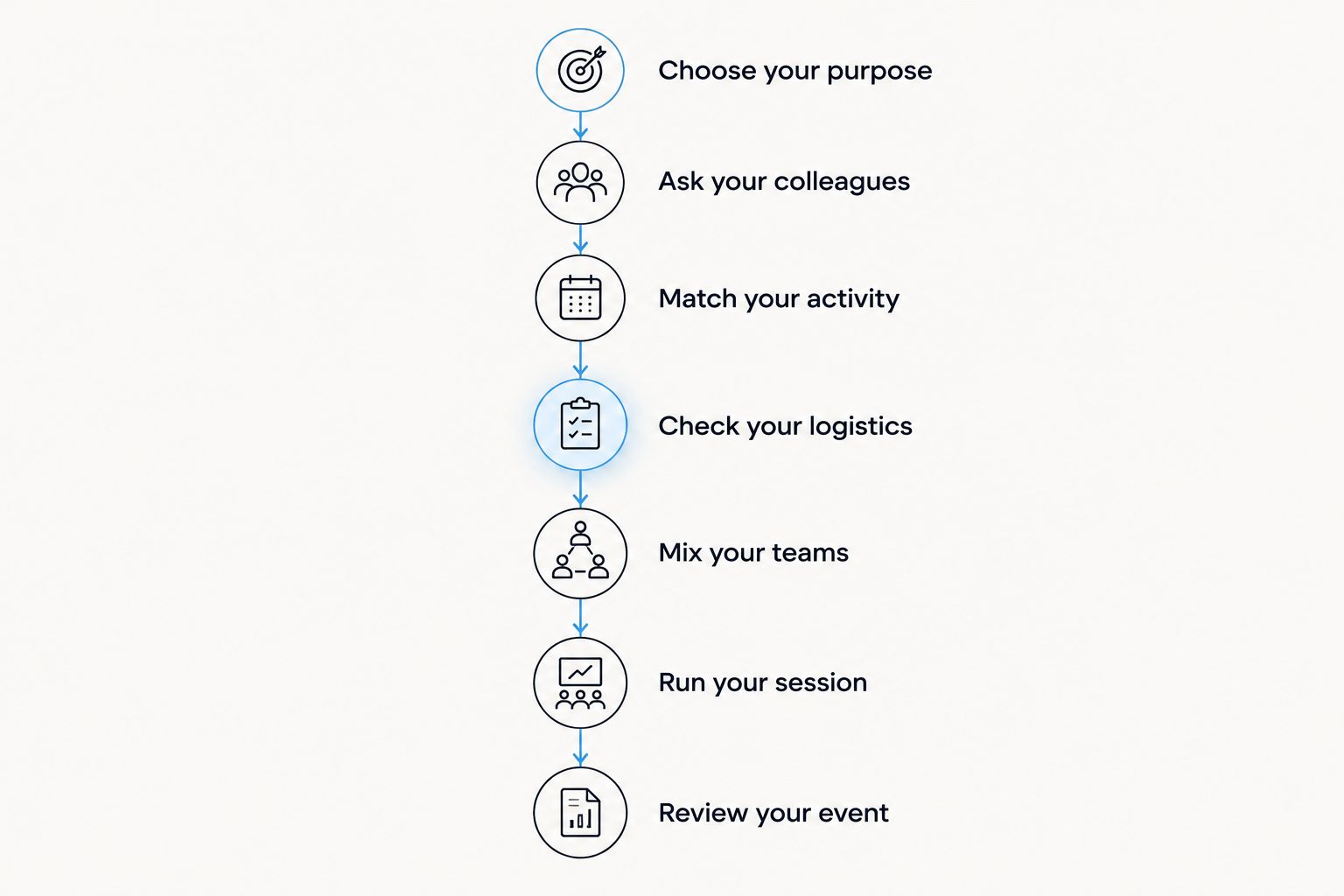
Mix your teams
Create a provisional team list in a spreadsheet, then check it against the purpose of the event. For cross-team introductions, mix colleagues who do not normally share an account. Avoid simply recreating your existing departments under different team names.
Make the format welcoming without treating everyone as interchangeable. New starters should not be left to find a team after everyone else has paired up. Managers can join the games without becoming judges of colleagues' confidence, sporting ability or personality.
Try 4-person groups as a planning example for a small office exercise, then adapt the structure to the activity and confirmed venue arrangements. That number is not a claim about batting cage capacity. For games with different participation formats, organise turn-taking rather than assuming the whole group plays simultaneously.
Keep the grouping rules simple:
- Mix account teams and disciplines where useful.
- Include new starters in the initial plan.
- Avoid grouping solely by seniority.
- Allow people to change roles or sit out.
- Check that nobody is left without a group.
Run your session
Open with a brief explanation, not a speech about productivity. Tell colleagues what is happening, how turns work and whether you are keeping scores. Follow the venue's instructions for equipment and safety rather than inventing your own rules.
For an agency social, keep work updates out of the activity window. Leave campaign reporting, client feedback and utilisation discussions for another meeting. If someone tries to turn the evening into an impromptu project review, bring the conversation back to the social plan.
Allow a suggested 10-minute welcome in your run sheet, followed by the agreed activity time. Keep transitions short and let people enjoy the games. If you organise a score sheet, make it optional and avoid prizes or penalties tied to drinking or embarrassing colleagues.
On the day, focus on these practical jobs:
- Explain the format and participation choices.
- Follow staff instructions for each activity.
- Keep turn-taking clear.
- Make competition optional.
- Protect the agreed finish time.
Review your event
Send a brief follow-up within a suggested 2 working days, while the details are easy to recall. Ask what people enjoyed, what made participation difficult and what they would change. Keep the questions about the event, not about individual colleagues.
Judge your 2026 event against its original purpose. For an introduction-focused session, ask whether people spent time with colleagues outside their usual group. For a work exercise, ask whether the team identified a usable change to its process.
Do not turn a positive response into a claim that the event increased revenue, retention or campaign performance. Those outcomes need separate evidence. A successful social can simply be an enjoyable, well-organised break that people want to repeat.
Close the loop with concrete actions:
- Collect feedback privately.
- Compare responses with the original purpose.
- Record practical problems for the next organiser.
- Keep useful grouping or timing choices.
- Share what you will change next time.
Compare activities for marketing agency teams
Choose social games for a break together; choose a work exercise for a specific process problem. The options below are recommendations by purpose, not a ranking of venues. Each has a useful role and a limitation.
| Option | Best for | Main advantage | Key limitation |
|---|---|---|---|
| 1stbase baseball and social games | Southampton agency teams wanting an off-site social | Interactive baseball, shuffleboard, ping-pong and foosball give the outing a shared activity | Physical participation needs checking; social play does not directly address work processes |
| Office creative challenge | Teams wanting to practise collaborative idea development | You can build the exercise around a fictional brief | It feels like more work if your aim is a break |
| Brief-and-handover exercise | Teams examining how work passes between disciplines | You can focus on the information each role needs | It needs careful facilitation to avoid blame |
| Conversation-led team gathering | Colleagues who prefer talking to competitive play | You can leave the agenda informal | Existing friendship groups can stay separate without thoughtful introductions |
| Remote shared activity | Distributed colleagues who cannot meet in Southampton | Participants can join from separate locations | It adds screen time and depends on suitable technology |
For a baseball-and-games outing, 1stbase team building fits the social brief. For a difficult account handover, start with the handover itself. Do not ask a venue to solve a problem that belongs in your working process.
Plan your Southampton team outing
Explore an interactive baseball batting cage and social games for your agency group.
Common mistakes marketing agencies make
Turning the social into another pitch
A fictional client brief suits a work-focused exercise, but it undermines a promised break. If you want creative collaboration, say so in the invitation. If you want an agency social, leave decks, presentations and feedback rounds behind.
Rebuilding the account-team silos
Keeping every project group together is convenient, but it does not serve an introduction-focused event. Mix colleagues deliberately and explain the reason without making it sound like a networking assignment. Leave room for natural conversations rather than prescribing every interaction.
Treating competitiveness as a job skill
A good copywriter does not need to win at foosball, and a confident account director does not need to lead every game. Keep game results separate from professional ability. Never use the outing to assess who has the right attitude for promotion or client work.
Forgetting the colleagues who cannot stay late
An open-ended evening gives people no clear point to leave. Set an official finish and describe any later socialising as optional. For your 2026 calendar, check the timing before choosing a date, rather than asking colleagues to rearrange commitments after the plan is fixed.
Turning colleagues into content
Do not assume everyone wants their games night posted on the agency's social channels. Ask before taking or publishing identifiable photos, and make declining easy. The event is for the team; creating promotional content should not become an unannounced extra task.
FAQ
What's the best team building for marketing agencies?
The best format is the one that matches your purpose and colleagues' participation needs. Choose social games for an off-site break, or a focused work exercise when you want to improve a briefing or handover process.
Is 1stbase suitable for a marketing agency team outing?
1stbase suits marketing agency teams looking for baseball and social games in Southampton city centre. It offers an interactive baseball batting cage, shuffleboard, ping-pong and foosball; confirm your group's arrangements and participation requirements directly.
Should an agency team-building event include client work?
Include client-style work only when you have clearly described the session as a work-focused exercise. For a social outing, leave campaign reporting, pitches and project reviews out of the activity window.
How long should a marketing agency team social last?
A proposed 90-minute activity window is a useful starting point for a compact agency social, not a venue session guarantee. Adjust the plan to the activity, travel and confirmed arrangements, and give colleagues a clear finish time.
How do we include colleagues who don't want to compete?
Make scoring optional and offer participation choices without putting anyone on the spot. Ask privately about requirements beforehand and confirm that the chosen format supports them.
Is an activity bar better than an office workshop?
An activity bar is better suited to an off-site social, while an office workshop is better suited to examining a working process. Neither format is the right choice for every agency event.
How do we know whether the event worked?
Compare feedback with the purpose you set before the event. Ask about enjoyment, participation and contact outside usual project groups; do not claim business results without separate evidence.
One last thing
Give someone other than the usual agency social organiser ownership of one small decision. Ask a willing colleague to choose the team names, collect activity preferences or manage the optional score sheet. Keep the responsibility bounded so organising does not become another unpaid-feeling project.
For your next event, save the final run sheet and the practical feedback together. That gives the next organiser something useful to work from—not just a folder of photos and a message saying everyone had fun.