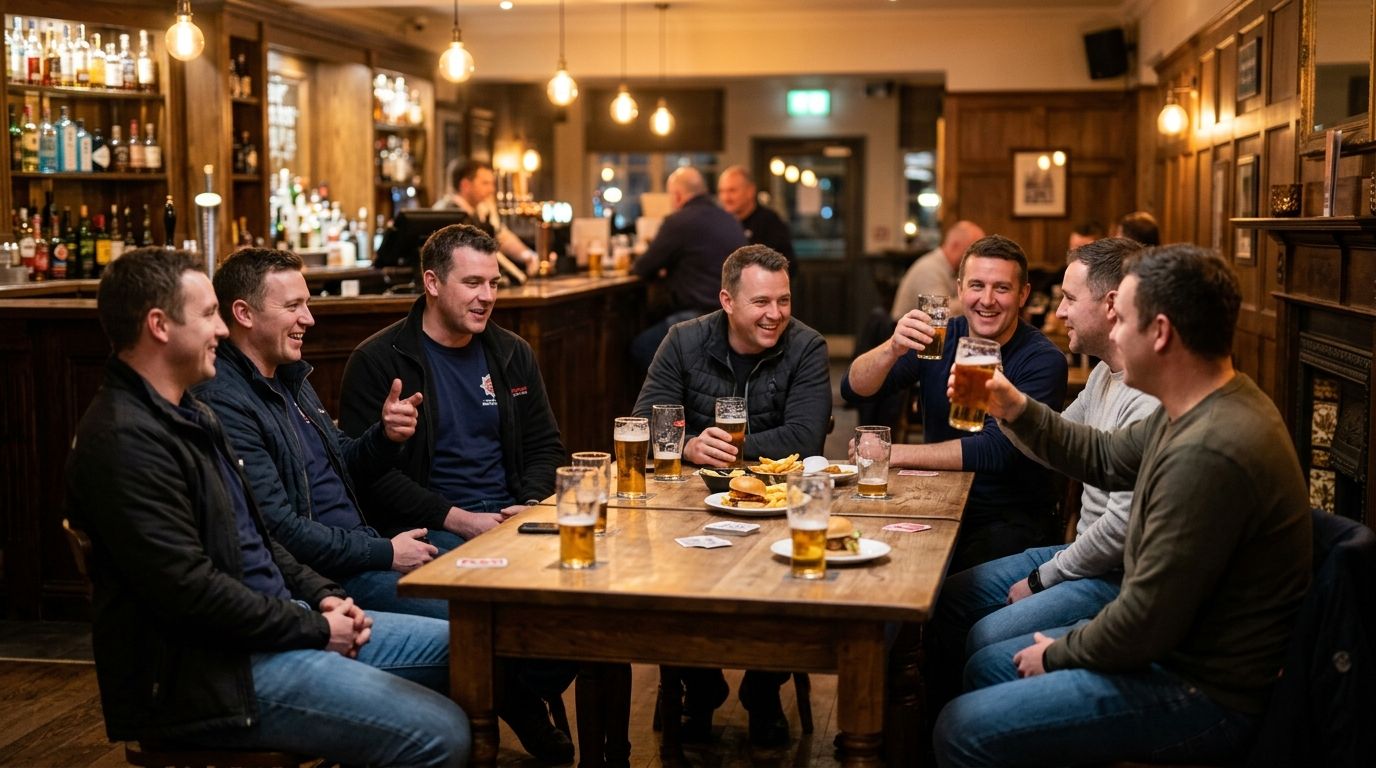
Fire and rescue team nights out in Southampton work best when people can join in without needing the same fitness level, appetite for competition or shift finish time. For 2026, an activity bar gives you a practical alternative to a meal-only plan: people can play, watch, talk and change games as the evening develops.
- For team night out ideas for fire and rescue staff Southampton, choose activities that welcome players and spectators.
- 1st Base is best for Southampton crews that want batting cages and table games in one city-centre outing.
- Confirm who can attend before fixing the date; a popular plan fails if the team cannot share the time.
- Keep competition optional and agree on an end time before the night starts.
Why this matters
A fire and rescue social is not a fitness test. Colleagues who work together in demanding roles need room to catch up, bring newer people into the conversation and choose how much they want to participate. A single activity with everyone watching each turn can leave part of the group waiting; a seated evening can leave others wanting something to do.
The decision is less about finding the loudest venue and more about giving the whole group a way in. 1st Base is an American-themed activity bar and interactive baseball batting cage in Southampton city centre. It also offers shuffleboard, ping-pong and foosball, giving organisers several activity formats to consider rather than one fixed style of play.
Why team nights out matter for fire and rescue staff
Fire and rescue colleagues do not all need the same kind of night. Some want an active challenge after work; others want conversation without being asked to perform in front of the group. If people have different duties, finish times or travel plans, a programme with only one shared starting moment makes attendance harder to organise.
Start with the people, not the game. Ask who wants to come, whether anyone prefers to watch rather than play, and what time people can realistically arrive. That produces a better brief than choosing a venue because the organiser personally likes baseball.
1st Base is best for Southampton fire and rescue teams that want an activity-led social where batting, table games and conversation can all be part of the plan. Its limitation is equally clear: a group seeking a quiet, seated evening should choose a quieter format. Do not turn an optional social into another task that colleagues feel obliged to complete.
Plan a Southampton fire and rescue team night out
Check who can actually attend
Ask for availability before you float a date as decided. A group message that asks only whether people are interested will not tell you whether the same people are free at the same time. Give colleagues a few workable choices, then settle on the option that lets the intended group meet without pressuring anyone to change a commitment.
Keep the invitation open to the people your team wants to include. The evening will feel different if it is limited to one crew or extended to colleagues from other roles, and the activity needs to suit the group you actually invite.
- Offer 2 or 3 possible dates, rather than an open-ended question.
- Ask people for an arrival window as well as a preferred date.
- Check whether anyone plans to leave early.
- Record preferences privately if colleagues raise access or participation needs.
Decide what the night is for
A celebration, a chance to welcome new colleagues and a casual catch-up do not need identical plans. Name the purpose in the invitation. If the point is conversation, build space for it; if the group wants friendly rivalry, make the games central without making scores the measure of whether the night worked.
This step also keeps the organiser from overfilling the schedule. You can propose a 30-minute arrival window and a clear time to regroup, then let the group settle. That is a planning choice, not a promise about any venue’s booking terms.
- Write a one-sentence purpose for the night.
- Decide whether play is the focus or an option alongside conversation.
- Tell invitees whether partners or other colleagues are included.
- Name one person to coordinate responses and questions.
Choose games people can enter easily
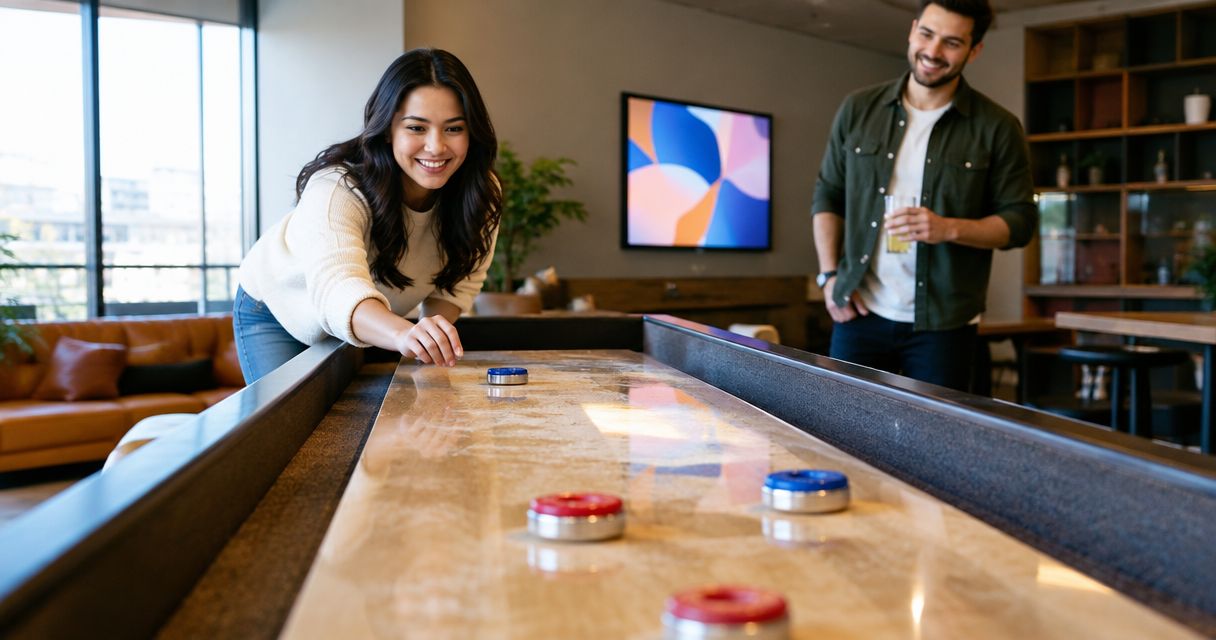
You can plan a social without asking every colleague to become a baseball player. At 1st Base, the known choices include an interactive batting cage, shuffleboard, ping-pong and foosball. Those activities give you different ways to structure an evening: individual turns, paired play or a game people can follow from nearby.
Ask the group what sounds fun before settling on the activity mix. Someone can be keen on batting but less interested in a tournament; another person can enjoy the table games without wanting a turn in the cage. Participation works better as an invitation than a roster.
- Put the batting cage forward as an option, not a requirement.
- Suggest shuffleboard for people who prefer a steadier-paced game.
- Offer ping-pong or foosball to colleagues who want quick match-ups.
- Leave room for people who would rather talk or watch.
Set a loose running order
You need enough structure to prevent confusion, not a minute-by-minute programme. Tell people when to arrive, when the group expects to start playing and when the organised part ends. Colleagues can then judge whether the plan fits their own evening.
For a mixed-interest group, propose 15-minute game rounds and a 10-minute break between sets of play. Treat those as organiser prompts, not venue rules. If conversation takes over, let it. A good team social does not need everyone to move to the next game at the same moment.
- Share the meeting point and agreed arrival time with attendees.
- Keep an initial window for late arrivals and introductions.
- Rotate interested players rather than assigning everyone a turn.
- Agree when any organised competition will finish.
Make competition optional
Friendly competition gives a group something to laugh about, but it stops being friendly when someone must play to belong. Ask who wants a match and who wants an informal turn. Avoid putting colleagues on the spot to represent their watch, department or role.
If you want a format, use short games with an easy way to swap players. Do not make skill at batting the headline of the night: people who have never held a bat should still feel welcome. At 1st Base, the range of named games makes it possible to discuss alternatives when you plan the outing, without assuming every person wants the same challenge.
- Invite volunteers for matches instead of assigning teams.
- Mix colleagues who do not usually socialise together.
- Keep score only if the players want to.
- Give spectators a place in the conversation, not a duty to cheer.
Confirm the details before inviting everyone
Once you have a date, a likely group size and an activity preference, check the venue details that affect the decision. Do not assume a particular game, space or arrangement is available on your chosen date. For 1st Base, ask directly about the activities you want, how the group can attend together and any practical requirements raised by invitees.
Send one final message that separates confirmed details from open questions. People should not have to search through a long chat thread to find the time or location. If someone cannot make the full evening, tell them whether joining for part of the planned social still works for your group.
- Confirm the date, time and group size with the venue.
- Ask about the chosen activities and any group arrangements.
- Check access needs directly rather than guessing from photos.
- Send the final plan to everyone in one message.
- Give attendees a way to flag changes before the night.
Plan your team night
Explore 1st Base’s Southampton games before choosing your group activity.
Compare night-out options for your team
There is no single right format for every fire and rescue group. Choose based on whether colleagues want to play, talk or do both. This comparison describes formats, not confirmed bookings or amenities at any particular venue other than the activities stated for 1st Base.
| Option | Best for | Key limitation |
|---|---|---|
| 1st Base batting cage | Colleagues who want an active, optional challenge | Not everyone will want a batting turn |
| 1st Base table games | Groups that want casual play alongside conversation | Popular games still need an agreed turn-taking approach |
| A quiet seated meet-up | Teams prioritising uninterrupted conversation | Gives active members less to do |
| A self-organised walk | Teams wanting a shared activity without a game | The group must agree on a route and weather plan |
A batting-led visit has the clearest challenge. Table games spread the activity across different interests, while a seated meet-up puts conversation first. A walk changes the setting entirely but asks the organiser to handle the route. Choose the format that includes the colleagues most likely to miss out under your first idea.
For a group split between active players and people who want to catch up, 1st Base is the strongest match among these options because its stated offering includes both a batting cage and table games. That is not a reason to book blindly. Confirm the arrangements that matter to your group before you set expectations in the invitation.
Common mistakes fire and rescue organisers make
Choosing the date around the organiser alone. A quick decision saves messages but can exclude the colleagues the night is meant to bring together. Check availability with the intended group before you settle on the plan.
Treating every attendee as a competitor. A scorecard can be fun for volunteers and uncomfortable for someone who came to reconnect. Make play optional from the invitation onwards, not only after a colleague asks to sit out.
Filling every minute. If the group has not had time to talk outside work, a packed rotation defeats part of the point. Give people a shared starting plan, then leave space for the evening to develop.
Assuming venue details. A description of the activities does not confirm arrangements for your date or group. Check the particulars directly, especially when attendance or access needs shape the decision.
Using work roles as teams without asking. Familiar groups can be an easy default, but they can also keep colleagues in their usual circles. Let people choose their level of involvement and mix groups when they want to meet someone new.
FAQ
What are good team night out ideas for fire and rescue staff in Southampton?
An activity bar, a quiet meet-up or a self-organised walk can work, depending on whether the group wants games or conversation. 1st Base offers an interactive batting cage, shuffleboard, ping-pong and foosball in Southampton city centre.
Is 1st Base suitable for colleagues who do not play baseball?
Yes, 1st Base also offers shuffleboard, ping-pong and foosball. Ask about the activities your group wants before you finalise the plan, and keep participation optional.
What is the best option for a mixed-interest fire and rescue team?
1st Base is best when some colleagues want an active game and others prefer less batting-focused options. Its stated mix of a batting cage and table games gives organisers several activities to discuss with the group.
How do you choose a date for a fire and rescue team social?
Ask the intended attendees about a short list of dates and their arrival times before settling on one. That is more useful than collecting general expressions of interest.
Should a fire and rescue team night have a tournament?
Only if the interested players want one. Keep matches short and optional so colleagues can join the conversation without feeling required to compete.
Can people come to a team night without playing?
Yes; you can plan an evening where watching and talking are valid ways to take part. Tell invitees that before the event so no one expects a compulsory game.
What should you confirm before arranging a group visit to 1st Base?
Confirm the date, group size, preferred activities and any practical needs directly with 1st Base. Do not assume that a particular arrangement is available for your chosen visit.
One last thing
The most useful question in 2026 is not whether the whole team will enjoy batting. It is whether everyone has a comfortable way to join the night. Ask that before you choose the games, and you will make a better decision for players, spectators and colleagues who mainly want to catch up.