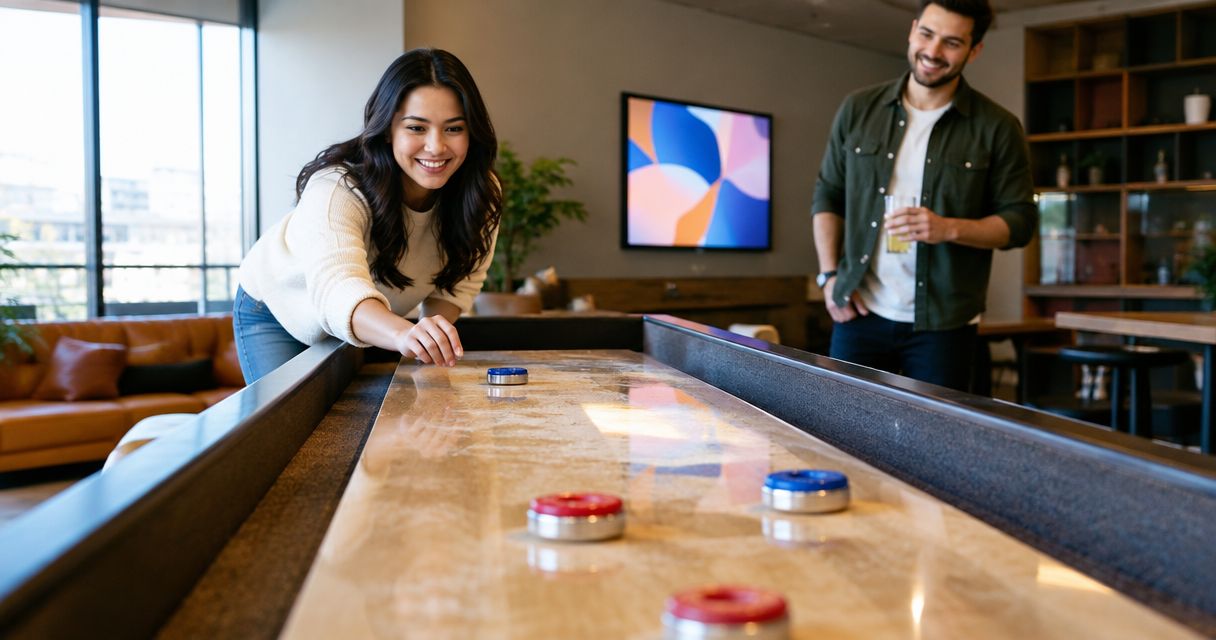
Getting more out of a night at 1st Base comes down to three things: book a slot that lets your group rotate through every game, warm up on the batting cage before the line builds, and match the pace of play to who's actually in your group. Skip the plan and you'll spend half the visit standing around watching two people hog the cage.
- Book a slot that guarantees a full rotation through the batting cage, shuffleboard, ping-pong and foosball at 1st Base.
- Warm up on the batting cage first — it's the slowest-turning game and the one most people need practice swings on.
- Groups mixing confident players and total beginners get more out of the visit when someone sets a simple rotation order upfront.
- 1st Base in Southampton city centre works for stag/hen dos, birthdays, corporate nights and family outings because four games run under one roof.
- Ages 8 to 80 are welcomed, so plan activity order around the widest range of ability in your group, not the loudest player.
Why this matters
Most groups treat an activity bar like a pub with extra furniture: they pick one game, camp on it, and never touch the other three. That's the single biggest reason visits feel shorter than they should in 2026 — not the length of the booking, but how badly it gets used.
A activity bar experience that actually works is one where every person in the group gets hands-on time on more than one game before the visit's over. That's a scheduling and rotation problem, not a luck problem, and it's fixable before you even arrive at 1st Base.
How to maximize your activity bar experience
Here's the order that gets the most out of a visit, tested against how groups actually move through the venue:
- Book with your full headcount confirmed. A group of 6 needs a different rotation plan than a group of 16 — sort numbers before you sort the games.
- Hit the batting cage first, while everyone's fresh. It's the game with the steepest learning curve, so early swings (even bad ones) pay off later.
- Rotate before energy dips, not after. The group that stays on shuffleboard for the whole booking is the group that leaves saying "we didn't get to the cage."
- Split into pairs or small teams for foosball and ping-pong. Both games move fast in doubles and stall in big crowds standing around one table.
- Save one game as the finale. Groups that end on a head-to-head match (foosball or shuffleboard tend to work best) leave with a clear "who won" story — better for photos, better for the group chat.
The four games, compared
| Activity | Best for | Skill curve | Quick tip |
|---|---|---|---|
| Baseball batting cage | Stag/hen dos, corporate teams, first-timers wanting a "wow" moment | Steepest — takes a few swings to find your timing | Go first in the rotation, before the line builds |
| Shuffleboard | Mixed-age groups, birthdays, casual dates | Low — playable in the first turn | Great as the closing game for a final head-to-head |
| Ping-pong | Competitive friend groups, quick 1-on-1 breaks | Moderate | Best in doubles when the group is 6+ |
| Foosball | Corporate socials, small teams, quick tournaments | Low to moderate | Runs fastest in singles knockout format |
Each game has a genuine trade-off worth knowing before you plan the visit. The batting cage delivers the biggest "wow" moment but takes longer per turn, so it's the one game you don't want to leave until last. Shuffleboard is the easiest entry point for anyone who's never picked up a game controller or a bat in their life, but it can feel slow for a group that wants constant action. Ping-pong and foosball both turn over quickly, which makes them ideal for filling gaps while other pairs finish the batting cage — but with a big group, one table becomes a bottleneck fast.
Ready to book your group in?
Lock in a slot that fits your headcount before you plan the rotation.
Why your experience varies
No two visits to an activity bar play out the same way. The factors that decide whether your group leaves buzzing or leaves saying "we should've stayed longer on the cage" are usually predictable:
- Group size — a party of 6 rotates through all four games easily; a party of 20 needs a designated rotation order or it splits into cliques around one game.
- Skill mix — a batting cage first-timer next to someone who's swung a bat before needs a beginner run before the group starts scoring seriously.
- Occasion type — stag and hen dos push for competitive scoring and a finale game; birthdays and family outings usually want more casual, rotate-everyone-through play.
- Time of arrival — coming in as one of the first groups of the evening means shorter waits between turns on the batting cage.
- Warm-up habits — groups that spend the first few minutes on practice swings rather than scored rounds get more confident play later in the visit.
- Whether someone's "running" the visit — every group that has one person calling the rotation order gets through more games than a group that free-forms it.
If you're bringing a first-timer to the batting cage, give them a few unscored swings before anyone starts keeping count. It changes how the rest of the visit goes.
How long should you book for a group activity bar visit?
The right length depends on your headcount and how many games you want everyone to touch — a small group of 4-6 can realistically rotate through all four activities in one booking, while a larger group of 15+ may only get solid time on two or three unless the rotation is planned in advance. Booking with your full group size confirmed lets the venue set expectations on timing before you arrive.
Do you need baseball experience for the batting cage?
No — the batting cage at 1st Base is built for players from complete beginners through to confident hitters, with ages 8 to 80 welcomed on the same visit. First-timers should expect a few unscored practice swings before jumping into a proper round.
What's the best group size for an activity bar visit?
Smaller groups get through more games per visit, but 1st Base handles everything from a couple on a date to a full stag or hen party. The trade-off is rotation planning: bigger groups need someone assigning turn order, or the visit collapses into whoever grabbed a game first.
FAQ
How do you maximize an activity bar experience with a big group?
Split into pairs or small teams before you arrive, hit the batting cage first while energy's high, and rotate every game before anyone camps on one for the whole visit. A designated rotation order is the single biggest difference between a group that plays everything and one that plays one game all night.
Is a batting cage suitable for beginners?
Yes — the batting cage at 1st Base welcomes ages 8 to 80 and is built around a learning curve, so first-timers should take a few unscored practice swings before playing a scored round.
What games does 1st Base have?
1st Base runs four activities under one roof in Southampton city centre: an interactive baseball batting cage, shuffleboard, ping-pong and foosball.
What's the best activity to play first at an activity bar?
Start with the batting cage. It has the steepest skill curve of the four games, so early practice swings pay off, and it turns over slower than the other games so it's best tackled before a queue forms.
Can you book 1st Base for a corporate event?
Yes — corporate groups regularly book 1st Base for team nights, using foosball and shuffleboard for quick tournament-style rounds between rotations on the batting cage.
Is 1st Base good for a stag or hen do?
Yes — stag and hen groups typically build a rotation ending on a head-to-head shuffleboard or foosball match for a clear finale and better photos.
Do kids play at 1st Base too?
Yes — the age range welcomed spans 8 to 80, so family outings and birthday parties with mixed ages can all rotate through the same four games.
How many games can a group realistically play in one visit?
Small groups of 4-6 can usually rotate through all four games in one booking; larger groups should plan a rotation order in advance to make sure everyone touches the batting cage, not just the quicker games.
One last thing
The groups that leave 1st Base talking about the visit for weeks aren't the ones who scored highest on shuffleboard — they're the ones who planned a finale. Ending the rotation on a head-to-head match, batting cage or shuffleboard, gives the whole group one shared moment to remember instead of four separate games nobody compares notes on. Plan that one detail before you book and 2026 group nights at 1st Base go from "fun" to "we're doing that again."