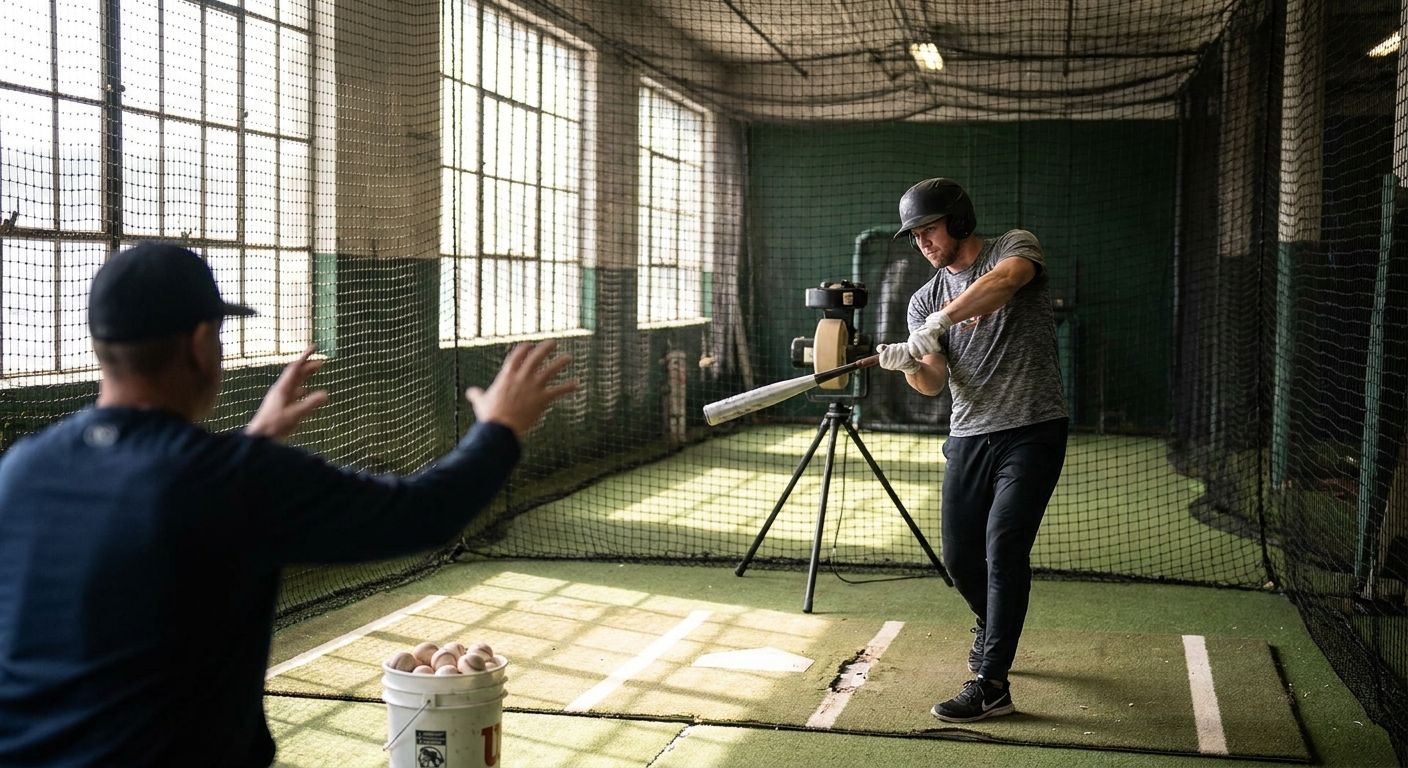
Nail these batting swing tips at 1st Base and you'll walk out of the cage swinging harder, straighter, and a lot more confident than when you walked in.
- A relaxed grip and a level swing path fix 80% of first-timer mistakes at the batting cage.
- 1st Base in Southampton city centre sets pitch speed per lane, so beginners can dial in form before power.
- Verdict: practise the 5-step swing sequence below for two sessions before you judge your power numbers.
- Stance width, hip rotation and follow-through matter more than bat weight for most casual hitters in 2026.
Why this matters
A weak swing at the cage almost always comes down to three things: grip, stance, and timing. Get those wrong and you'll spend your whole session topping the ball or swinging through air. Get them right and even someone who hasn't held a bat since school sport will start connecting solidly by their third or fourth round.
This matters more at an indoor batting cage in 2026 than it did a decade ago, because most cages now run mixed-speed lanes for stag dos, birthday parties, and corporate nights where half the group has never swung a bat. The technique below works whether you're facing a slow-pitch lane or cranking the speed up for a competitive round with mates.
What you'll need
- A batting cage with adjustable pitch speed (most 1st Base lanes let you scale up as you improve)
- Trainers with grip, not smooth-soled shoes
- A bat sized to your reach, not your ego, most cages provide a house bat if you don't bring one
- 15-20 minutes uninterrupted, rushing between turns kills your form
- A willingness to whiff a few times before it clicks
If you've never stepped into a cage before, read through how to prepare for your first batting cage session in Southampton before you book, it covers what to wear and how the lanes are set up.
The steps
1. Set your stance shoulder-width apart
Stand with your feet roughly shoulder-width apart, knees slightly bent, weight balanced on the balls of your feet. Too narrow and you'll lose power, too wide and you can't rotate your hips. This is the single most common fix that instantly improves a shaky first round in 2026's newer batting cages, which pitch faster than older analogue machines.
Common mistake: standing flat-footed with locked knees. It looks confident but kills your rotation before the ball even arrives.
2. Grip the bat like you're holding a bird
Hold the bat firmly enough that it won't slip, loosely enough that your wrists stay flexible. A death grip tightens your forearms and slows your bat speed measurably, tension is the enemy of a fast swing. Line up your knuckles roughly in the middle, not perfectly aligned, that's a myth that actually restricts wrist snap.
Common mistake: gripping the bat like a hammer. Your hands should feel relaxed until the split second of contact.
3. Load your weight back before the pitch
As the pitching arm or machine starts its motion, shift your weight slightly onto your back foot. This "load" is what generates power on the forward swing, without it you're pushing the bat instead of driving it. Watch the release point, not the machine housing, timing starts there.
Common mistake: standing still through the whole pitch and only reacting once the ball is halfway to the plate. By then it's too late to load properly.
4. Rotate your hips before your hands
This is the step that separates a solid line drive from a weak dribble. Your hips should start turning toward the pitch a fraction of a second before your hands bring the bat through. Hands-first swings look fast but generate far less power because they skip the body's biggest muscle group.
Common mistake: "arm-only" swinging, where the bat drags because the hips never open up. You'll feel this as soreness in your forearms rather than your core the next day.
5. Keep your eyes on the ball through contact
Sounds obvious, gets ignored constantly. Most beginners pull their head up to see where the ball's going before the bat has actually made contact. Keep your chin tucked toward your front shoulder and your eyes fixed on the ball until you feel the hit.
Common mistake: peeking early. It causes you to pull off the pitch path and miss solid contact by inches.
6. Follow through fully, don't stop at contact
A swing that stops dead at the ball loses power and often means you were already decelerating before impact. Let the bat continue its arc across your body and finish over your opposite shoulder. A full follow-through is a good sign your swing was committed, not tentative.
Common mistake: "checking" the swing halfway, usually out of nerves about missing. Commit to the full arc even on your first few tries; a full miss with good mechanics teaches you more than a half-swing that connects.
For structured beginner drills built around exactly this sequence, baseball batting cages for beginners in Southampton breaks down pitch speeds you should start on before ramping up.
Troubleshooting
- You keep missing high pitches: you're likely dropping your back shoulder too early. Keep your shoulders level through the load phase.
- The ball keeps going foul left (for right-handers): you're rotating your hips too fast relative to your hands, slow the hip turn down slightly and let your hands catch up.
- Your bat feels heavy after a few swings: you're gripping too tight the whole time, not just at contact. Relax your hands between pitches.
- You're topping the ball into the ground: your swing path is coming down on top of the ball instead of level. Focus on swinging "through" the ball's height, not down at it.
- You flinch or step back from faster pitches: this is timing anxiety, not a mechanics problem. Drop the machine speed down a notch for a few rounds and rebuild confidence before pushing pace again.
- Your hits sound weak even when they connect: check your follow-through, a swing that dies at contact transfers less energy even on solid hits.
Book your batting cage session
Practise these swing tips on a real lane in Southampton city centre.
Tools and resources
- An indoor cage with adjustable pitch speed, so you can build mechanics before chasing power
- A phone recording your swing from the side, seeing your own hip rotation lag is more useful than any coaching tip
- A group booking if you're bringing friends, competitive reps speed up learning faster than solo practice
- The 1st Base batting cage in Southampton city centre, which pairs adjustable lanes with a full activity bar for between-round breaks
What to do next
Once your swing feels consistent at moderate speed, the next move is repetition under pressure, not more theory. Book a second session within a week or two while the mechanics are still fresh, muscle memory fades fast without follow-up reps. If you're hooked, look at joining a regular group session to keep the swing sharp long-term.
FAQ
What are the best batting swing tips for beginners?
Start with a shoulder-width stance, a relaxed grip, and hip rotation before your hands move. These three batting swing tips fix most of the weak contact beginners get in their first cage session in 2026.
How long does it take to improve your batting swing?
Most people see a noticeable improvement within two to three sessions of focused practice. Consistency across sessions matters more than the length of any single visit.
Is a heavier bat better for a stronger swing?
No, a bat that's too heavy slows your swing speed and often does more harm than good. A bat sized to your reach and comfort generates more consistent power than a heavier one you can't control.
What pitch speed should beginners start on at an indoor batting cage?
Beginners should start on the slowest available setting and only increase speed once contact feels consistent. Most cages, including 1st Base in Southampton, let you adjust speed per lane so groups of mixed skill can practise together.
Why do I keep missing the ball at the batting cage?
Missed contact is usually a timing issue tied to loading your weight too late or pulling your head up early. Slowing the pitch speed down for a few rounds while you rebuild the swing sequence fixes this faster than pushing through at full speed.
Do I need my own bat for an indoor batting cage session?
No, most indoor batting cages provide house bats sized for different reaches. Bringing your own is optional and only matters once you've settled on a weight and length that feels right.
How much does an indoor batting cage session cost in 2026?
Pricing varies by venue and group size, so check current rates directly with the batting cage you're booking. Group and party bookings often work out cheaper per person than solo sessions.
Can kids use the same batting swing tips as adults?
Yes, the core mechanics, stance, grip, hip rotation, follow-through, apply at any age. Pitch speed and bat size are the only variables that should change for younger hitters.
One last thing
The fastest swing improvement most people see doesn't come from more power, it comes from slowing the pitch speed down a notch and rebuilding contact consistency first. Hitters who chase max speed too early groove bad habits that take twice as long to unlearn once the fun of the fast lane wears off.