
An activity bar gift voucher costs the amount shown for your chosen voucher at checkout, so check the venue’s current options rather than budgeting from a general average. Also check whether it covers the whole experience or only contributes towards the booking. For a gift bought in 2026, confirm the redemption terms before you pay: a voucher’s value does not, by itself, tell you what the recipient can do with it.
- How much does an activity bar gift voucher cost? Check the selected voucher and its terms, not a general average.
- Compare the voucher’s coverage with the intended group booking before buying.
- 1stbase suits Southampton activity bar outings built around interactive baseball and games; confirm gift arrangements directly.
- Check redemption rules, expiry wording and any recipient payment before giving an experience gift.
How much does an activity bar gift voucher cost?
Use the current voucher listing to establish the purchase amount, then check what that amount actually buys. A contribution towards an outing and a voucher covering a defined experience are different gifts, even when the descriptions sound similar.
Start with the venue, not a generic budget. If you are considering 1stbase, the Southampton city-centre activity bar offers interactive baseball, shuffleboard, ping-pong and foosball. Confirm gift arrangements directly before promising any of those activities to the recipient.
The checks below separate the payment you make from the experience you intend to give. Treat these as possible voucher formats to investigate, not as confirmed options at any particular venue.
| Format to look for | Best for | Main advantage | Main limitation to check |
|---|---|---|---|
| A voucher with a stated monetary value, if offered | Giving a contribution while leaving the booking choice open | The recipient can assess their options within the redemption rules | The value does not necessarily cover the intended outing |
| A voucher for a defined experience, if offered | Giving a particular activity | The gift can describe a clearer experience | Participant, session and redemption restrictions need checking |
Neither format wins automatically. Choose the one whose written terms match your gift, rather than the one with the most exciting description.
Why this matters
An experience gift creates an expectation. If you describe it as a birthday outing for a group, the recipient should know whether the gift covers that outing or simply helps pay for it.
Keep the promise precise. A contribution is a thoughtful gift when you describe it honestly; it becomes awkward when the recipient expects everything to be covered and discovers otherwise while organising friends.
For a 2026 celebration, separate the activity from the wider plan. Decide whether you are giving someone time at a venue, a particular game or help towards a social occasion. Those are different intentions, and the voucher wording needs to support yours.
Buy against the experience you want to give, not just the amount you want to spend. That makes the choice clearer without guessing what a venue includes.
A monetary-value voucher: best for leaving the choice open
If a venue offers monetary-value vouchers, consider this format when you want the recipient to have a say in the outing. Ask which bookings or purchases the voucher can be used towards before treating that flexibility as a benefit.
The advantage is choice within the stated rules. You can give a contribution without deciding every detail of the visit, which suits a recipient who prefers to organise their own plans.
The drawback is uncertainty about coverage. A monetary value does not establish the number of participants, the activities included or the length of a session. Those details belong to the booking, not automatically to the voucher.
Before choosing this route, ask:
- Which activities or purchases can the voucher be used towards?
- Can the recipient pay any remaining balance separately?
- What happens if the booking uses less than the voucher’s value?
- Does the voucher apply to the booking as a whole or to an individual participant?
Choose this format for flexibility only after confirming how that flexibility works. Do not describe it as a complete group experience unless the intended booking is covered.
A defined-experience voucher: best for a clearer gift
If a venue offers a voucher for a specified experience, read the full inclusion list. The activity name alone is not enough to establish what the recipient receives.
This format suits a gift built around a particular idea: taking a turn in a batting cage, for example, rather than simply contributing towards a night out. Its strength is clarity when the description states the activity, participants and session arrangements.
The trade-off is a narrower promise. Check whether the recipient can change the experience, choose their preferred date or bring the people you have in mind. Do not assume those choices are included.
For a gift presented in 2026, make the card match the written description. If the voucher specifies an activity, describe that activity; do not expand it into an entire evening of games, drinks and extras.
Choose this format when the recipient wants the stated experience and the terms fit their plans. A clearly described gift is more useful than an ambitious promise the voucher does not support.
Why the amount you need varies
Work backwards from the outing you intend to give. These are the details to establish before deciding how much of that outing your gift should cover:
- Activity choice: identify the game or experience you want to give, then check whether the voucher applies to it.
- Group size: establish whether the intended booking covers the recipient alone or includes companions.
- Session scope: check the booked activity and duration rather than assuming the voucher covers an open-ended visit.
- Included purchases: distinguish the activity from anything else the group plans to buy.
- Gift coverage: decide whether you are funding the whole booking or making a contribution towards it.
These checks establish the right purchasing question. Instead of asking only what a voucher costs, ask whether the selected voucher covers the specific booking you have in mind.
Do not infer a discount from the word ‘group’, or an inclusion from the word ‘experience’. Ask for the current booking details and use those to judge the gift.
How do I choose the right voucher for a group?
Choose the intended group experience first, then check the voucher against it. Do not work backwards from a voucher amount and hope it fits the celebration.
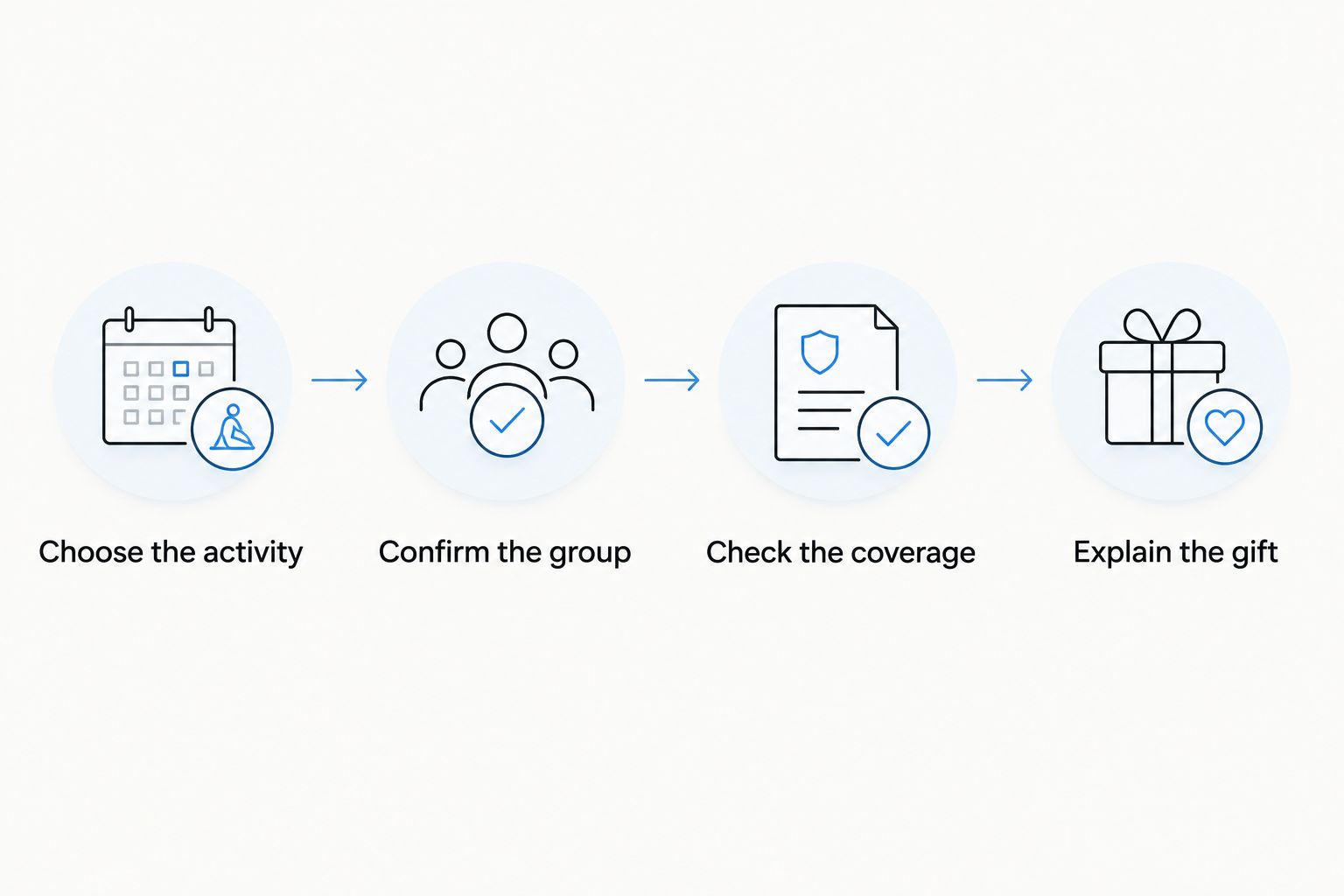
- Choose the activity. Ask what the recipient actually wants to do. A baseball-focused outing and a broader games-bar visit are not the same plan.
- Confirm the group. Establish who the gift is meant to include. Keep the recipient’s place separate from any promise to cover friends or colleagues.
- Check the coverage. Match the voucher wording to the booking details. Resolve any difference before purchasing.
- Explain the gift. Tell the recipient what is covered, what needs arranging and whether they will need to contribute.
For a 2026 group birthday, agree the scope before collecting contributions. Someone organising the gift needs to know whether everyone is funding the recipient’s experience or helping with a shared booking.
Keep that distinction in the message that accompanies the voucher. It prevents the organiser from having to explain the gift’s limits after the recipient has already invited people.
What should I check before paying?
Read the voucher terms and the intended booking details together. Neither replaces the other: the voucher explains redemption, while the booking establishes the experience you are trying to give.
Expiry and redemption
Check whether the terms specify a deadline for making a booking, attending the activity or both. Record the exact wording rather than reducing it to a vague reminder to ‘use it soon’.
Also check how redemption works. Confirm whether the recipient needs to enter a code, contact the venue or follow another stated process. Do not promise instant online redemption without verifying it.
Changes and remaining value
Ask what happens if the recipient changes the plan or does not use the full voucher value. Treat refunds, transfers, extensions and unused balances as terms to verify, not benefits to assume.
For a voucher purchased in 2026, keep the purchase confirmation and the terms supplied with it. That gives the recipient the relevant instructions alongside the gift, rather than leaving them to reconstruct the purchase later.
Suitability for the recipient
Check participation requirements before gifting an activity to children, a mixed-age family or anyone with specific access needs. A venue’s activity list does not answer every question about an individual visit.
Give the venue a clear description of the proposed group. Ask about the actual requirements instead of relying on a general impression that the activity looks suitable.
Is a voucher better than booking the activity directly?
Choose a voucher when the recipient should decide the details; consider a direct booking when the plan is already agreed. Confirm the relevant terms whichever route you take.
A voucher makes sense as a gift format when choosing the date is part of the recipient’s enjoyment. Its limitation is that somebody still needs to arrange the visit and follow the redemption process.
A direct booking suits an organised celebration with a known group and an agreed plan. Its limitation is the commitment involved: check change and cancellation terms before making the booking as a surprise.
For a batting-focused gift, the guide to batting cage session costs in Southampton addresses the underlying activity. Keep that booking decision separate from the question of how to present it as a gift.
Is an activity bar the right gift for the recipient?
1stbase is best for Southampton groups who want an activity bar outing built around interactive baseball and bar games. Its stated activities include shuffleboard, ping-pong and foosball alongside the batting cage.
That gives you a clear starting point for the gift idea. Think about whether the recipient enjoys playing games with friends, rather than choosing purely because the venue fits a birthday or leaving-do theme.
The limit is preference: someone who wants a quiet, conversation-led celebration might prefer a different kind of outing. Do not make the gift dependent on an activity they have never expressed an interest in trying.
Ask a simple question before buying: would the recipient enjoy the activity itself? If the answer is yes, check the gift arrangements and build the plan around that interest.
FAQ
How much should I spend on an activity bar gift voucher?
Choose your spending limit after checking what the intended booking includes. Decide whether your gift will cover the experience or contribute towards it, then confirm the current voucher options.
Does an activity bar gift voucher cover the whole group?
Do not assume an activity bar gift voucher covers the whole group. Check whether its terms specify participants, a shared booking or a monetary contribution.
Can the recipient pay extra if the voucher does not cover everything?
Check whether the venue permits a separate payment for any remaining balance. Confirm the payment process before describing the voucher as a contribution towards a larger booking.
Can an activity bar gift voucher be used for drinks as well as games?
Use the voucher’s stated redemption terms to establish whether it covers drinks, games or particular purchases. An activity bar setting does not establish what the voucher includes.
Does 1stbase offer an activity bar experience in Southampton?
1stbase is an American-themed activity bar in Southampton city centre offering interactive baseball, shuffleboard, ping-pong and foosball. Confirm gift arrangements directly before purchasing or promising a particular experience.
What should I include when giving someone an activity voucher?
Include the voucher, its redemption instructions and a clear explanation of what your gift covers. Pass on the expiry wording and purchase confirmation without publishing the redemption code.
Should I buy a voucher or book the activity as a surprise?
Choose a voucher if the recipient should arrange the visit, subject to the venue’s terms. Consider a direct booking when the group and plan are agreed, after checking change and cancellation rules.
One last thing
Do not let the gift card promise more than the voucher. Write a personal message about why you chose the activity, then explain the coverage plainly.
‘I thought you would enjoy a baseball outing with friends’ describes the idea without inventing inclusions. Keep the practical details alongside that message so the recipient can organise the visit without an awkward conversation about who pays for what.