
Plan your corporate team session at 1st Base around the start and finish times confirmed for your booking, rather than assuming a standard duration. Keep the booked activity time separate from your full outing, which also needs to account for getting there, gathering colleagues and any social plans afterwards.
- How long does a corporate team session take at 1st Base? Confirm your booking’s start and finish times.
- For corporate team building, distinguish booked activity time from the full Southampton outing.
- Set the required departure time before organising transport or adding other plans.
How long does a corporate team session take at 1st Base?
Use your confirmed booking times as the answer—not an assumed number of minutes. Before you send the company calendar invitation, establish when colleagues need to arrive, when the activity starts and when the booked session finishes. Those are different scheduling details, even when they sit close together.
Start with 1st Base to discuss your corporate visit. Ask for the timing of your intended booking and what that timing covers, then build the wider event around that answer.
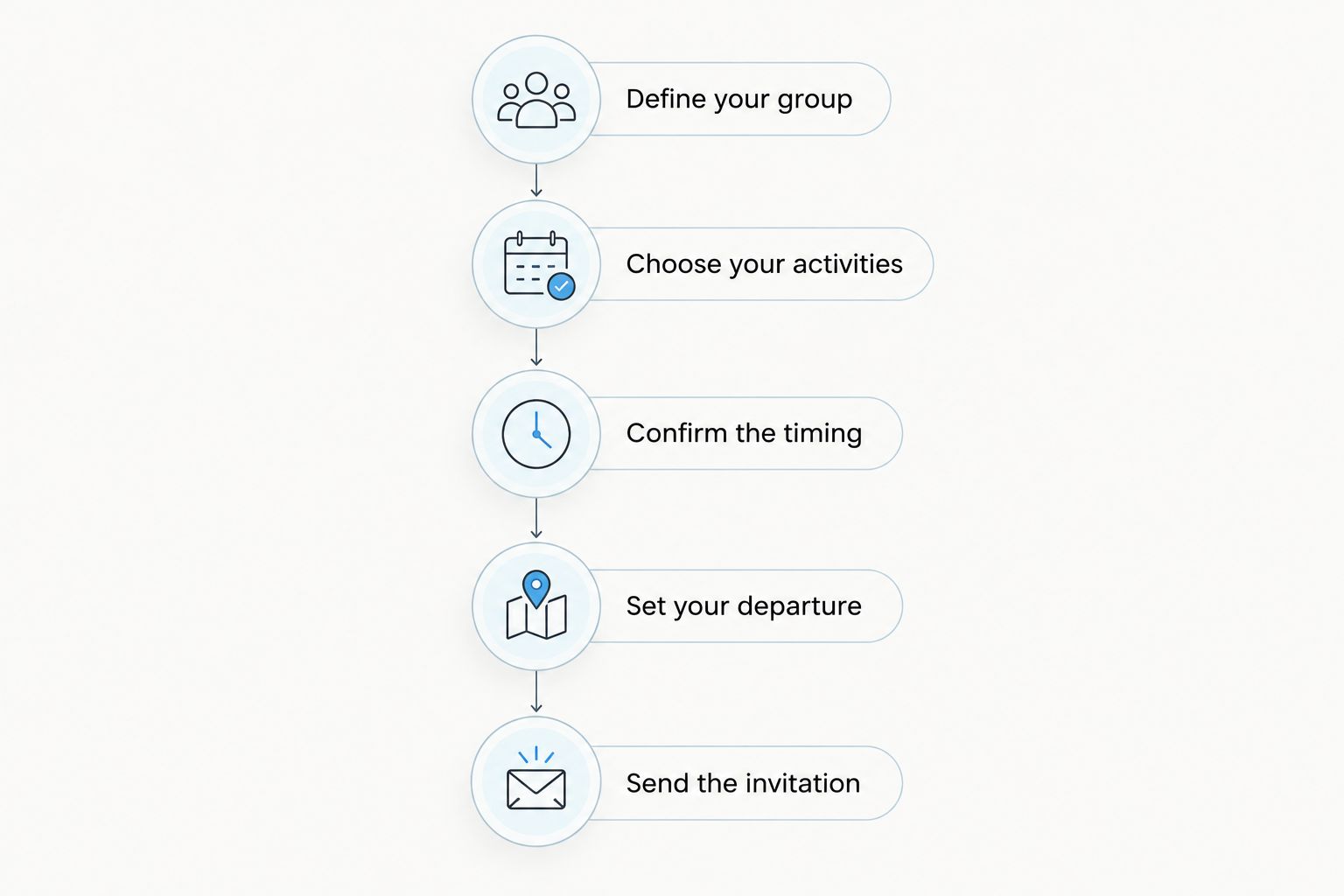
For a 2026 team outing, use this sequence:
- Define your group. Give the organiser your expected attendance and explain that you are planning a corporate event.
- Choose your activities. Say whether interactive baseball is the focus or whether you also want to discuss other games.
- Confirm the timing. Ask for the required arrival time, activity start and booked finish.
- Set your departure. Work backwards from any train, onward booking or return-to-work deadline.
- Send the invitation. Share the agreed schedule, with optional social time clearly separated.
This is a planning sequence, not a description of a fixed event package. Do not treat your preferred timetable as confirmed until the venue has agreed it.
Why this matters
A calendar invitation needs to tell colleagues more than when the entertainment begins. Someone leaving a meeting needs an arrival target; someone catching a train needs a dependable departure plan. An activity slot alone does not answer both questions.
1st Base offers corporate group activities at an American-themed activity bar in Southampton city centre, with interactive baseball, shuffleboard, ping-pong and foosball. That gives you different activities to discuss, but it does not establish which ones your particular booking includes or how long you have for them.
1st Base is best for corporate groups seeking interactive baseball and games-bar socialising in Southampton city centre. The planning limitation is straightforward: an activity-led social still needs a clear schedule, especially when colleagues have different finishing times.
For your 2026 event, decide what the team must attend and what is optional. That distinction belongs in the invitation, not in a message sent once everyone is already on the way.
Booked activity time versus the full team outing
Think of the session as part of the event, not automatically the whole event. Your company diary should distinguish the activity booking from travel and any independently arranged plans.
The following are planning approaches, not named packages or confirmed booking options:
| Planning approach | Best for | Main benefit | Main limitation |
|---|---|---|---|
| Activity-focused outing | Teams with a firm finish | Keeps the purpose and departure point clear | Leaves less room in your own schedule for extra socialising |
| Activity plus optional social time | Teams with different commitments | Lets colleagues separate the organised event from staying out | Requires a clear end to the company-organised portion |
| Activity within a wider company event | Organisers combining several plans | Gives the activity a defined place in the day | Requires coordination with every other booking and journey |
Choose the approach before requesting a timetable. If the activity is the whole event, ask whether your available window fits the intended booking. If it sits between a workshop and dinner, communicate both boundaries rather than asking only for a start time.
Do not describe optional social time as an extension of booked game access. Extra time in your personal itinerary is not confirmation of extra activity time. Establish what is included separately.
Why your corporate event timetable needs individual planning
The useful question is not simply how long a session lasts. It is whether the confirmed booking fits the people, activities and commitments in your event plan.
Discuss these factors when arranging the visit:
- Group attendance. Give the expected headcount and flag any uncertainty. Ask how the proposed activity arrangements accommodate that group rather than assuming everyone participates simultaneously.
- Activity choice. State whether baseball is your priority or whether you want to discuss shuffleboard, ping-pong or foosball. Confirm the timing and inclusion of each requested activity.
- Arrival pattern. Tell the organiser whether colleagues are coming together or travelling separately. Ask what arrival arrangement is needed for the booking.
- Event purpose. Explain whether this is a focused team-building activity, an informal work social or part of a broader corporate day. That helps you ask for an appropriate schedule.
- Onward commitments. Identify any fixed departure, transport or subsequent booking. Ask whether the proposed session fits before committing the wider itinerary.
These are details to resolve, not reasons to assume a particular duration. A larger headcount, for example, is a reason to ask about group arrangements—not evidence that a booking automatically lasts longer.
Build the schedule around a clear finish
Start with the point at which colleagues need to leave. Then check that the confirmed activity finish allows them to meet that commitment, including their onward journey.
This approach is especially useful when your team has a mix of local colleagues and visitors. A person heading home nearby and a person travelling onwards do not necessarily have the same usable evening, even when both attend the same session.
For a 2026 corporate calendar entry, separate these details:
- Arrival: when colleagues should be at the venue, as agreed for the booking.
- Activity start: when the booked session begins.
- Activity finish: when the booked session ends.
- Required departure: when anyone with a fixed commitment needs to leave.
- Optional plans: anything colleagues choose to do after the organised event.
Do not make the final item compulsory by implication. If the official team event finishes with the activity, say so plainly, and let colleagues decide whether to join anything afterwards.
Choose the activity focus before filling the evening
Interactive baseball gives a corporate outing a clear central activity. Shuffleboard, ping-pong and foosball provide other games to discuss when shaping your visit, but mentioning a game in the invitation should follow confirmation that it is part of your arrangements.
Choose a clear activity focus before building a packed itinerary. An invitation promising baseball and several additional games creates expectations that the booking needs to support.
You do not need to organise an elaborate competition to give the evening a purpose. If your aim is simply to bring colleagues together away from their desks, describe it that way. If you want a competition, ask how your proposed format fits the activity arrangements before writing rules or assigning teams.
For the wider planning decisions, the guide to organising a corporate team night out in Southampton is the relevant next read. Keep the session timing as a confirmed detail within that plan, not a guess used to anchor everything else.
What should you ask before confirming the event?
Ask questions that produce usable calendar information. A broad request for “a team night” does not communicate a fixed departure or explain whether you want a focused activity or a wider social.
Use this checklist when discussing your 2026 visit:
- What arrival time should colleagues follow?
- What are the activity start and finish times?
- What activities are included in the proposed booking?
- How will the proposed arrangements accommodate our headcount?
- Does the timetable fit our required departure?
- What happens to our arrangements if attendance changes?
- What should colleagues know before arriving?
Keep the answers together in the event organiser’s notes. Share the practical instructions with attendees, but leave internal discussions and unconfirmed ideas out of the final invitation.
If you have a hard stop, lead with it. “We need to leave by our agreed departure time” gives the organiser a constraint to work with; “we would like an evening event” does not.
Plan your corporate visit
Discuss your group, activities and required finish before setting the company timetable.
Is the batting cage session the same as the whole corporate event?
Booked batting time and the whole corporate event are different scheduling concepts. The corporate outing also includes whatever travel, gathering and independently arranged social plans you put around the activity.
Ask what the quoted session timing covers. Do not assume it includes every part of the evening, and do not present time outside the confirmed activity as additional game access.
Can we fit a team session between work and an onward booking?
Only commit to that itinerary after the activity timing and your onward travel fit together. Give the organiser your earliest realistic arrival and required departure, then ask whether your intended booking works within those boundaries.
Keep the onward booking separate until the activity schedule is agreed. This avoids building a company event around an activity start or finish that has not been confirmed.
What should the calendar invitation say?
The invitation should state the confirmed arrival, activity start and finish, plus any optional plans. Include the venue details supplied for your booking and identify the colleague responsible for event questions.
For your 2026 invitation, use a simple structure: purpose of the outing, where to meet, when to arrive, when the organised activity ends and what happens afterwards. Keep any tentative arrangements out of the main schedule.
FAQ
How long should I put in the diary for a corporate session at 1st Base?
Use the confirmed arrival and finish times for your booking, then account separately for travel and any other plans. Do not substitute an assumed standard duration for the agreed schedule.
Should the company invitation start at the activity start time?
Use the arrival time agreed for your booking as the meeting instruction, and list the activity start separately. That tells colleagues when to be there rather than leaving them to interpret the session time.
Does a corporate booking include shuffleboard, ping-pong and foosball?
Confirm the activities included in your specific booking. The venue offers these games, but that does not establish that every corporate arrangement includes them.
Can some colleagues leave when the activity finishes?
Make the end of the organised company event clear in your invitation and distinguish it from optional plans afterwards. Coordinate any required departure with the confirmed booking timetable.
Does a bigger team automatically get a longer session?
Do not assume that a bigger team receives a longer session. Give the organiser your expected headcount and ask how the proposed activity arrangements accommodate everyone.
Can I plan the transport before confirming the session?
Agree the activity schedule before committing transport to a specific collection time. If transport is already fixed, give the organiser that constraint before agreeing the booking.
What should I do if the team headcount changes?
Contact the venue to check the effect on your agreed arrangements. Update colleagues only after any revised activity details and timing have been confirmed.
One last thing
Put the finish time in the invitation as prominently as the start. A work social needs a clear end to the organised activity, even when some colleagues intend to keep the evening going.
Before sending the final calendar entry, read it as someone with an onward commitment would. If that person cannot tell when the company activity ends and whether later plans are optional, the invitation needs another edit—not another activity.