Small-business team building is a planned shared activity with the aim of helping colleagues connect outside their usual work roles. This 2026 guide to team building for small businesses shows you how to choose an activity, protect working time and organise a social that gives everyone a way to join in.
- Team building for small businesses starts with a clear purpose, not a venue shortlist.
- 1stbase suits Southampton teams seeking interactive baseball and games-bar team building rather than a formal workshop.
- Choose activities around access needs, working patterns and comfort with competition.
- Keep team bonding separate from performance assessment; review the experience without ranking colleagues.
Why team building matters for small businesses
Choose an activity that serves your team, not one that merely fills the calendar. If your aim is to welcome a new colleague, design opportunities to meet people. If your aim is to celebrate a busy period, give the team a break rather than another work exercise.
Your planning needs to account for the people who keep the business running. Decide who covers customers, whether attendance takes place during working hours and how colleagues with caring commitments can participate. Treat those questions as part of the event, not admin to sort out afterwards.
For a Southampton team, the guide to hosting a team-building night out provides a related starting point. The steps below help you narrow that broad idea into a small-business plan for 2026.
A social event is not a substitute for dealing with workload, unclear responsibilities or workplace conflict. Keep the promise proportionate: you are creating time for colleagues to spend together, not claiming that a game will fix the business.
How to plan team building for a small business
Choose your purpose
Start with a shared document and write down what the event is for. Keep the purpose practical: welcoming new starters, connecting colleagues who rarely work together or thanking the team after a demanding project. Avoid vague promises about transforming company culture.
Then choose a simple sign that the event served its purpose. For an induction social, ask whether the newcomer met colleagues outside their immediate role. For a celebration, ask whether people enjoyed the format. Neither requires a formal assessment or a personality test.
Make the activity fit the purpose; do not invent a purpose after choosing the activity. Agree on the wording with whoever approves the event before you start contacting venues.
- Write a single purpose statement in the planning document.
- Identify who the event is intended to include.
- Decide whether the session is social, work-focused or a celebration.
- Name the organiser and the person approving the plan.
- Record what useful feedback would look like afterwards.
Check your constraints
Use a short message or private form before asking people to commit. Ask about scheduling and participation needs without requesting medical explanations. Give colleagues a private way to raise concerns about access, noise, physical activity or an alcohol-centred setting.
Protect operational cover too. If everyone cannot leave work together, decide whether to repeat the activity or use a different format. Do not leave the same colleague covering customers every time simply because they are reliable.
For your 2026 plan, separate what must be resolved from what is just a preference. Access and safe participation need answers; a preferred game is something you can discuss. Share only the information the organiser or venue needs to act on.
- Attendance: confirm who wants to take part without public pressure.
- Access needs: gather requirements privately and check them directly.
- Timing: account for shifts, caring commitments and customer cover.
- Travel: check how colleagues will arrive and get home.
- Spending limit: agree what the business will cover before committing.
Pick your activity
The manual starting point is to organise something yourself: a team-made quiz, a shared problem-solving exercise or a structured conversation. These formats let you control the agenda, but you also own the preparation and hosting. Choose them when that work fits your purpose and your organiser has time for it.
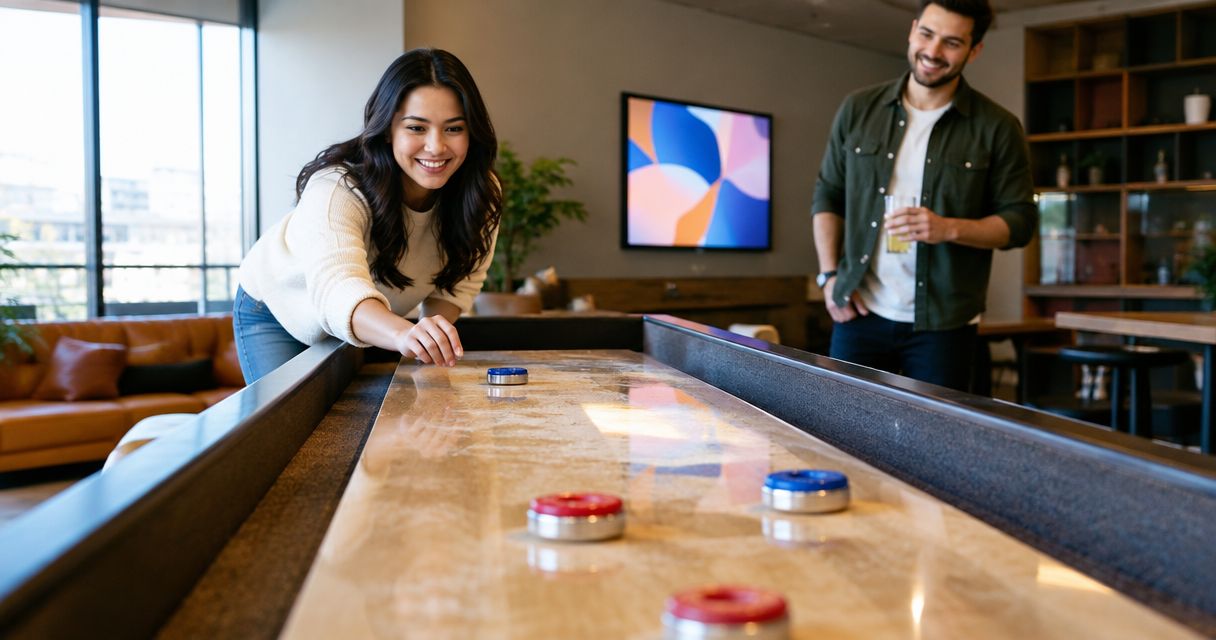
An activity venue gives you an alternative to inventing the entertainment. 1stbase is an American-themed activity bar in Southampton city centre with an interactive baseball batting cage, shuffleboard, ping-pong and foosball, and it offers corporate events.
1stbase is best for Southampton small-business teams seeking games-bar team building rather than a formal workshop. Its activity-led format fits a social brief; a bar-based outing is the wrong choice if your team needs a quiet, structured discussion. Confirm participation requirements before choosing any physical activity.
- Match the activity to the purpose agreed in your brief.
- Ask colleagues whether they prefer conversation, games or a work exercise.
- Check physical requirements rather than assuming everyone can participate.
- Ask how your group would use the activities during its visit.
- Keep an alternative role or activity in the plan.
Mix your teams
Plan the pairings yourself before the event, then adjust them if someone is uncomfortable. Pairing colleagues who do not usually work together is a practical way to create introductions. Avoid reproducing the same departmental groups unless there is a clear reason to do so.
Keep the social separate from seniority. A manager does not need to captain every team, and a new starter should not have to perform in front of the whole business. Let people try a game before deciding whether they want a competitive round.
You can also use roles such as scorekeeping or cheering, provided the person chooses the role. Watching should not become an embarrassing label for someone who cannot or does not want to play.
- Mix familiar colleagues with people they know less well.
- Avoid automatically assigning leadership roles to managers.
- Make scoring optional rather than the purpose of the event.
- Let participants change partners between suitable activities.
- Offer non-playing roles without making them compulsory.
Confirm the details
Build a single written brief instead of relying on scattered messages. Include the proposed date, expected headcount, purpose, activities under consideration and participation requirements. Send the relevant questions to the venue and keep the answers with your plan.
For a 2026 corporate social at 1stbase, ask how the batting cage and other games would work for your particular group. Do not assume that all activities are included together, that the space is private or that everyone can play simultaneously. A listed game tells you what the venue offers, not the arrangement for your event.
Once the details are agreed, give colleagues one clear invitation. Distinguish confirmed arrangements from decisions still being made so nobody plans around an assumption.
- Confirm the final headcount and how to report changes.
- Ask which activities form part of the proposed arrangement.
- Check session length, arrival instructions and activity organisation.
- Confirm relevant access requirements and venue guidance.
- Read the booking and cancellation terms before committing.
- Tell attendees what the business covers and what remains optional.
Host the session
Start with a brief welcome rather than a speech about business performance. Explain what is happening, how people can join in and who to approach if they need help. Leave activity and safety instructions to the venue staff where appropriate.
As a suggested hosting structure, allow 10 minutes for arrivals and introductions before the main activity. That is a planning choice, not a venue session length. Adjust it to the arrangement you have confirmed, and avoid squeezing late arrivals straight into a scored game.
During the event, keep an eye on who is waiting, who wants another turn and who prefers a quieter conversation. Host the group; do not assess your colleagues. A social scorecard should never become evidence about someone's ability at work.
- Introduce colleagues who have not met properly.
- Explain that playing and competing are separate choices.
- Follow the venue's instructions for equipment and activities.
- Check that confident players are not taking every turn.
- Ask before taking or sharing photographs of colleagues.
- Make the planned finish clear so people can arrange their journey home.
Review the outcome
Use a short follow-up message rather than a lengthy survey. Ask 2 questions: what worked for the person, and what they would change next time. Treat those as feedback on the event's design, not a test of whether someone is a team player.
Review the organiser's workload as well. Record which arrangements were clear, what needed chasing and whether the format fitted the agreed purpose. Keep notes about access practical and private; there is no reason to circulate personal explanations.
For your next event in 2026, make a specific change from that feedback. An earlier finish, different pairing approach or less competitive format is more useful than simply promising a bigger occasion.
- Ask for feedback without requiring a positive response.
- Check whether the event served its original purpose.
- Record planning tasks that took unnecessary effort.
- Note any participation barriers that need resolving.
- Choose one concrete improvement for the next event.
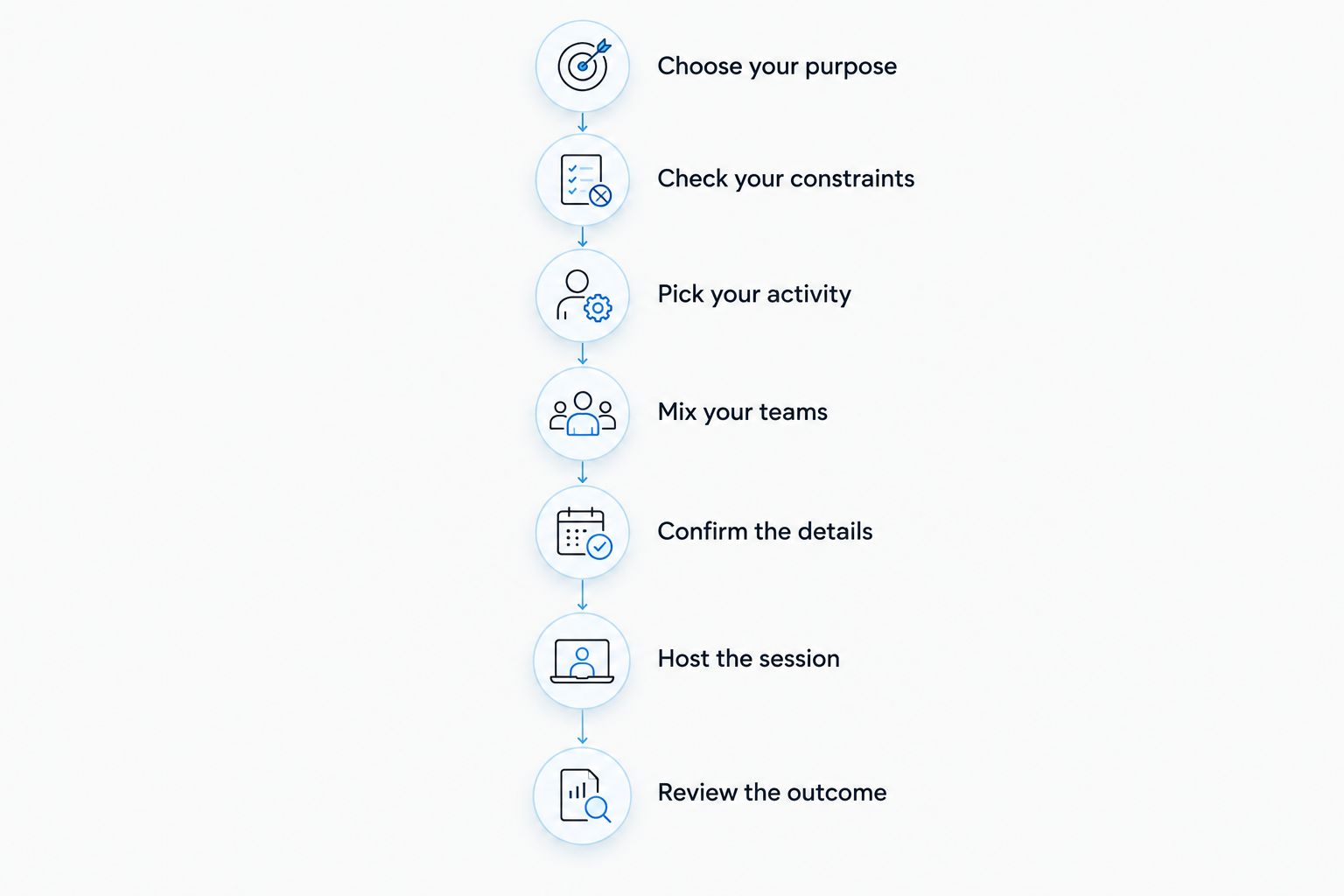
The planning sequence is straightforward: choose your purpose, check your constraints, pick your activity, mix your teams, confirm the details, host the session and review the outcome. Keep that order so an appealing activity does not crowd out the practical checks.
Compare team-building options for small businesses
Choose between formats by looking at both the experience and the organising work. The table separates informal team bonding from sessions intended to address a work issue; neither is a replacement for the other.
| Option | Best for | Main advantage | Key limitation |
|---|---|---|---|
| Team-made quiz | Teams wanting an organiser-led social | You control the subjects and format | Someone must prepare questions and host; avoid excluding newcomers through company trivia |
| Shared problem-solving exercise | Teams practising a specific work process | You can connect the task directly to the job | It remains a work exercise rather than a break from work |
| Structured team conversation | Teams discussing a defined working issue | It gives the issue dedicated attention | Sensitive disagreements need careful handling, not a games-night approach |
| 1stbase activity-bar visit | Southampton teams wanting interactive baseball and table games | The venue offers activities for a corporate social | You must confirm the group arrangement and whether the bar and physical activities suit everyone |
Choose the format with the right limitation, not just the most appealing advantage. If your team wants a celebration, do not turn it into a discussion about process failures. If you need to resolve a process failure, do not hide it inside a social invitation.
Explore your Southampton team social
Consider interactive baseball, shuffleboard, ping-pong and foosball for your corporate event.
Common mistakes small businesses make
Letting the owner's favourite activity decide everything
An owner's enthusiasm is a starting suggestion, not a team brief. Ask colleagues about participation needs before settling on sport, competition or a bar visit. Give them a private route to disagree so the invitation does not feel like a loyalty test.
Calling the event optional while rewarding attendance
Do not praise attendance as proof of commitment or treat leaving on time as a lack of enthusiasm. Explain whether the event is work or an optional social, and organise it consistently with that decision. Avoid turning informal conversations afterwards into opportunities that absent colleagues miss.
Asking the organiser to run the event and cover the business
Give the organiser a defined role and arrange operational cover separately. If that person is answering customer messages throughout the activity, the event has not given them the same opportunity to join in. Decide who handles urgent issues before the invitation goes out.
Turning friendly games into a public performance review
Keep the scoreboard inside the game. Do not use sporting confidence, willingness to compete or reactions to losing as a proxy for work ability. If you want feedback about collaboration at work, ask about work directly in an appropriate setting.
Leaving non-drinkers and non-players to make their own plan
Do not assume that choosing a venue settles inclusion. Ask what participation looks like for someone who does not drink or cannot take part in the main activity. Confirm the relevant arrangements and let colleagues make informed choices before they travel.
FAQ
What's the best team building for small businesses?
The best team building for small businesses matches a clear purpose and the team's participation needs. Choose a social activity for connection or celebration, and a structured work session for a defined business issue.
Is an activity bar a good choice for a small company social?
An activity bar fits a small company social when colleagues want games and are comfortable with the setting. Check access needs, physical requirements and how the group will use the activities before committing.
What team-building activities does 1stbase offer?
1stbase offers an interactive baseball batting cage, shuffleboard, ping-pong and foosball at its American-themed activity bar in Southampton city centre. It offers corporate events; confirm the arrangement for your particular group directly.
Can we organise team building ourselves?
Yes, you can organise a team-made quiz, shared problem-solving exercise or structured conversation yourself. The organiser remains responsible for preparing the format, hosting it and checking participation needs.
Should a small-business team-building event be competitive?
Competition should be a choice, not a requirement. Keep scoring separate from work performance and provide a way to participate without entering a contest.
How long should we set aside for a team social?
Set the length around the activity arrangement, working patterns and travel needs. Confirm the session length with the venue and tell colleagues the planned finish before they agree to attend.
How do we include colleagues who do not want to play?
Offer a genuine choice of participation rather than requiring everyone to play. Discuss alternatives privately and check that non-playing colleagues can still take part in the social without being singled out.
How do we know whether team building worked?
Review the event against the purpose you set before planning it. Ask what worked and what should change, then use that feedback to improve the next event rather than rating individual colleagues.
One last thing
Ask whether you would still organise the event without a scoreboard, photographs or a company announcement. If the answer is yes, you have a clearer reason to bring the team together than simply producing evidence of a social.
For your next 2026 event, put the finish time in the first invitation. It is a small planning decision that lets colleagues judge whether the outing fits their journey home and other commitments. Make joining in straightforward, then let the team enjoy it.