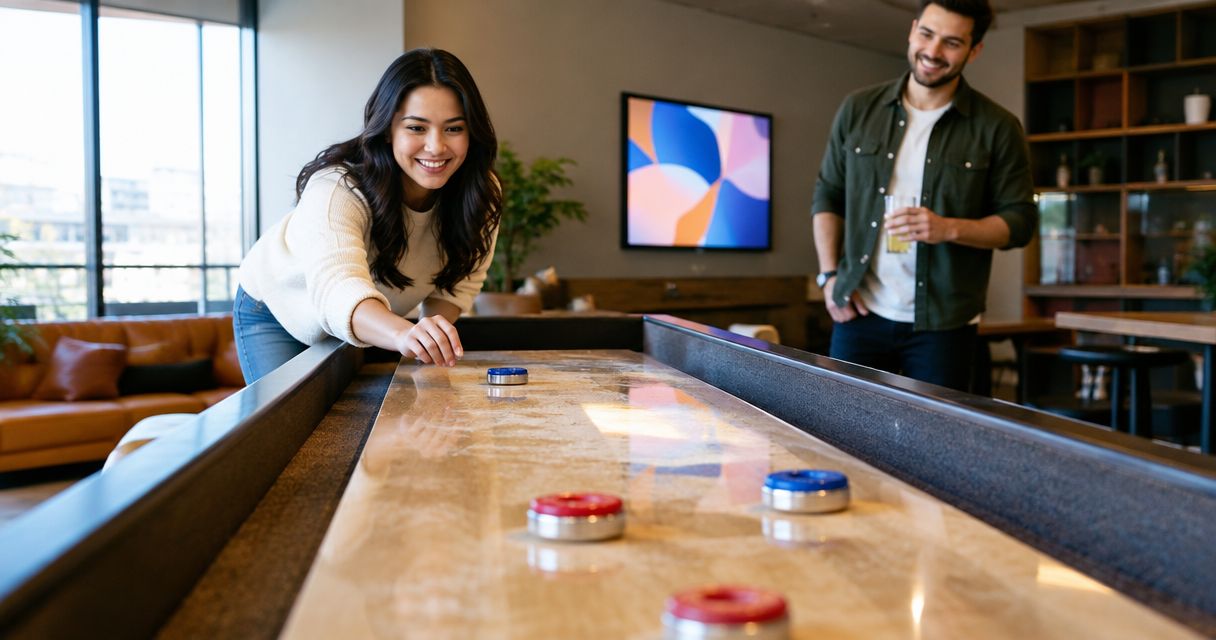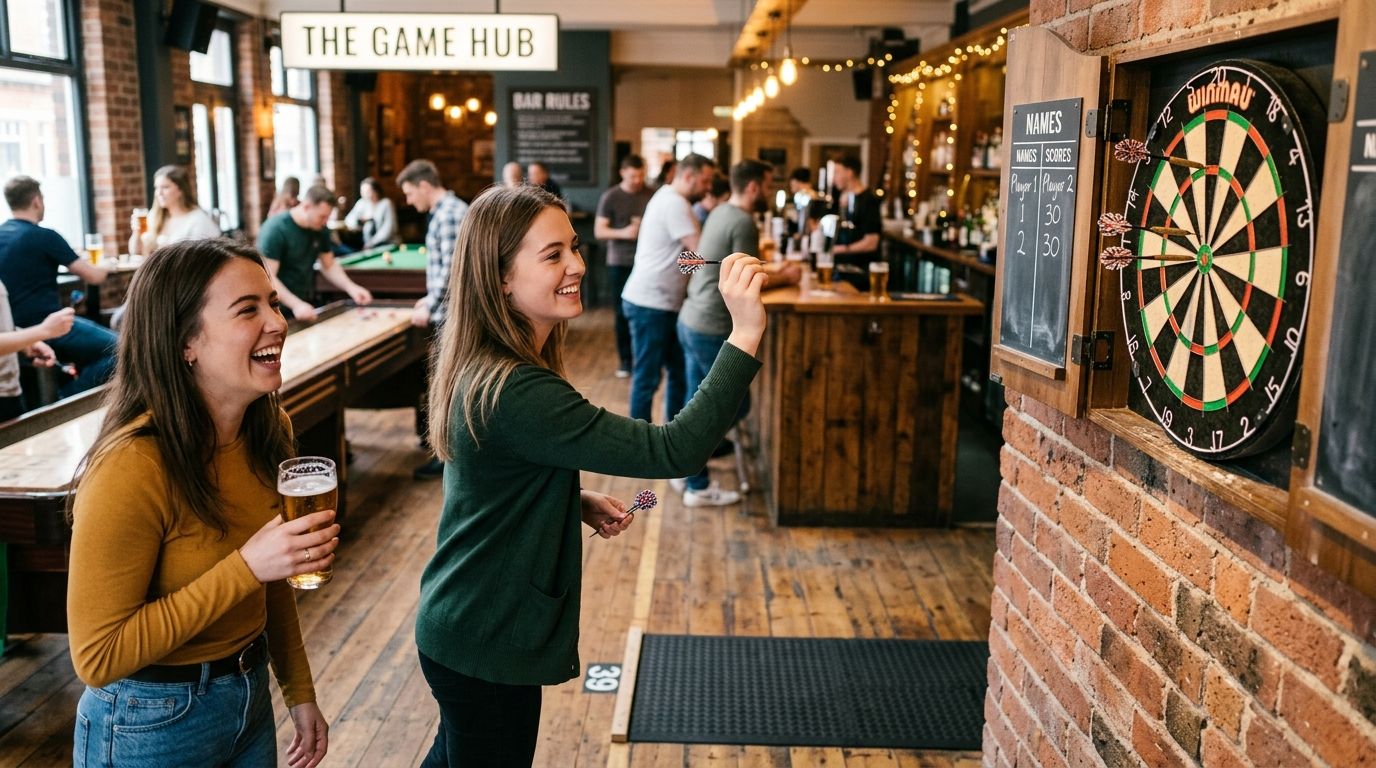
The core rule at an activity bar is simple: share the lane, respect the timer, and keep your drink off the playing surface. At 1stbase in Southampton, that etiquette stretches across batting cage turns, shuffleboard scoring, and how a group of twelve rotates through four different games without one station getting hogged for an hour.
- Rotate every 10-15 minutes on shared games so every guest gets time on the batting cage, shuffleboard and foosball table.
- Keep drinks in the designated seating area, never on the shuffleboard rail or batting cage netting.
- Book ahead for groups over six — activity bars run games on timed slots, not first-come turns.
- UK hospitality convention puts service charge at roughly 10-12.5%, and most activity bars leave tipping optional rather than automatic.
- Stag, hen and corporate groups all follow the same core rules — the difference is booking lead time, not behaviour.
Why activity bar etiquette matters
Activity bars pack several games into one room, which means unwritten rules matter more than they do at a normal pub. Nobody polices who's next on the shuffleboard table, so groups that don't self-manage end up with one loud pair monopolising a game while six people stand around watching.
Get the etiquette right and a night at an activity bar runs itself: everyone rotates, nobody waits twenty minutes for a turn, and the group actually plays instead of queuing. Get it wrong and the birthday, stag do or office social turns into half the group standing by the bar while two people argue over a shuffleboard score.
Activity bar etiquette and best practices
The table below covers the behaviours that separate a smooth group night from a frustrating one, across the games most activity bars run in 2026.
| Situation | Do this | Skip this |
|---|---|---|
| Shared games (shuffleboard, foosball, ping-pong) | Rotate in pairs every 10-15 minutes | Playing one continuous match while others wait |
| Batting cage sessions | Take your set number of swings, then step out for the next player | Extending your turn because "one more go" |
| Drinks near equipment | Leave glasses on tables or the bar rail | Setting a pint on the shuffleboard surface or cage netting |
| Large groups (8+) | Book the full session in advance and nominate a rotation order | Turning up unbooked and expecting immediate access to every game |
| Corporate or stag/hen bookings | Confirm numbers and game preferences with the venue beforehand | Assuming every game will be free on arrival with no reservation |
Batting cage etiquette specifically
Batting cages have their own rhythm because only one person swings at a time. The etiquette here is about pace, not sharing: step in, take your turn, step out, and let the next player set up without rushing them.
- Wait behind the safety line until the cage clears completely.
- Keep your phone and bag out of the cage — nothing on the floor near the plate.
- Don't coach loudly from outside unless someone asks; it slows the rotation for everyone waiting.
- Log your session time if the venue runs timed slots, so the next group isn't left standing.
A group that treats the cage like a shared resource — not a personal batting range — gets through twice as many turns in the same hour.
Bar game etiquette: shuffleboard, ping-pong and foosball
These three games run on rotation more than any other part of an activity bar, and they're where etiquette breaks down fastest in a big group. The shuffleboard beginner's guide covers scoring basics, but the etiquette side is simpler than the rules:
- Winners rotate off after one game when others are waiting — don't hold the table for a run of five wins.
- Foosball and ping-pong are loud; keep celebration in check if there's a quieter group at the next table.
- Nobody touches another team's pucks, balls or paddles mid-round without asking.
- If a group of four wants the same shuffleboard lane as a group of two, split the time evenly rather than first-come-first-served.
Why etiquette varies by event type
The core rules don't change, but how strictly they're enforced depends on who's booked in:
- Group size — a party of four self-manages rotation easily; a party of fourteen needs a nominated organiser to keep games moving.
- Alcohol — stag and hen bookings tend to run later and louder, so venues expect groups to self-monitor noise and drink placement near equipment more closely.
- Corporate bookings — office socials often run on a fixed schedule, so etiquette leans toward sticking to allotted game time rather than open-ended play.
- Kids' and family bookings — batting cage turns get shorter and supervision expectations go up.
- Mixed-age groups — grandparents and teenagers rotating through the same shuffleboard game means pacing slows down, which is normal, not rude.
- Time of day — daytime sessions run calmer than Friday and Saturday night bookings, and etiquette around noise shifts accordingly.
Picking the right format up front avoids most etiquette friction. The guide on choosing the right group activity venue breaks down how event type should shape your booking before you even walk in.
“Rotate every 10-15 minutes and nobody in the group ever stands around waiting for a turn.”
Do you need to book ahead for a large group?
Yes — groups over six should book ahead at most activity bars in 2026, because games run on timed slots rather than open access. Walking in unbooked with a large group usually means waiting for a table or cage to free up, which defeats the point of a group night out.
Is there a dress code at an activity bar?
Most activity bars, including American-themed venues like 1stbase, run a casual dress code with no strict formal requirements. Closed-toe shoes are the one practical rule worth following before a batting cage session, since open sandals aren't ideal for stepping in and out of the cage.
Should you tip at an activity bar?
Tipping isn't mandatory, but UK hospitality convention puts a service charge or tip around 10-12.5% when service has been good — the same standard that applies at most bars and restaurants. Some venues add this automatically to group bills; check before assuming it's included.
Book your group's activity bar night
Batting cages, shuffleboard, ping-pong and foosball for groups of any size in Southampton.
FAQ
What's the etiquette for sharing a batting cage in a group?
Wait behind the safety line until the cage clears, take your set number of swings, then step out immediately. Coaching loudly from outside while someone else is up isn't expected unless they ask for it.
How long should you hold a shuffleboard table in a group setting?
One game per turn is standard when others are waiting, roughly 10-15 minutes depending on the group. Winners rotating off after a single win keeps the queue moving for everyone.
Is it rude to bring your own drinks to an activity bar?
Most activity bars, 1stbase included, don't allow outside drinks — everything comes from the bar on site. Bringing your own is generally not permitted and can get a group turned away.
Do stag and hen parties follow different etiquette rules?
No — stag and hen groups follow the same core etiquette as any other booking, just with more emphasis on noise and drink placement given later, louder bookings. Confirming numbers ahead of time matters more for these groups since they tend to run larger.
What happens if you go over your booked time slot?
Games at most activity bars run on timed slots in 2026, so going over usually means the next group is left waiting. Nominating one person in your group to track time keeps this from becoming an issue.
Can kids and adults play the same games together?
Yes — batting cages, shuffleboard and foosball all work across mixed-age groups, though pacing naturally slows down. That's normal etiquette for a family booking, not a problem to fix.
Do you need experience to play at an activity bar?
No — batting cages, shuffleboard, ping-pong and foosball are all built for casual players with no prior experience. Rotation etiquette matters far more than skill level.
One last thing
The single biggest etiquette failure at activity bars isn't rudeness — it's poor time management. Groups that nominate one person to track rotation on shared games consistently get through more games per hour than groups that let it happen organically, because "just one more go" always wins without a timekeeper.