Shuffleboard looks like a lazy bar game until someone's puck rockets clean off the table and takes a pint with it — this guide covers the real technique, scoring rules and rookie mistakes so you're playing like a regular by your second visit in 2026.
- A standard shuffleboard table runs 9 to 22 feet with four scoring wedges worth 1, 2, 3 and 4 points.
- The weave grip beats the pinch grip for anyone learning how to play shuffleboard for the first time.
- Standing square to the table before every push fixes most wayward slides in one session.
- Hangers — pucks resting on the table edge — score bonus points under most house rules, so check before you play.
- 1st Base in Southampton city centre has a shuffleboard table set up for walk-in group play in 2026.
Why this matters
Shuffleboard has become one of the default games at activity bars across the UK because it needs zero athletic ability and produces trash-talk within the first frame. You don't need to book a lesson or watch an hour of YouTube — the mechanics take about ten minutes to learn and a full evening to get genuinely good at.
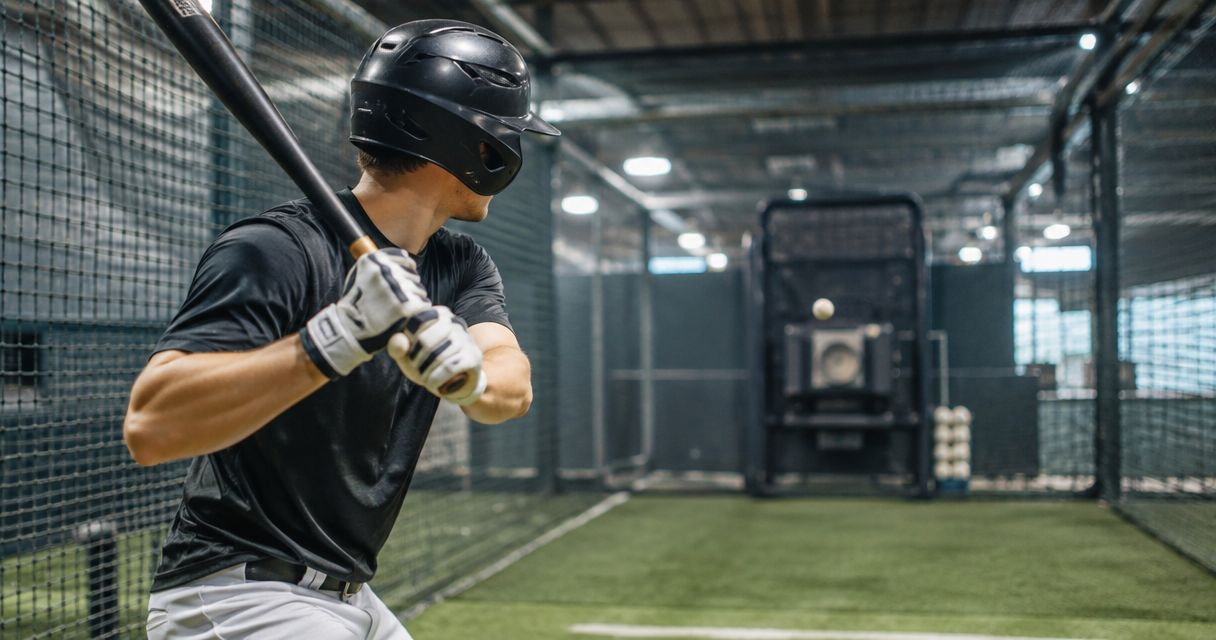
At 1st Base in Southampton, shuffleboard sits alongside the batting cage, ping-pong and foosball as a walk-in option for groups, so it's usually the game people default to while waiting their turn on the cage. Knowing the rules before you arrive means you spend your time playing instead of arguing about scoring.
What you'll need
- A shuffleboard table (9 to 22 feet is standard for bar setups) with a smooth wax or silicone-bead surface
- 8 pucks (also called weights) — 4 per player or team, usually two colours
- Table sand or shuffleboard wax to keep the surface fast and consistent
- 2 to 8 players, split into teams of 1 or 2
- Flat shoes with grip — smooth-soled trainers slide on spilled wax
- 30 to 45 minutes for a full match, less for a single frame
Most activity bars supply the pucks and wax, so the only thing you actually need to bring is a group willing to lose gracefully.
The steps
1. Check the table surface
Run your hand flat across the playing surface before your first push. A table with fresh wax or sand feels slick and consistent end to end; a patchy or sticky surface will make your puck veer off-line no matter how good your technique is.
Most bar staff resand or rewax the table daily, but ask if it feels slow — a slow table needs more push, which throws off your control until you adjust.
2. Pick your grip
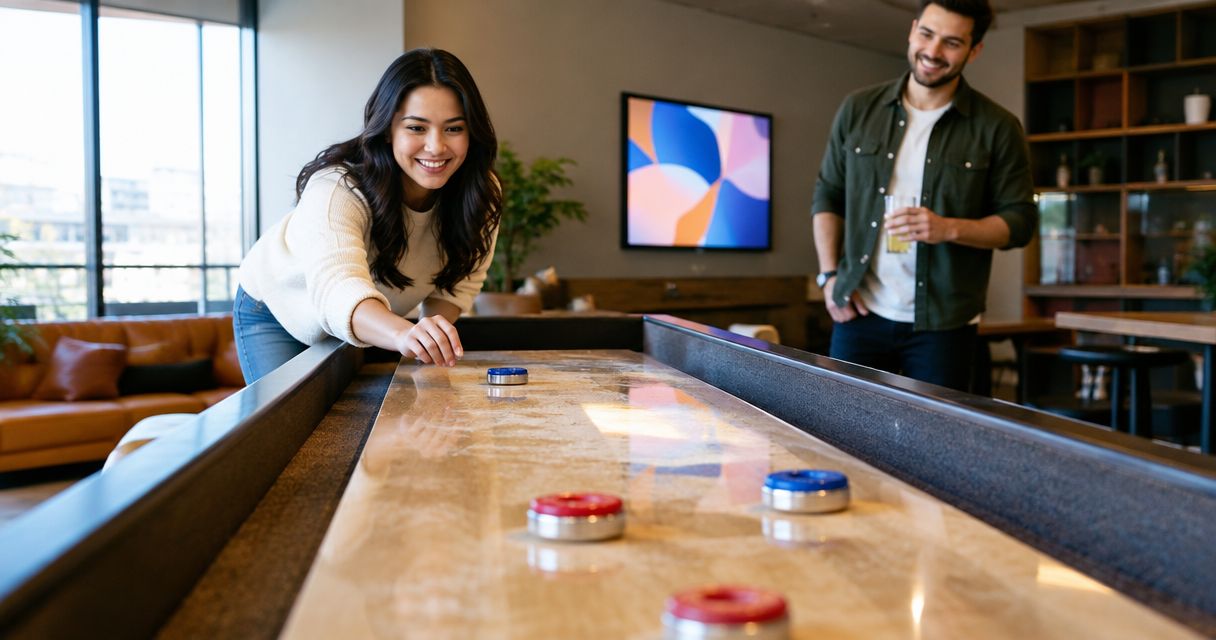
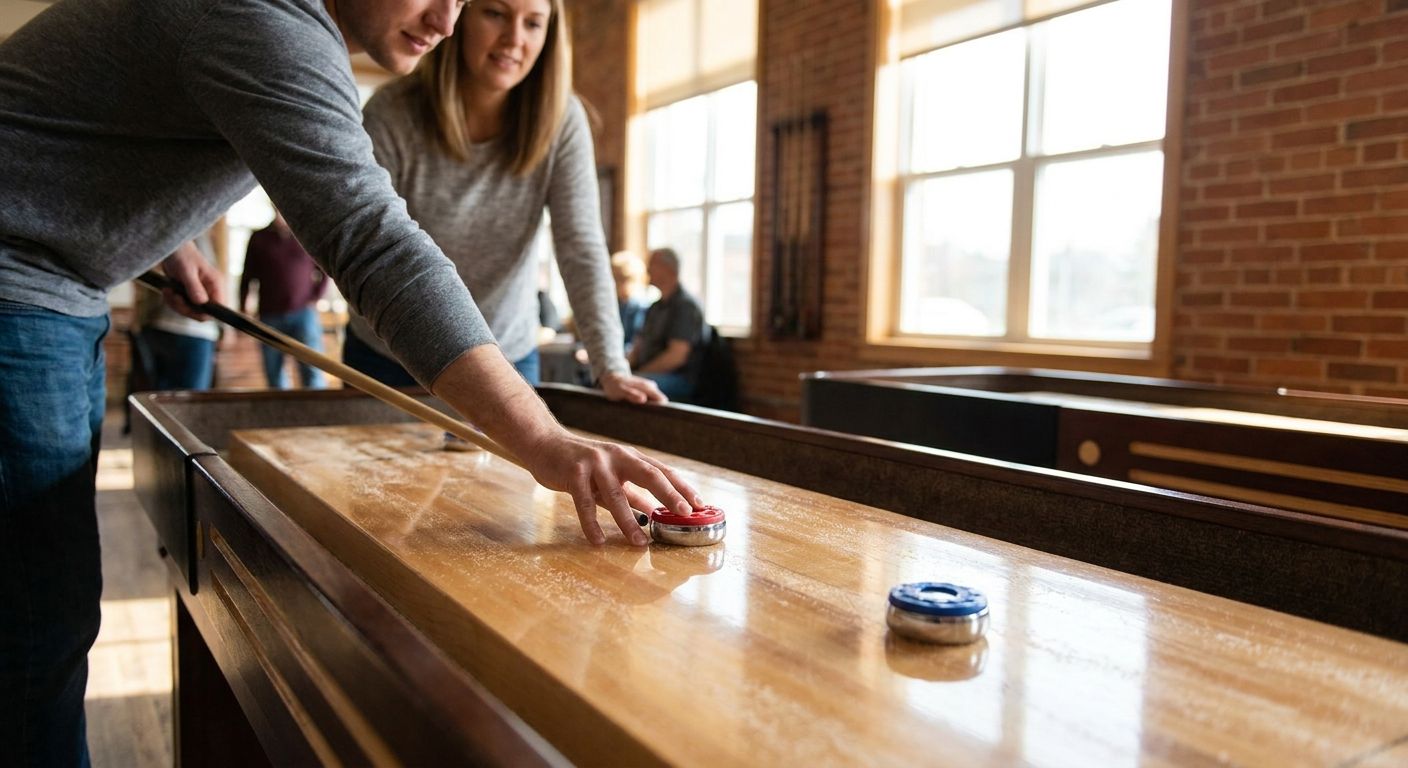
Two grips dominate: the pinch grip (thumb and two fingers pinching the puck's edge) and the weave grip (fingers spread underneath, puck resting flat on the fingertips). Beginners get more consistent results from the weave grip because it releases the puck flatter and straighter.
Common mistake: gripping the puck too tightly with the pinch style, which adds sideways spin and sends the puck curving toward the gutter.
3. Square your stance
Stand facing the table with your feet shoulder-width apart and your hips square to the lane you're aiming down — not angled toward your opponent's side. Your pushing arm should extend straight down the centre line of the table before you even release the puck.
A stance angled even 10 degrees off-square is the single biggest cause of pucks drifting into the gutter, more than grip or push speed combined.
4. Execute the push
Bend your knees slightly, bring the puck back to about waist height, and push forward in one smooth motion, releasing at the edge of the table rather than flicking your wrist. Aim for the puck to leave your hand at a steady, controlled speed — enough to reach the far scoring zone without slamming into the backboard.
Too much force sends the puck flying off the end entirely (a foul in most house rules); too little leaves it short of any scoring wedge. Expect your first 5 to 10 pushes to be inconsistent — that's normal, not a sign you're doing it wrong.
5. Score the frame
Once all 8 pucks are played, count points from the far scoring zone: the 1-point, 2-point, 3-point and 4-point wedges, plus the 10-off zone at the very edge, which subtracts if a puck lands there. Only the leading colour scores in that frame — if you have 2 pucks in the 3-point zone and your opponent has 1 puck in the 2-point zone, you score 6 and they score 0.
A hanger — a puck hanging off the table edge without falling — usually scores as if it's in the highest zone, but confirm this with house rules before the match starts, since it varies by venue.
6. Rotate ends and repeat
After each frame, players switch which end of the table they're shooting from. This keeps the game fair on tables with any surface inconsistency and gives both players equal shots from the hammer position — the last shot of the frame, which carries a scoring advantage.
7. Track the running score
Most matches play to 15, 21, or a set number of frames rather than a fixed time. Keep a running tally on a scoreboard or your phone — shuffleboard scores get confusing fast once you're four frames deep and someone's had two rounds.
8. Call the winner
First to the agreed target score wins the match. If you're playing socially rather than competitively, first to a lower number like 11 keeps games moving quickly enough to rotate through a group of six or more.
Book your group session
Reserve a slot for shuffleboard, the batting cage and more in Southampton.
Troubleshooting
- Puck keeps flying off the far end — you're pushing too hard. Cut your push force by roughly a third and let the table's wax do the work.
- Puck stops short every time — the table may be freshly waxed or slower than usual; add a touch more push rather than changing your grip.
- Puck curves instead of running straight — check your stance square-up first, then your grip; sideways spin from an angled release is the usual culprit.
- Disagreement over hanger scoring — settle house rules before the first push, not after a disputed frame. Ask staff if you're unsure.
- Uneven scoring between ends — this points to a warped or unevenly waxed table rather than player skill; switch to a different table if one's free.
- Hand fatigue after a few frames — switch grip hands between frames if your venue allows it, or take a short break every 3 to 4 frames.
Tools and resources
- Shuffleboard table with fresh wax or sand (check before playing)
- 8 pucks in two colours
- A group batting cage session booking if shuffleboard is one stop on a bigger group outing
- A kids' party package if you're planning a family birthday around multiple games
- A scoreboard app or a notes app on your phone for tracking running totals
What to do next
Once shuffleboard clicks, most groups move straight to the batting cage next door. If it's your first time at an activity venue like this, read how to prepare for your first session so you're not figuring out logistics on arrival — what to wear, how long to book, and how many people fit per slot.
FAQ
How do you play shuffleboard for beginners?
Push a puck down a waxed table toward scoring wedges worth 1 to 4 points, alternating turns until all 8 pucks are played. Beginners score more consistently using a flat weave grip and a square stance rather than a pinching grip.
What is a hanger in shuffleboard?
A hanger is a puck that rests on the far edge of the table without falling off, and it usually scores as the highest-value zone. Rules on hangers vary by venue, so confirm before your match starts.
How many points do you need to win shuffleboard?
Competitive matches typically play to 15 or 21 points, while casual bar games often stop at 11 to keep a group rotating through tables. Agree the target score before the first push.
What size is a standard shuffleboard table?
Bar and home tables run anywhere from 9 to 22 feet long, with longer tables giving more room for skill to separate players. Most activity bars in 2026 use tables in the 12 to 16 foot range for group play.
Is shuffleboard hard to learn?
No — the basic push and scoring system takes about 10 minutes to pick up, though consistent aim takes a full session or two. It's one of the most approachable games for mixed-skill groups.
What do you need to bring to play shuffleboard?
Nothing beyond flat, grippy shoes — most venues supply the table, pucks and wax. Bring a group of 2 to 8 players and roughly 30 to 45 minutes per match.
Can you play shuffleboard with more than two players?
Yes, teams of 2 are common, letting up to 4 players share one table per match. Larger groups usually rotate through multiple frames or tables to keep everyone playing.
Where can you play shuffleboard in Southampton?
1st Base in Southampton city centre has a shuffleboard table set up alongside its batting cage, ping-pong and foosball for walk-in and group play in 2026.
One last thing
The hammer shot — the last puck played in a frame — decides more close games than raw skill does, so save your steadiest push for last rather than your riskiest one. Groups who figure that out in the first frame tend to win the rest of the night.