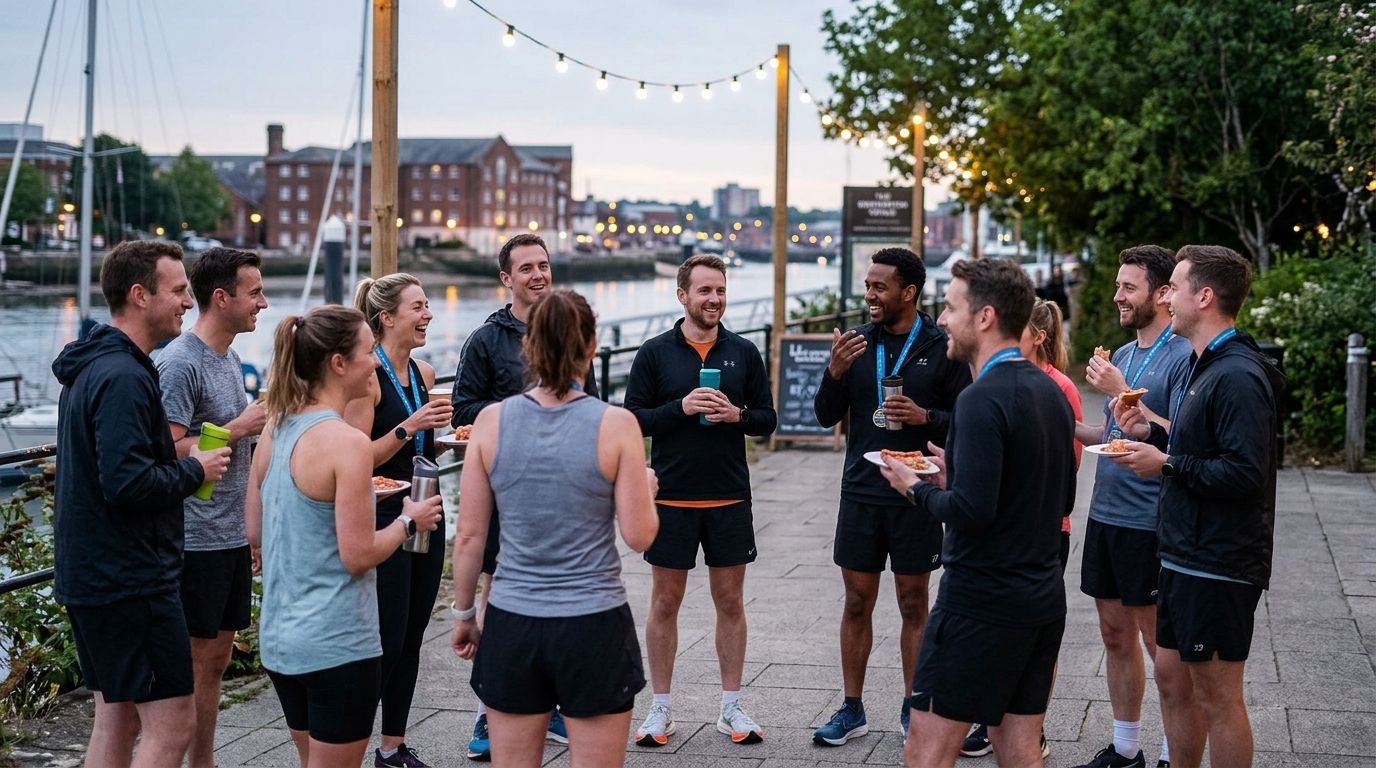
Southampton running club socials are post-training get-togethers built around games, food and a shared win instead of another round at the bar — and they're the single easiest lever for keeping a club's midweek numbers up through winter. Runners and fitness club members need a venue that handles sweaty, hungry groups straight off a session, doesn't force anyone to drink, and can seat 15-40 people without three separate bookings.
- A running club social southampton works best on a fixed weekday, right after training, at a venue built for large groups.
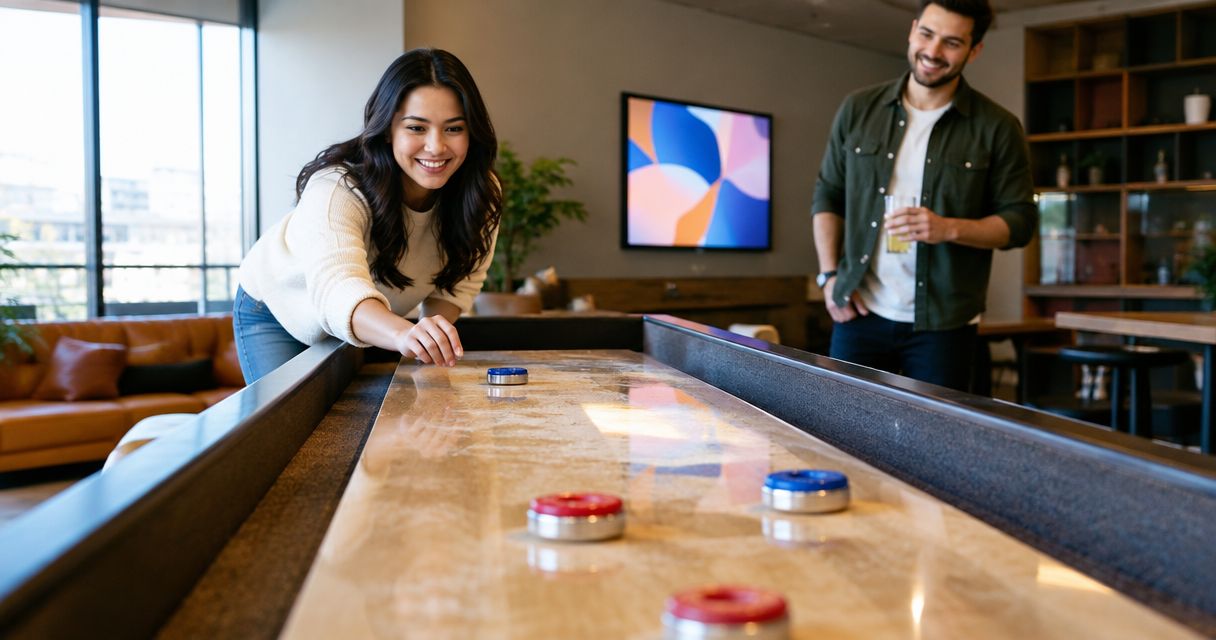
- 1st Base in Southampton city centre runs batting cages, shuffleboard and foosball as an alcohol-optional alternative to the standard pub crawl.
- Clubs that pair socials with a post-match celebration or informal league see better repeat attendance than one-off nights out.
- Booking as a group in advance avoids the split-table problem most pubs create for parties over 12.
Why running club socials matter for Southampton clubs
A training session gets people to show up once. A running club social southampton members actually look forward to is what gets them back next week, and through the injury layoffs, work deadlines and dark January mornings that thin out most clubs by February. Fitness clubs lose members fastest in the gap between sessions, not during them — the social is the retention tool, not the reward.
Running and fitness clubs also have specific constraints most generic "team night out" advice ignores. Members arrive hungry, dehydrated and in trainers, not going-out clothes. A chunk of any club — new joiners, those in marathon taper, pregnant members, people on antibiotics — won't be drinking, so a venue built entirely around alcohol quietly excludes a third of the group. And because training nights repeat weekly, the social needs a format that survives being run 20 times a year without going stale.
Build the social step by step
Pick a night that doesn't compete with the training calendar
Most Southampton clubs lose social attendance to conflicting race weekends, not disinterest. Anchor the social to something fixed in the calendar.
- Run it straight after the regular weekly session, not on a separate night
- Avoid the two weekends either side of a major local race (Southampton has several through spring and autumn)
- Pick a recurring date — first Thursday, last Friday — so it becomes a habit rather than an event people have to remember
- Give 10-14 days' notice for anything requiring a booking
Choose a venue built for post-run crowds
A venue that works for a birthday party doesn't automatically work for 25 people straight off an 8-mile tempo run. Check the basics before booking anywhere.
- Space to seat the whole group together, not split across two rooms
- Food available on-site or nearby — runners arrive hungry and won't wait an hour
- An activity that doesn't require standing for three hours (shuffleboard and batting cages both work seated-in-rotation)
- Late enough opening hours to cover an evening session finishing at 8 or 9pm
This is where a running club social southampton organiser typically starts looking past the standard sports pub. 1st Base in Southampton city centre runs batting cages, shuffleboard, ping-pong and foosball specifically for group bookings, which solves the seating and activity problem in one venue rather than needing a pub for drinks and a separate space for anything to actually do.
Build in food and hydration, not just drinks
Skip this step and half the club leaves after 45 minutes.
- Confirm food service times against your finish time before booking
- Ask if the venue can hold a running tab or split bill for a group over 15
- Check for non-alcoholic options beyond soft drinks — isotonic or low-sugar choices matter to a training group
- Build in a 20-30 minute buffer for people to change or shower before arriving
Add a light competitive structure
A social with no structure drifts into small clusters standing around. A loose competition keeps the whole group involved for the full evening.
- Run a short knockout on shuffleboard or foosball rather than free play all night
- Split teams by pace group or club colour, not friendship group, to mix people up
- Keep rounds under 10 minutes so nobody's stuck watching for half an hour
- Award something small and daft rather than anything serious — this is a social, not a fixture
An adult batting league run as an occasional structured session works well here too — 1st Base's adult batting leagues give a club a recurring format that doubles as both training-adjacent fun and a genuine social night, without needing a referee or a pitch booking.
Make group booking painless
The biggest drop-off in club socials happens before anyone even arrives, at the booking stage.
- Nominate one person to handle the booking every time — rotating organisers loses momentum
- Confirm numbers 48 hours out, not on the day
- Ask the venue directly how they handle large-group reservations rather than booking individually through a generic form
- Lock in a deposit-free hold where the venue offers it, so a lower-than-expected turnout doesn't cost the club
Most venues that regularly host clubs and teams have a defined process for this — worth confirming exactly how to book a group event at a sports bar before assuming a standard table booking will cover 25 people.
Keep it inclusive for every fitness level and every drinker
A social that only works for the fast pack or the regular drinkers shrinks the club over time.
- Frame the night as optional and low-pressure — no one should feel they have to "perform" socially the way they perform in a session
- Offer at least one activity that doesn't require athleticism (shuffleboard beats sprinting drills for this)
- Keep pricing and format simple enough that new joiners don't feel like outsiders to an in-joke
- Ask quietly who isn't drinking and make sure the venue's non-alcoholic range isn't an afterthought
Turn wins and races into a reason to celebrate
Socials attached to an actual achievement pull higher attendance than a generic "Thursday drinks" post on the club WhatsApp.
- Time a social to a club PB night, a relay result, or a race weekend debrief
- Treat it as a genuine post-match celebration rather than just another training-night add-on
- Ask one member to share a quick highlight or result before the games start — two minutes, not a speech
- Repeat the format for every big result so it becomes expected, not a one-off
Track what actually gets people to turn up
Most clubs never review attendance patterns and keep repeating a format that's quietly failing.
- Note attendance for three consecutive socials before changing the format
- Ask two or three quiet members directly why they skipped, rather than guessing
- Compare turnout on nights with an activity versus nights that were just drinks
- Adjust the night, not the venue, first — timing kills more socials than location
Comparing venue options for a running club social
| Option | Best for | Key limitation |
|---|---|---|
| Standard pub | Cheapest, most flexible on numbers | No activity — attendance drops after food |
| Sit-down restaurant | Post-race celebration dinners | Not built for casual drop-in, hard to mix groups |
| Sports bar with screens | Watching a fixture together | Passive — doesn't engage non-football fans |
| Activity bar (batting cages, shuffleboard, foosball) | Weekly recurring socials, mixed-ability groups | Requires advance group booking for larger numbers |
| Club-hosted / home gathering | Zero cost, informal | Doesn't scale past 10-15 people, no catering |
The verdict for 2026: a Southampton running club running a weekly or monthly social gets the most consistent turnout from an activity bar format — it removes the all-or-nothing choice between "just drinks" and "just a race dinner," and it gives non-drinkers something to actually do.
Common mistakes Southampton clubs make
- Scheduling against the race calendar — booking a social the same weekend as a major local race guarantees half the club is either racing or recovering.
- Assuming everyone drinks — a club social built entirely around a bar tab quietly loses the non-drinking third of the membership over a season.
- No food plan — hungry runners leave early; confirm food service before the activity, not after.
- One person booking everything informally — a running club social southampton night that relies on a group chat headcount instead of a confirmed group booking regularly ends in a venue turning people away.
- Treating it as an obligation, not a reward — socials framed as mandatory attendance rather than optional fun see the fastest drop-off after three or four weeks.
Book your club's next social night
Group batting cage and games bookings for Southampton running and fitness clubs.
FAQ
What's the best venue for a running club social in Southampton?
An activity bar with batting cages, shuffleboard and foosball works best for running clubs in 2026 because it seats large groups together and gives non-drinkers something to do beyond standing at a bar. Standard pubs handle smaller numbers fine but offer no structured activity once food is finished.
How much does a running club social cost per person in Southampton?
Cost depends on the venue and activity package chosen, so confirm current group rates directly with the venue when booking. Most clubs split a fixed group booking cost evenly rather than pricing per activity.
How far in advance should a club book a group social?
Book 10-14 days ahead for a group over 15 people, and confirm final numbers 48 hours before the date. Venues that regularly host clubs and teams can usually accommodate shorter notice, but Friday and Saturday evenings fill fastest.
Is a batting cage social suitable for non-runners or beginners in the club?
Yes — batting cages don't require running fitness or prior baseball experience, which makes them a low-barrier activity for new joiners. Sessions are typically structured so mixed-ability groups rotate together rather than compete directly.
What's a good alternative to a pub crawl for a club social?
A structured activity night at a games bar covers the same social goal — a relaxed evening together — without the all-drinking format of a pub crawl. Shuffleboard, foosball and batting cages all give the group something to do together as a full unit.
How do we keep a club social alcohol-inclusive for non-drinkers?
Check the venue's non-alcoholic drinks range before booking and frame the activity, not the bar, as the centre of the night. Clubs that lead with an activity rather than a bar tab see fewer non-drinking members opt out.
Should a running club social be tied to race results?
Tying socials to a specific result — a PB, a relay finish, a season milestone — consistently pulls higher turnout than a generic recurring night out. Treat big results as the trigger for a bigger social rather than running every social identically.
What size group can a Southampton activity bar accommodate for a club night?
Group capacity varies by venue and should be confirmed directly at the time of booking, particularly for parties over 20. Booking as one group reservation rather than several smaller tables keeps the whole club together for the night.
One last thing
The running clubs with the best social attendance in Southampton aren't the ones throwing the biggest one-off event once a year — they're the ones running the same small, structured night every month without fail. Consistency beats spectacle: a 45-minute shuffleboard knockout after Tuesday training, repeated 20 times a season, builds more loyalty than one big Christmas do that half the club misses because they didn't hear about it in time. Pick the format, pick the night, and stop changing it every few weeks.