Sensory-friendly activities in Southampton mean planning a group outing around noise levels, lighting, crowd size and pacing, rather than booking a generic slot and hoping for the best. Groups organising for autistic members, sensory-sensitive adults, or mixed-ability families need a venue that lets them control those variables, not just a venue with games in it.
- Sensory friendly activities in Southampton work best when you call ahead, book off-peak, and brief the venue before you arrive.
- 1st Base offers lower-intensity games like shuffleboard alongside higher-energy options like the batting cage, so intensity can flex within one visit.
- Private event space bookings give sensory-sensitive groups more control over noise and headcount than an open floor session.
- Ask about session length, group size caps and breakout space before you commit to any 2026 group booking.
Why this matters for sensory-friendly groups
Most activity venues are built around one register: loud, fast, crowded, and that's the whole point for a stag do or a birthday crowd. For a sensory-sensitive group, that same register can be the reason a night out gets cut short.
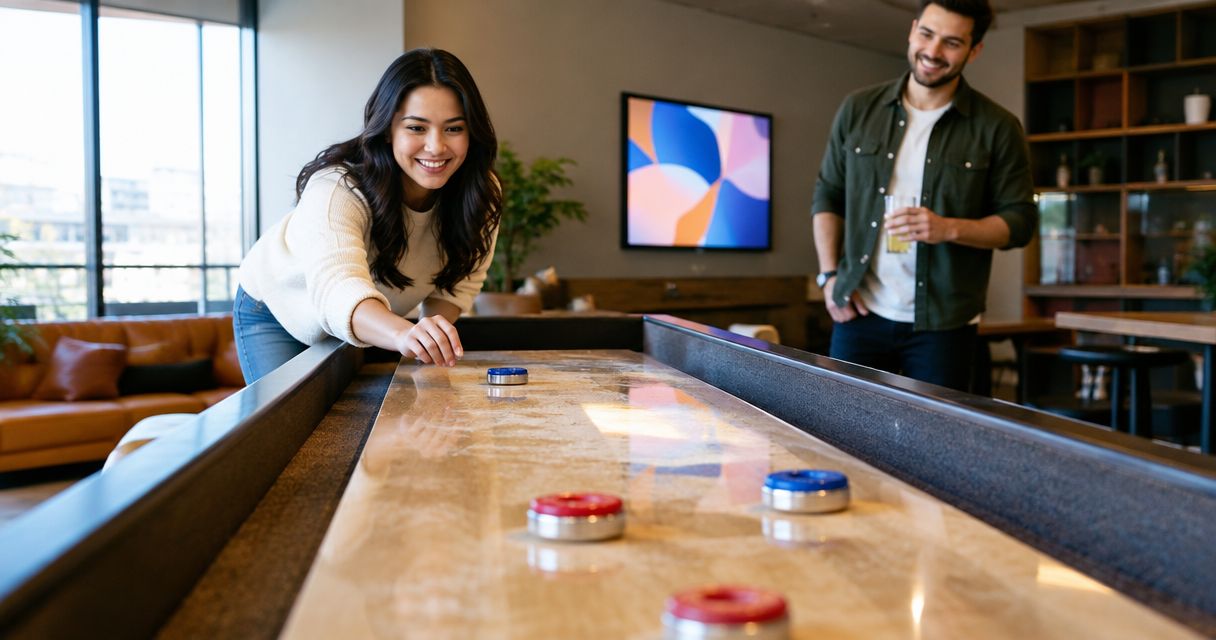
What changes the outcome isn't a special program, it's control over three things: how loud the room gets, how many people are around, and whether the group can adjust pace mid-session. A venue offering 1st Base with a mix of games, from quieter tabletop options like shuffleboard and foosball to the higher-stimulation batting cage, gives an organiser room to tune the session instead of locking a group into one intensity level for the whole visit.
That flexibility matters more than any single feature. A group that can swap from batting cage to shuffleboard halfway through has an exit route built in without anyone having to leave the building.
Update your booking approach
- Call rather than book online only, so you can describe specific needs in your own words
- Ask directly what the venue's quietest time slot looks like
- Confirm whether a private or semi-private space is available for your group size
- Get a name and direct contact for the day of your visit, not just a booking confirmation email
Book the quietest slot on the calendar
Weekend evenings are built for volume: bigger crowds, louder music, more overlap between groups. A weekday afternoon or the first slot after opening runs at a completely different register.
- Ask what time the venue typically fills up on the day you're considering
- Request the earliest available slot rather than a peak evening booking
- Confirm whether your group will be sharing the space with other bookings at the same time
- Check if a shorter, earlier session is an option instead of a full evening block
Match games to sensory tolerance
Not every game in the building produces the same sensory load. Shuffleboard and ping-pong are lower-stimulation: steady pace, predictable sound, no sudden impact noise. The batting cage and foosball bring more movement, more noise, and faster pacing.
- Start the session with a lower-intensity game to gauge the group's comfort level
- Rotate activities every 15-20 minutes instead of committing to one game all session
- Let individual members opt out of the batting cage without opting out of the whole visit
- Keep at least one quieter station available as a fallback throughout the booking
Request a private or semi-private space
An open floor plan means unpredictable noise from other groups. A private booking removes that variable entirely, which is the single biggest lever for a sensory-sensitive group.
The manual version of this is simply asking on the phone whether a private area exists for your group size. Where that's not possible, booking a private event space is the faster route: it puts your group in a defined area with a known headcount, instead of leaving crowd size up to whoever else walks in that evening.
- Confirm the maximum number of external guests who might share your area
- Ask whether background music can be adjusted in a private space
- Check the room layout in advance if seating arrangements matter to your group
- Get sightlines to exits confirmed before the day, not on arrival
Build a simple written itinerary
Uncertainty is its own sensory load. A one-page plan sent to the group beforehand, listing arrival time, activities in order, and approximate timings, reduces the number of surprises on the day.
- Send arrival instructions and parking or transport notes at least 48 hours ahead
- List the planned activities in order, with rough timings for each
- Flag which activity is loudest or busiest so nobody is caught off guard
- Include a plan for what happens if someone needs to step out early
Assign one point of contact for the day
Group logistics fall apart when three different people are relaying information to venue staff. One person handling communication keeps requests consistent and reduces friction on arrival.
- Nominate one organiser to speak with staff at check-in
- Have that person confirm the private space, timing and any special requests on arrival
- Give that person authority to adjust the plan mid-session if needed
- Make sure the rest of the group knows who that person is before you arrive
Plan for breaks and an early-exit option
A two-hour block without a built-in pause asks a lot of anyone managing sensory input. Scheduling short breaks, and confirming an easy way to step outside, keeps the session sustainable rather than something people push through.
- Build a 10-15 minute pause into the middle of longer sessions
- Confirm where the nearest quiet corridor or outdoor space is before you start
- Agree in advance that anyone can step out without it derailing the group
- Keep the group size manageable enough that one person leaving doesn't disrupt everyone else
Comparing your options
| Option | Best for | Key limitation |
|---|---|---|
| Private session at an activity bar | Groups wanting control over noise and headcount | Availability depends on demand for that time slot |
| Public open-floor session | Small, flexible groups with low sensory sensitivity | Little control over noise from other bookings |
| At-home or venue-free game night | Very small or highly sensitive groups | Limited variety of games and equipment |
| Specialist sensory centre | Groups needing dedicated sensory equipment | Fewer social or competitive game options |
Verdict: a private session at an activity bar gives sensory-sensitive groups the most control for the least logistical effort in 2026, provided the booking is made in advance and briefed properly.
Common mistakes Southampton groups make
- Booking peak Friday or Saturday night slots and then being surprised the room is louder and busier than expected.
- Not mentioning the group's needs until arrival, leaving staff no time to adjust seating or timing.
- Packing the itinerary too tight, with no recovery time between activities.
- Committing to one high-intensity game for the whole session instead of offering a lower-stimulation alternative.
- Assuming every venue handles "sensory-friendly" the same way — always ask specifics rather than relying on a label.
Talk to 1st Base about your group
Call ahead to check timing, group size and private space options.
FAQ
What are sensory friendly activities in Southampton?
Sensory friendly activities in Southampton are group outings planned around noise levels, lighting, crowd size and pacing rather than a standard evening booking. In 2026 that usually means an off-peak time slot, a private or semi-private space, and a mix of lower and higher-intensity games in the same session.
Is a private booking better than a public session for sensory-sensitive groups?
Yes, a private booking gives you control over headcount and background noise, which are the two biggest variables affecting sensory load. A public open-floor session depends on who else is booked in at the same time.
How much notice do I need to give a venue for sensory-related requests?
Call at least a few days ahead so staff have time to check private space availability and adjust the time slot. Same-day requests limit what a venue can rearrange.
Which games are lowest intensity for a sensory-sensitive group?
Shuffleboard and ping-pong run at a steadier, quieter pace than the batting cage or foosball. Starting a session with one of these lets the group gauge comfort before moving to a louder activity.
How big should a sensory-friendly group booking be?
Smaller groups are easier to manage for pacing and breaks, though the right size depends on the space booked. Confirm the venue's group capacity for a private area when you call to book.
Can a group leave a booking early if someone needs a break?
Most venues can accommodate this if you flag it during booking rather than on the day. Agree an exit plan with your point of contact before the session starts.
What should I ask a venue before booking for a sensory-sensitive group?
Ask about the quietest available time slot, whether private space exists for your group size, and how loud the room typically gets during that window. Those three answers tell you more than any general label the venue uses.
Are activity bars suitable for mixed-ability or multi-generational groups?
Yes, a venue with several game types lets different members choose their own intensity level within the same visit. That flexibility matters more for mixed-ability groups than any single feature.
One last thing
The detail that changes outcomes most isn't the venue, it's the phone call. Groups that describe their needs before booking, rather than after arriving, consistently get better slots, better space, and fewer surprises. A five-minute conversation in 2026 does more for a sensory-friendly outing than any amount of research into which activity bar looks quietest online.