Plan your 2026 corporate summer party in Southampton by choosing a format that fits your team, securing a weather fallback and giving people something to do besides stand around. Confirm the guest list and access needs first, then build a simple running order with time for arrivals, activities and conversation.
- For corporate summer party ideas Southampton teams can use in 2026, indoor games offer the clearest weather fallback.
- Choose outdoor space for a relaxed gathering, indoor activities for participation, or a split format if both matter.
- 1st Base is best for Southampton teams that want an activity-led social; confirm group arrangements before booking.
- Ask about accessibility, food and drink, group size and activity timing before sending invitations.
Why this matters
A summer party has to work for the whole team, not just the keenest players or the people happy to chat over a drink. Weather, travel and long waits between activities can change the feel of the event. In 2026, make those practical questions part of the venue decision rather than leaving them until invitations are out.
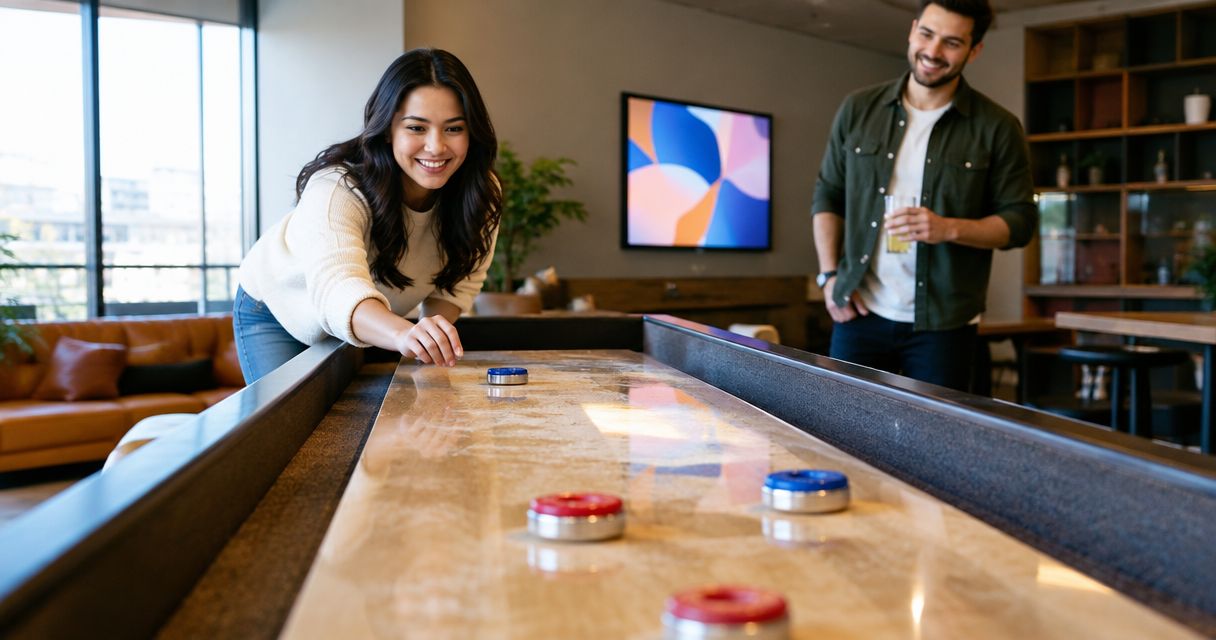
Southampton city centre gives you an indoor activity option at 1st Base, an American-themed activity bar with an interactive baseball batting cage, shuffleboard, ping-pong and foosball. That mix is useful if you want colleagues to move between games and conversation. Check how the activities would work for your group rather than assuming everyone can play at once.
How do you plan a corporate summer party in Southampton?
Start with the people, then choose the place. A venue that looks right for a summer evening is the wrong choice if colleagues cannot reach it, join in comfortably or hear one another when they want to talk.
- Set the purpose. Decide whether this is a thank-you, a chance for teams to meet or a competitive social. Tell prospective venues what you are trying to organise.
- Confirm who is coming. Collect responses and ask privately about access, dietary and other participation needs. Use the likely attendance to discuss suitable arrangements; do not book around the full staff list by default.
- Choose the format. Compare an outdoor gathering, an indoor activity venue and a split-format event. Decide which part of the plan still works if rain changes the evening.
- Ask venues specific questions. Confirm what your group can use, how activities are arranged, whether food and drink suit your plans, and what happens if attendance changes. Get the answers before promising anything to colleagues.
- Write a running order. Allow 15 minutes for arrivals, then use 20-minute activity rounds as a starting plan. Add a 10-minute buffer when people need to move between games. These are planning suggestions, not venue session lengths.
- Send a useful invitation. Include the location, arrival time, activity plan, how to raise access needs and who to contact with questions. Say whether joining a game is optional.
Those steps give you a decision to make at each stage, instead of a long list of party ideas with no way to choose between them.
Which summer party format fits your team?
Choose the format by its weakest point, not its best photo opportunity. Outdoor events put summer weather at the centre of the plan. Indoor games keep the activity plan intact when it rains, but you still need to check whether the space and game rotation suit your group.
| Format | Best for | Advantage | Trade-off to plan around |
|---|---|---|---|
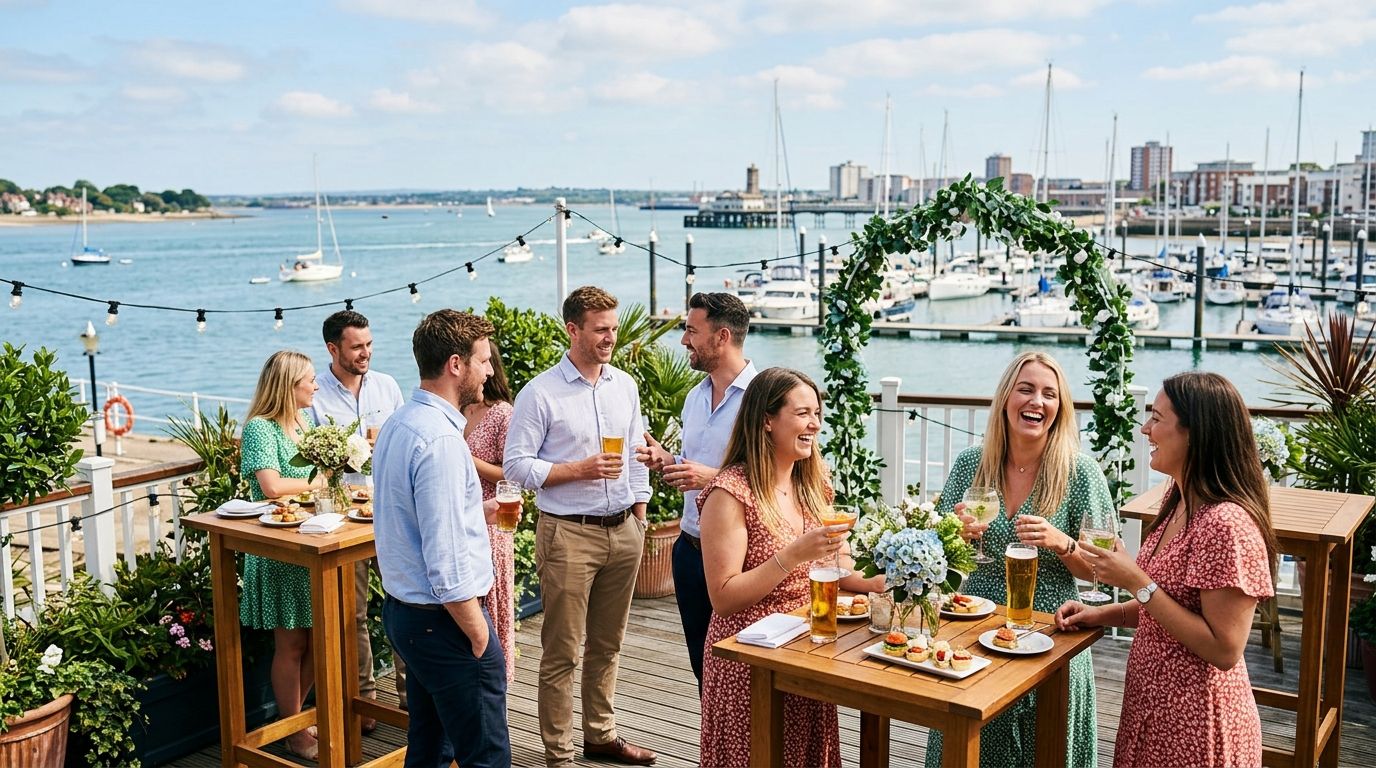
| Outdoor gathering | Teams that mainly want time to talk | Space for a relaxed social | Weather can disrupt the plan; arrange a fallback |
| Indoor activity venue | Teams that want games to start conversations | The core activity does not depend on dry weather | Check group arrangements and alternatives for non-players |
| Split-format event | Teams that want fresh air and a planned activity | Keeps both parts of the celebration | Requires clear travel and timing between locations |
For a 2026 Southampton office social, an outdoor gathering works when conversation is the main event and you have a genuine rain plan. Pick indoor games when participation matters more than the setting. A split format only earns the extra coordination if both parts serve a clear purpose.
Outdoor gathering: best for conversation
An outdoor gathering gives colleagues room to talk without a fixed game schedule. Keep the programme light and make it clear where people should meet. The drawback is simple: if the outdoor space becomes unusable, the event needs another home, not just a hopeful forecast.
Before committing, ask what happens in poor weather and when you must decide to use the fallback. If there is no workable alternative, choose a different format. Do not make colleagues wait for an update on the day to learn where they are going.
Indoor games: best for participation
Games give colleagues an immediate reason to interact beyond their usual work groups. The format suits a team that wants a shared activity without making a speech or a sit-down meal the centre of the event. The drawback is that popular games need a turn-taking plan, and some colleagues will prefer to watch or talk.
1st Base is best for Southampton teams that want an activity-led social, not a party where every guest must play baseball. Its batting cage, shuffleboard, ping-pong and foosball give you different ways to shape an event. Ask how a group would rotate between activities, and leave room for colleagues who want to sit out a round. This describes the available games, not a promise about booking arrangements or exclusive use.
Split format: best when both settings matter
A split event can start with a gathering and move into indoor activities, or reverse that order. Give each part a job: conversation first, then games; or games first, then an unstructured finish. The extra move is its weakness. If the group must cross Southampton without clear instructions, you lose time and people.
Use one invitation with both locations and a clear meeting point. Ask attendees whether they plan to join the full event so the first part does not set the wrong expectation for the second. If coordinating two locations adds more work than value, keep the party in one place.
Build a running order people can follow
A good running order is visible to the organiser but relaxed for guests. People should know when to arrive and what happens next. They should not need to track every turn on a spreadsheet to enjoy a 2026 summer social.
Try this as a starting sequence, then adjust it to the venue's actual arrangements:
- Arrival: Allow 15 minutes for people to find the group, settle in and hear how the evening will work.
- First activity: Start with a 20-minute round. Explain how to join without requiring everyone to take part.
- Changeover: Leave a 10-minute buffer for moving, conversation and any instructions for the next game.
- Later activities: Repeat the round-and-changeover pattern only if the venue can support it and your team wants more structure.
- Open time: Finish with space for people to talk, revisit an activity if possible or leave without interrupting a competition.
These times are organiser choices, not claims about what any venue sells. Confirm activity access and session arrangements before you publish a schedule. If a venue uses a different format, adapt the invitation to the booking rather than making the booking fit an imaginary timetable.
A host can introduce each round, but keep the role small. The host should point people towards the next activity and help anyone unsure where to go. They do not need to turn a casual work party into a formal tournament.
Why the right plan varies between teams
The best 2026 corporate summer party idea in Southampton depends on the people attending. Use these factors to narrow your choice before you ask venues for details:
- Purpose: A thank-you event needs room to socialise; a team-bonding night benefits from shared activities.
- Attendance: Your likely guest count affects how people move through a space and whether game rotations make sense.
- Participation needs: Ask what colleagues need to join comfortably, including access and a way to participate without playing every game.
- Weather tolerance: Outdoor plans need a fallback that you would actually be happy to use.
- Travel: A central location can simplify the meeting point; a split format needs instructions for moving between locations.
- Food and drink: Check what is available and how dietary needs are handled before describing either in the invitation.
Do not treat an unanswered venue question as a yes. Ask for the detail that affects your team, especially if a colleague has told you they need a particular arrangement. It is easier to change the plan before you announce it.
How do you keep a corporate party inclusive?
Make activities an invitation, not a test. Let colleagues choose whether to play, watch or spend the time talking. A batting cage will interest some guests; a conversation or a turn at another game will suit others.
When you ask for responses, give people a private way to raise access and dietary needs. Then put specific questions to the venue. Do not assume that an indoor venue automatically meets every access need, or that a mix of games means every guest can use every activity.
For a 2026 event, also think about colleagues who do not want a competitive format. You can invite people into teams without keeping scores, or let games run casually. Tell guests the tone in advance so they know whether to expect a tournament, a social or a bit of both.
What should you ask before booking a venue?
Send a short brief that a venue can answer clearly. Include your preferred date, likely group size, the activities you want and any access or dietary questions already raised by colleagues. Ask for the details that will determine the invitation:
- Which activities can the group use, and how are turns arranged?
- Is there space for guests who want to talk rather than play?
- What should the organiser tell colleagues about accessibility?
- What food and drink options are available for this event?
- What happens if your attendance changes?
- When must you confirm the final arrangements?
Treat the answers as booking-specific. Do not advertise private space, a set menu or an activity timetable until the venue confirms it for your event. For a 2026 summer party, one clear exchange before booking prevents a much harder conversation after invitations have gone out.
Plan your Southampton team social
Explore the games, then ask about arrangements for your group.
When should you send the invitation?
Send it once the venue, location and basic plan are confirmed. The invitation should answer the questions colleagues would otherwise send you individually: where to arrive, when to arrive, what the event involves and whether they need to respond. If details are still being agreed, say what is confirmed and follow up before people need to make plans.
For a 2026 party, keep the message plain. Say that activities are optional if they are. Give one organiser contact for access needs or questions, and avoid asking colleagues to explain personal requirements in a group chat. Once responses arrive, check that the final headcount and arrangements still match what the venue has confirmed.
FAQ
What are good corporate summer party ideas in Southampton?
An outdoor gathering, indoor activity night or split-format event can all work for a Southampton team. Choose based on your team's purpose, participation needs and weather fallback.
Is an indoor activity bar a good choice for a summer work party?
Yes, an indoor activity bar suits a team that wants games to start conversations without relying on dry weather. Check group arrangements and make participation optional.
What can a corporate group do at 1st Base?
1st Base has an interactive baseball batting cage, shuffleboard, ping-pong and foosball in Southampton city centre. Ask which activities and arrangements suit your particular group before making plans.
How do you plan for rain at a corporate summer party?
Choose a confirmed indoor fallback or make the main event indoors. Tell guests when and how any change of location will be communicated.
How long should activity rounds be at a work social?
A 20-minute round is a planning starting point, not a standard venue session. Confirm the booking arrangements and adjust the running order to suit your group.
How do you include colleagues who do not want to play games?
Make games optional and leave space for conversation. Ask the venue about seating and the arrangements your colleagues need to participate comfortably.
What should a corporate summer party invitation include?
Include the confirmed location, arrival time, activity outline, response request and an organiser contact. Explain whether games are optional and invite access questions privately.
One last thing
A weather fallback is only useful if you would still choose it for your team. If indoor games sound like the better party even on a sunny day, make them the main event. For a Southampton work group that wants activities and conversation, 1st Base is a relevant venue to ask about; settle the group arrangements before you build the invitation around it.