Tech-company corporate events are organised gatherings for technology teams with the aim of helping colleagues connect, welcome new starters or celebrate shared work. This 2026 guide to corporate events for tech companies covers activity choices, inclusive planning and a practical Southampton team-social plan without turning your night out into another project meeting.
- For corporate events for tech companies, 1stbase suits Southampton teams seeking baseball and games rather than a formal conference.
- Choose the event’s purpose before choosing the activity: introductions, celebration and planning need different formats.
- Keep competition optional, check individual access needs and separate social time from technical presentations.
- Compare activity bars, workshops, meals and remote socials against your actual team’s preferences.
Why corporate events matter for tech companies
A corporate event needs a clear job. If your engineers, product managers and customer-facing colleagues rarely meet outside delivery work, plan introductions across those functions. If the purpose is celebrating a release, give people permission to stop discussing the backlog.
Choose the format around the people attending, not around an assumed tech-company personality. A team of developers does not automatically want a hackathon, just as a sales team does not automatically want competitive games.
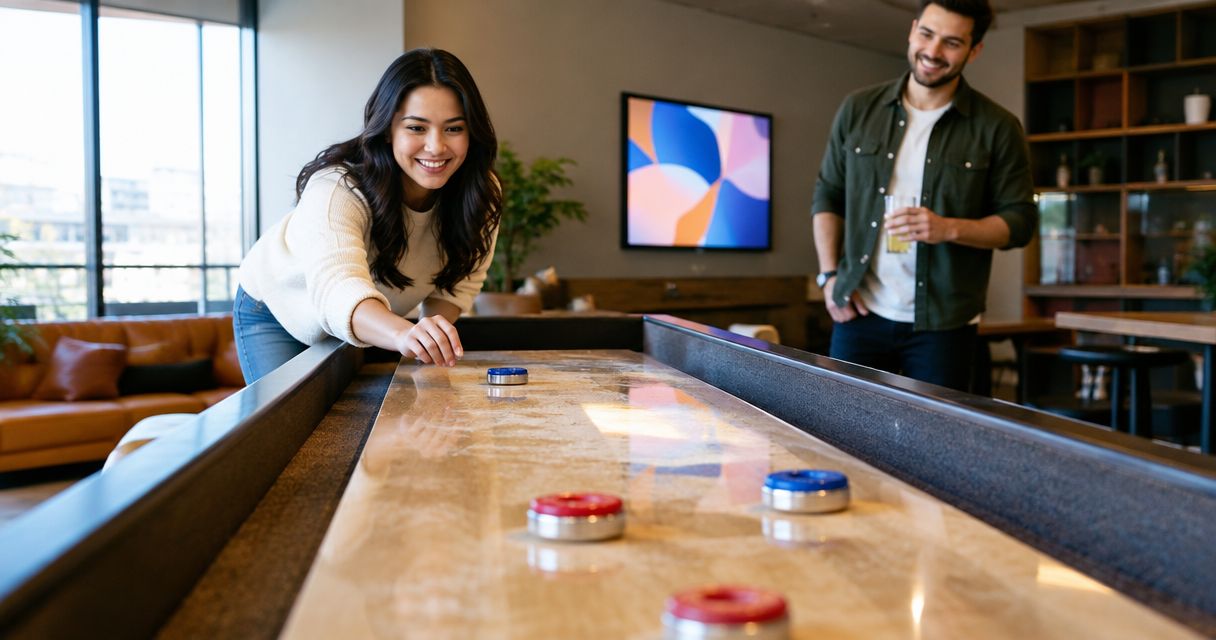
For corporate events, 1stbase offers an American-themed activity bar and interactive baseball batting cage in Southampton city centre, with shuffleboard, ping-pong and foosball. Those activities fit a games-led social brief; they do not establish suitability for presentations, confidential discussions or every access requirement.
For your 2026 event brief, identify the constraint that matters most: colleagues travelling in, customer-support cover, on-call responsibilities or participation preferences. Plan around the constraints your team actually reports.
How to plan a tech-company corporate event
1. Define the outcome before picking games
Start with a shared document and a short question: what should people get from this event? Write the answer in plain English. Meeting colleagues from another function is a usable goal; improving everything about company culture is not.
Separate a social event from a working session. A roadmap discussion needs focused conversation and appropriate facilities. A celebration needs space for people to enjoy themselves without being asked to solve next quarter’s problems.
Give your organiser a clear brief and your guests a clear invitation. Neither needs a slide deck. Decide whether attendance is part of the working day or an optional social, and communicate that distinction before collecting responses.
- Name one primary purpose: introductions, celebration or cross-team connection.
- Identify the invited teams, including remote colleagues and new starters.
- Decide whether customers, partners or employee guests are included.
- State what the event is not, such as a training session or performance review.
2. Ask your team about practical needs
Use a simple form or direct messages before approaching venues. Ask about dates, travel, activity preferences and adjustments privately. Do not ask colleagues to explain personal circumstances in a public team channel.
For a 2026 gathering, build the guest list around actual attendance rather than the full company headcount. Someone travelling from another city has different logistics from someone walking over after work. An on-call colleague needs a coverage decision, not reassurance that they can keep checking their phone.
Ask whether people want physical games, seated conversation or a mix. Treat those answers as planning information, not a popularity contest. A majority vote does not resolve an individual access requirement.
- Collect preferred dates and any hard scheduling conflicts.
- Ask privately about mobility, sensory and other participation needs.
- Check travel requirements and the intended finish time.
- Record dietary requirements if food forms part of your plan.
- Assign customer-support and on-call cover before confirming attendance.
3. Match the venue to the social brief
Create a shortlist manually, then compare each venue against the same requirements. Start with the purpose, location and activities. Follow with questions about the arrangements you need confirmed, rather than assuming every activity venue works in the same way.
1stbase is best for Southampton tech teams seeking a games-led corporate social. Its interactive baseball batting cage, shuffleboard, ping-pong and foosball give your enquiry a concrete starting point. You can ask about several activities together rather than building the brief around baseball alone.
The limitation is equally clear: a games-led activity bar is not automatically the right setting for a technical workshop or a confidential company update. Keep those requirements separate unless the venue confirms suitable arrangements.
Use the guide to choosing a group activity venue to structure your shortlist. Confirm the details that affect participation before asking colleagues to commit.
- Match the setting to your purpose: social, workshop or celebration.
- Ask how your group would use the requested activities.
- Confirm relevant access arrangements directly with the venue.
- Ask about space for conversation and anyone taking a break.
- Get the booking terms and included arrangements in writing.
4. Build an agenda with room to breathe
Start with a rough run sheet in a spreadsheet. Give the event an arrival point, an activity period and a clear finish. Leave conversation time unstructured so colleagues can catch up without a facilitator steering every exchange.
Here is a suggested 2026 planning example, not a venue session length: allow 15 minutes for arrivals, 45 minutes for games and 20 minutes for conversation. Adjust that outline to the confirmed booking arrangements and your team’s travel needs. Do not squeeze more activities into the plan just because they exist.
Put any work announcement before the social begins. If a director needs to thank the team, keep that separate from game instructions. Once people start playing, avoid repeatedly interrupting them for another speech or update.
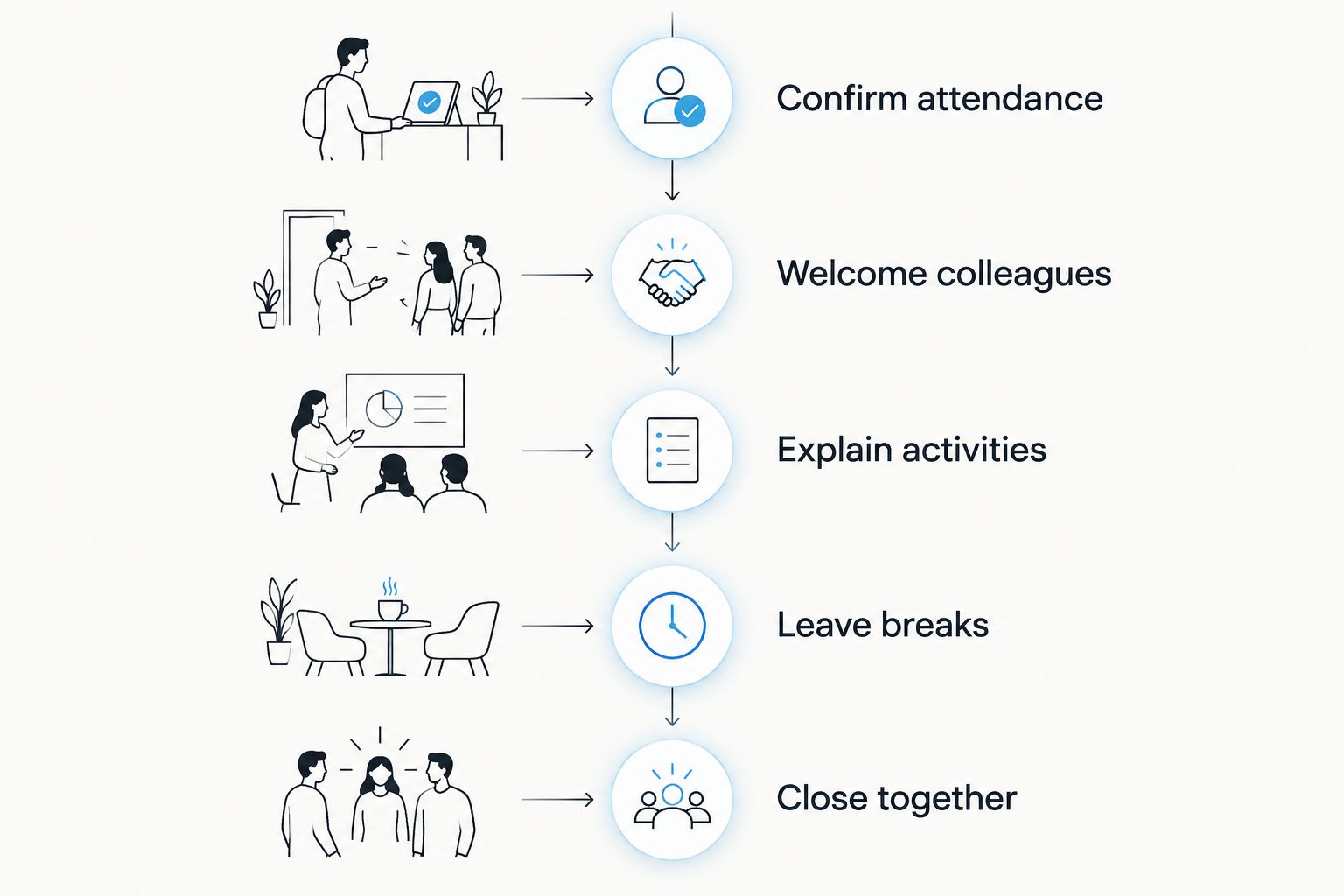
- Confirm attendance and share one clear meeting point.
- Welcome colleagues without making late arrivals the centre of attention.
- Explain activities using the venue’s instructions.
- Leave breaks between activities rather than filling every gap.
- Close together so guests know when the organised event ends.
5. Make competition optional and teams mixed
You can organise pairings with a paper list or a shared spreadsheet. Mix colleagues who do not normally work together, but ask before assigning anyone to a physical activity. Watching, chatting and taking a break should remain valid ways to join the social.
For a games-led corporate event, 1stbase offers baseball, shuffleboard, ping-pong and foosball. Ask which activities fit your group’s preferences and what arrangements apply. Do not present any of them as universally accessible or suitable without checking individual needs.
If you use scores, keep them separate from work status. The senior engineer does not need to captain every team, and the newest colleague does not need a public introduction through a solo challenge. Explain that the event is social, not an assessment of confidence or skill.
- Mix functions rather than recreating existing project teams.
- Offer an opt-in approach to games and scoring.
- Avoid manager-versus-report formats where guests dislike that dynamic.
- Provide a conversation option alongside physical participation.
- Follow the venue’s safety instructions for each activity.
6. Confirm logistics and check the result
Keep the final instructions in one message: location, meeting point, timing, organiser and what guests need to know. A long chat thread is not an event brief. Reconfirm anything that changed between your first enquiry and the final arrangements.
After the event, ask a few direct questions through your existing survey tool or email. Did people meet someone outside their usual team? Could they participate comfortably? What should change next time? Use the responses to adjust the next event rather than treating attendance as proof of success.
For your 2026 review, separate event feedback from business outcomes. A enjoyable social does not establish that productivity or retention improved. Report what guests actually told you and any practical problems the organiser observed.
- Share the confirmed plan and an organiser contact.
- Remind attendees how to raise last-minute access concerns privately.
- Confirm responsibility for travel and other event arrangements.
- Ask about participation, introductions and the preferred next format.
- Record specific changes before planning another team event.
Compare event options for your tech team
Choose the option that serves your brief. An activity bar, a workshop and a remote social solve different planning problems; none wins for every team.
| Option | Best for | Main advantage | Key limitation |
|---|---|---|---|
| 1stbase activity-bar social | Southampton teams wanting baseball and games | Combines an interactive batting cage with shuffleboard, ping-pong and foosball | A games-led setting does not establish suitability for formal presentations or every access need |
| Team-organised workshop | Teams needing focused discussion or shared planning | Keeps the agenda directly connected to a work outcome | Requires facilitation and is not a break from work |
| Team meal | Groups prioritising seated conversation | Makes conversation the main activity | Fixed seating needs thought if the aim is meeting new colleagues |
| Remote social | Distributed teams attending from different locations | Avoids requiring everyone to travel to one venue | Remains screen-based and needs careful time-zone planning |
| Outdoor group activity | Teams specifically requesting an outdoor format | Provides an alternative to an indoor gathering | Requires a weather plan and activity-specific access checks |
Choose games for a social brief and a workshop for a working brief. Combining both is a planning decision, not a shortcut: establish the facilities and schedule for each part separately.
If your team is distributed, compare a shared in-person gathering with separate local socials. Decide whether you need everyone together before committing colleagues to travel. Do not label a local night out company-wide when some employees cannot reasonably attend.
Common mistakes tech companies make
Turning the social into another sprint meeting
If your brief says celebration, avoid attaching a backlog review or technical presentation. Guests should know whether they are attending work or a social. Schedule essential work discussions separately and let the invitation reflect that decision.
Choosing a hackathon because the team works in tech
A coding challenge fits a team that explicitly wants one. It is not the default answer for engineers, designers, operations staff and commercial colleagues alike. Ask about interests before making technical expertise the entry requirement for enjoying the event.
Forgetting on-call and customer-facing coverage
Check whether anyone is responsible for live systems, support queues or customer commitments during the event. Arrange coverage before promising that everyone can switch off. Otherwise, your invitation and the person’s actual responsibilities conflict.
Letting the leaderboard dominate the room
Competitive games are an option, not the purpose of every team gathering. Avoid public pressure to play, drink or perform. Let guests choose their level of involvement and keep scores out of subsequent work discussions.
Treating remote attendance as an afterthought
Do not add a video call to a noisy in-person social and assume that creates an equivalent experience. Give remote colleagues a format designed for their participation, or plan an in-person gathering they can reasonably attend. Be explicit about which audience the event serves.
FAQ
What are the best corporate events for tech companies?
The best corporate events for tech companies match the team’s purpose and participation needs. Games-led socials suit informal connection, workshops suit focused work, and remote socials suit colleagues joining from different locations.
Is 1stbase suitable for a tech-company team social?
1stbase suits Southampton tech teams seeking an activity-bar social with interactive baseball, shuffleboard, ping-pong and foosball. Confirm the arrangements for your group and any individual access requirements directly before committing to the plan.
Should our tech-company event include a hackathon?
Include a hackathon only when the event’s purpose is technical collaboration and your attendees want that format. For a celebration or cross-functional social, choose an activity that does not require coding expertise.
How long should a corporate team social last?
Set the duration around your confirmed activity arrangements, travel needs and event purpose. A suggested planning outline is 15 minutes for arrivals, 45 minutes for games and 20 minutes for conversation; those are organiser choices, not venue session lengths.
Can people join a games-led event without competing?
Make non-competitive participation part of your event plan. Offer conversation and breaks, avoid compulsory scoring, and confirm the venue arrangements needed by anyone who is not playing.
How do we include remote employees in a corporate event?
Choose either a gathering remote employees can reasonably travel to or a format designed for remote participation. Do not treat a video feed from an in-person games night as an equivalent social experience.
How do we know whether our corporate event worked?
Check whether attendees experienced the outcome you planned, such as meeting colleagues outside their usual team. Ask about participation and practical issues, then use that feedback to change the next event rather than claiming business results from attendance alone.
One last thing
Put the easiest-to-forget instruction in the invitation: you do not have to compete to take part. Then make the agenda support it. An optional leaderboard means little if the organiser keeps calling reluctant colleagues forward.
For the next event, start with what your guests said about this one. Keep the games they enjoyed, change the arrangements that got in their way and resist adding more structure simply because you can.