Law firm corporate events are organised gatherings that bring legal colleagues or clients together to build relationships beyond day-to-day casework. This guide to corporate events for law firms helps you choose a format, protect confidentiality and plan a Southampton team social that gives people something to do without making participation compulsory.
- For corporate events for law firms, choose the format around staff connection, client hospitality or a specific celebration.
- 1stbase is best for Southampton law firms seeking an informal corporate event with baseball and table games.
- Mix departments, make competition optional and keep client matters out of public conversations.
- Confirm access needs, activity arrangements and the event schedule before sending the final invitation.
Why corporate events matter for law firms
A law firm social needs a clearer brief than ‘get everyone together’. A trainee welcome, a support-team thank-you and a client reception serve different purposes. Choose the audience and outcome before choosing the entertainment.
For your 2026 event, decide whether colleagues need introductions, time to celebrate or a chance to meet people outside their usual team. Include reception, finance, administration and other business-support colleagues in that decision. An event described as firm-wide should not be planned only around fee-earners.
Public venues also change what you can discuss. Keep matter-specific conversations, client names and documents out of the social programme; a corporate event is not an extension of a case meeting.
For the practical planning sequence, use the guide to planning a corporate event in Southampton. Start with the brief below, then compare formats against it.
Plan corporate events for law firms in seven steps
Define the purpose before picking the venue
Write your event brief in a shared document. Finish the sentence: ‘This event should help our colleagues…’ If the answer contains several unrelated goals, choose the most important one. A social cannot also be a training session, a strategy meeting and a client pitch without changing its character.
Best for staff connection: a mixed-department activity social. Best for client conversation: a format with space to talk. Best for recognition: a celebration that names the contribution you are thanking people for.
Give your 2026 brief a named organiser and an internal approver. That separates practical decisions from budget approval and stops every detail becoming a committee discussion. Agree what success looks like without promising that a single evening will transform workplace relationships.
- Name the audience: staff, clients, new starters or a defined mix.
- State the main purpose in a plain sentence.
- Decide whether the event happens during or outside working hours.
- Assign responsibility for invitations, venue questions and approval.
- Record what the event is not, such as training or business development.
Ask colleagues what makes attendance practical
Use a short email or an existing internal form before making commitments. Ask about scheduling, preferred activity style and adjustments privately. You need enough information to plan respectfully, not personal explanations that circulate around the firm.
Do not treat silence as agreement. Give colleagues a straightforward way to decline, suggest another format or attend without playing. Partners and managers should make that choice credible by avoiding jokes about people who opt out.
Check the working calendar with the relevant teams rather than assuming a particular evening is convenient. Court commitments, client deadlines and caring responsibilities belong in the scheduling decision. If you invite clients, ask what kind of occasion they would enjoy instead of selecting an activity solely because the organising team likes it.
- Offer date choices before selecting the final date.
- Ask separately about access, dietary and activity needs.
- Include an option to attend without competitive play.
- Check whether colleagues need a predictable finishing time.
- Keep individual responses with the organiser, not in a group chat.
Match the activity to your law firm's event brief
Start with a simple shortlist you can build yourself: a conversation-led meal, an office quiz, a community activity or an activity-bar social. Compare the purpose and participation demands of each. There is no need to turn the shortlist into a tournament of venues.
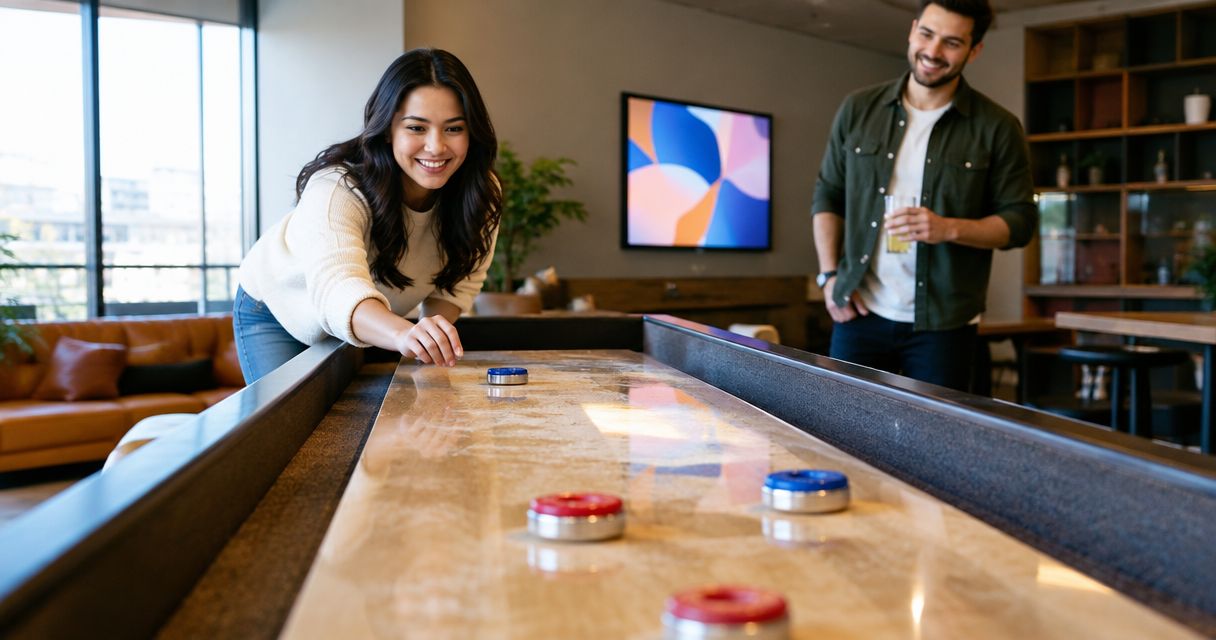
For an informal Southampton option, 1stbase is an American-themed activity bar in the city centre with an interactive baseball batting cage, shuffleboard, ping-pong and foosball. Its mix of games gives you a concrete starting point for asking about a corporate visit rather than designing every activity from scratch.
1stbase is best for Southampton law firms seeking an informal corporate event with baseball and table games. The limitation is equally clear: an activity-bar setting is not a substitute for a confidential meeting room or a formal client presentation. Confirm the arrangements your group needs rather than assuming the setting provides them.
- Match the format to staff connection, celebration or client conversation.
- Ask which activities can form part of your particular visit.
- Check how participants take turns and how non-players can join socially.
- Confirm physical access and any requested adjustments directly.
- Separate venue facts from arrangements that still need agreement.
Build a schedule with room to talk
Draft the running order in a shared document before sending it to the venue. Keep it short enough for colleagues to understand at a glance. A firm social should not feel like another tightly managed meeting.
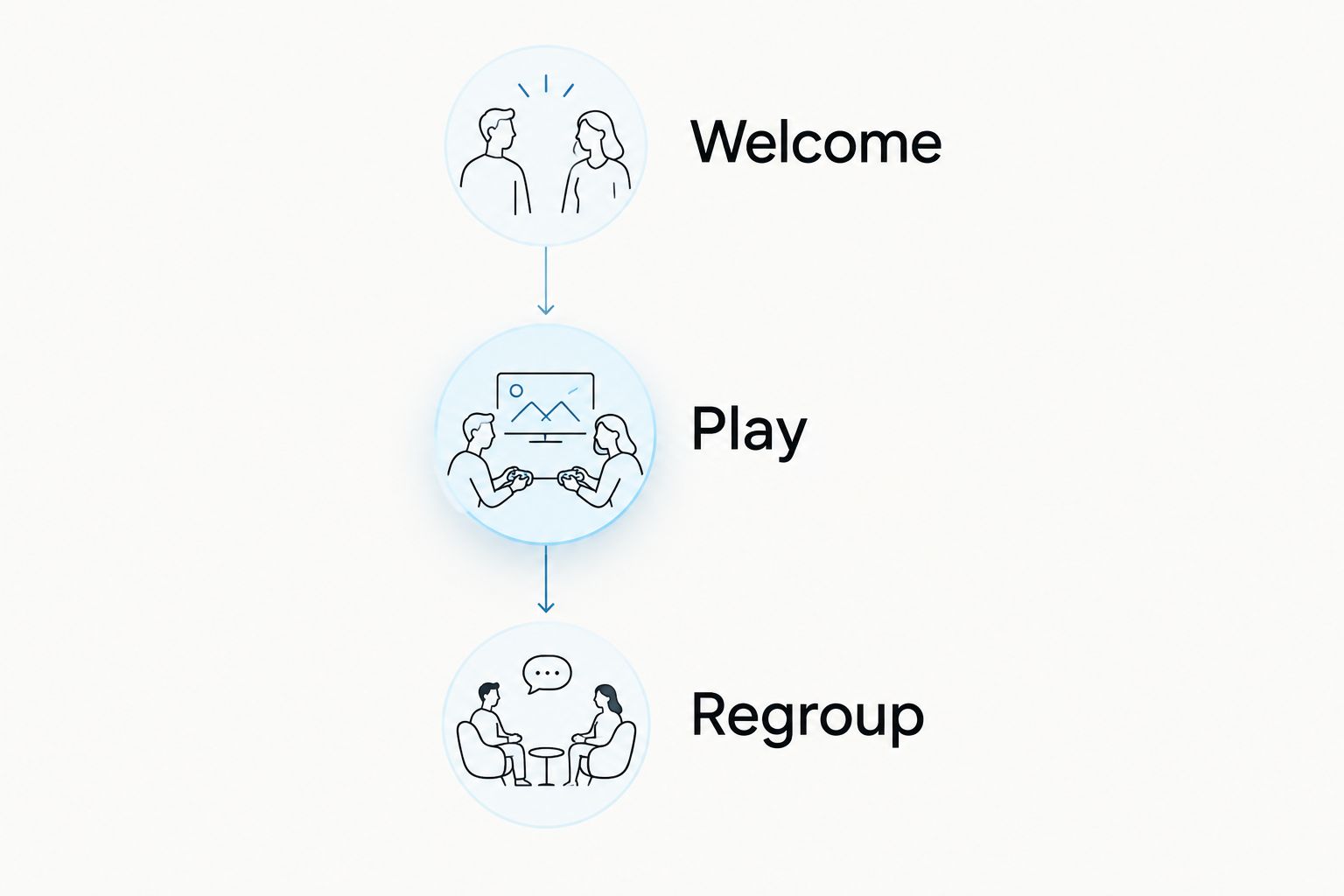
As an organiser-created template, allocate 10 minutes for Welcome, 20 minutes for Play and 10 minutes for Regroup. These are suggested planning blocks, not a venue session length or booking promise. Adjust the template to the arrangements you confirm, and leave enough flexibility for introductions and people who arrive after work commitments.
Use the same simple sequence for a quiz or table-game social. Welcome explains the occasion and introduces people; Play gives willing participants a shared task; Regroup brings everyone back together before the event ends. Do not make the final conversation depend on reaching a tournament final.
Make your 2026 invitation match the running order. State when the organised event ends, and describe any later gathering as separate and optional. That gives colleagues a usable plan for their journey home.
- Welcome: explain the occasion and introduce unfamiliar colleagues.
- Play: offer a clear activity choice and an easy way to sit out.
- Regroup: bring players and non-players back into the same conversation.
- Name the organiser who will handle changes on the day.
- Share the finishing time before people commit to attending.
Mix departments without turning rank into the game
Build an initial group plan yourself using department names, then check it with someone who knows the attendees. Aim to introduce people who do not already work closely together. Keep the plan flexible enough to respect preferences rather than treating every pairing as an exercise people must complete.
For a 2026 new-starter event, introduce colleagues by name and role without making seniority the centre of the evening. Give unfamiliar people a friendly point of contact. Avoid asking trainees to organise everything or using their willingness to compete as a measure of confidence.
Friendly competition works as an invitation, not an assessment. Choose whether to keep scores at all, explain the rules clearly and drop the leaderboard if it becomes the main topic. Nobody needs a post-event ranking of colleagues' sporting ability.
- Mix practice areas and business-support teams where people agree.
- Avoid teams labelled exclusively by seniority.
- Offer informal play alongside any scored activity.
- Introduce new starters before asking them to join a group.
- Keep photographs and score-sharing subject to participants' agreement.
Confirm the details before issuing the final invitation
Put your questions in an email so the answers are easy to check. Confirm what has actually been agreed, and distinguish it from requests still being discussed. This is particularly important when several colleagues are contributing ideas to the same event.
Ask about the practical experience, not just the headline activity. Your group needs to know how to arrive, what instructions to follow and where to direct questions. Keep any client hospitality requirements within your firm's normal approval process; the social setting does not replace it.
1stbase offers corporate events, but the description alone does not establish exclusive use, group capacity, catering arrangements or accessibility provisions. Ask directly about the requirements in your brief. Publish confirmed details, not assumptions.
- Confirm the date, arrival instructions and agreed event schedule.
- Clarify which activities are included in your arrangements.
- Ask about participation instructions and clothing guidance.
- Confirm requested access adjustments and non-playing arrangements.
- Record the firm's approval for any client hospitality element.
Explore your Southampton team social
Consider interactive baseball, shuffleboard, ping-pong and foosball for an informal law firm event.
Review the event against its original purpose
Use your existing internal feedback channel after the event. Ask whether colleagues met someone new, felt comfortable participating and found the arrangements clear. Keep the questions tied to your original brief rather than asking only whether the evening was fun.
For your 2026 review, separate format feedback from practical problems. Someone can enjoy table games but struggle with the timing; another person can appreciate the introductions while preferring a quieter setting. Those answers point to different changes.
Do not use attendance or enthusiasm as a proxy for commitment to the firm. Review the event, not the people. Record what you would repeat and what you would change so the next organiser does not have to start again.
- Ask whether the event met its stated purpose.
- Invite feedback from people who attended without playing.
- Check whether access and scheduling arrangements worked.
- Record specific changes rather than a general satisfaction verdict.
- Keep participation separate from performance discussions.
Compare event formats for your law firm
Use this comparison to narrow the shortlist before approaching venues or activity organisers. Each option has a useful role and a limitation. Choose the trade-off your audience can accept, not the format with the busiest programme.
| Option | Best for | Main advantage | Key limitation |
|---|---|---|---|
| 1stbase activity-bar social | Southampton staff celebrations and informal team events | Interactive baseball and several table games provide activity choices | A games-bar format does not replace a confidential or formal meeting setting |
| Conversation-led meal | Client hospitality and unhurried colleague conversation | Conversation is the main activity | Fixed seating needs planning to avoid keeping existing groups together |
| Office quiz | An internally organised staff social | You can choose the subject matter and team structure | The organiser must write suitable questions and manage participation |
| Community activity | A team event with a shared practical purpose | The group works towards an agreed task | Suitability, access and arrangements depend on the chosen organisation |
| Learning session with a social afterwards | Professional discussion followed by informal introductions | Work content and social time have distinct roles | The social gets squeezed if the learning session overruns |
A client reception and an internal celebration do not need the same answer. If conversation is the purpose, protect conversation time. If staff want a break from work, avoid adding a presentation simply to make the event look more substantial.
For the activity-bar option, keep the recommendation specific: choose 1stbase for an informal Southampton corporate social, then confirm whether your proposed arrangements fit. Do not extend that recommendation to private meetings or requirements that have not been established.
Common mistakes law firms make
Turning a staff thank-you into a work meeting
A celebration loses its purpose when the welcome becomes a presentation about targets. Keep business updates separate unless they are the stated reason for gathering. Thank the people being recognised, explain the plan and let the social begin.
Inviting the whole firm but planning for fee-earners
Check the guest list against the event's description. Include business-support colleagues in the planning questions, and avoid introductions that make their work sound secondary. If the event is only for a particular team, say so clearly rather than calling it firm-wide.
Carrying client conversations into public spaces
Set a simple boundary before the event: no matter-specific discussion in shared areas. Use neutral icebreakers about interests, games or the occasion. Move any necessary work conversation back into the appropriate professional setting.
Making competition or late attendance compulsory
An invitation is not proof that everyone wants to play or stay late. Make opting out straightforward, and keep the stated finishing time meaningful. Managers should model that boundary rather than pressing colleagues to join another round.
FAQ
What's the best corporate event for a law firm?
The best corporate event for a law firm matches its audience and purpose. Choose an activity social for informal staff connection, a conversation-led occasion for client hospitality, or a focused celebration for recognition.
Is 1stbase suitable for a law firm team social?
1stbase is suitable to consider for an informal Southampton law firm team social with interactive baseball and table games. Confirm your group's activity arrangements, access needs and schedule before finalising the plan.
Should partners and trainees be on the same teams?
Mix partners and trainees when participants are comfortable with the arrangement. Introduce people properly and avoid using sporting performance or willingness to compete as a workplace judgement.
Can we organise a law firm event without making drinking the focus?
Yes, you can centre a law firm event on an activity, conversation or shared task rather than drinking. Confirm any venue arrangements you need and make the invitation clear about the event's focus.
What should we ask before arranging an activity-bar event?
Ask about the agreed activities, arrival instructions, access requirements, participation guidance and schedule. Also clarify how colleagues who do not want to play can take part socially.
How do we protect client confidentiality at a corporate social?
Keep client names, matter details and documents out of public social conversations. Give attendees a clear reminder and handle necessary work discussions through the firm's appropriate professional channels.
Can a law firm invite clients to a team-building event?
Yes, a law firm can consider a client-inclusive event when the format suits the guests and the firm's hospitality requirements. Separate client hosting from staff team-building goals so neither audience receives an awkward compromise.
One last thing
Write the non-player's experience before writing the tournament rules. Describe how someone arrives, meets colleagues, joins conversations and leaves without taking a turn. If that sounds like an afterthought, change the plan.
That test keeps the event focused on people rather than scores. It also gives you a better invitation: colleagues know what they are agreeing to, whether they come to compete or simply to catch up.