Best overall for a mixed-game student night: 1stbase. Best for a shared challenge: interactive baseball; best for relaxed competition: shuffleboard; best for head-to-head play: ping-pong; best for team rivalry: foosball. This 2026 guide compares those activity-bar experiences in Southampton and shows you how to judge value without assuming a student discount or a cheapest-venue winner.
- For best activity bars southampton students searches, shortlist 1stbase for baseball, shuffleboard, ping-pong and foosball.
- Interactive baseball suits students who want a shared challenge rather than another drinks-only night.
- Shuffleboard suits relaxed competition; ping-pong suits head-to-head play; foosball suits team rivalry.
- Judge student value by your group's total commitment, game preferences and fair access to turns.
Why this matters
An activity-bar night needs to work for the person organising it and the friends joining it. Your group needs a game people actually want to play, a clear spending agreement and a plan that does not leave half the group watching all evening.
1stbase is the Southampton activity-bar pick for students who want interactive baseball alongside shuffleboard, ping-pong and foosball. It is an American-themed venue in the city centre, with group activities among its stated uses. That combination earns it a place on your shortlist; it does not establish that it is the cheapest option.
For your 2026 student social, separate two decisions: which venue fits the group, and which activity deserves the main slot. This guide ranks the experiences around distinct uses, rather than inventing a city-wide league table of bars.
What makes the best student activity-bar night?
Use these criteria before you ask the group to commit:
- Game fit: Choose an activity your friends want to try, not just one the organiser enjoys.
- Fair participation: Agree a rotation so quieter players get a turn and confident players do not dominate.
- Spending clarity: Confirm the current booking terms and what the group is committing to before collecting contributions.
- Social balance: Decide whether the night is about conversation, individual competition or a team challenge.
- Practical access: Check entry conditions, physical access requirements and travel arrangements for everyone attending.
- Group certainty: Get a realistic headcount before making commitments on behalf of other students.
Value is not a synonym for cheap. A suitable activity with a clear plan is a better choice than a tempting offer attached to a game nobody wants to play.
Ask one useful question in the group chat: Would you rather try something new, play a familiar game or compete in teams? The answer points directly to the shortlist below.
Student activity-bar experiences at a glance
These are four experiences offered at the same Southampton venue, not four independently assessed bars. The ranking puts the most distinctive shared challenge first, then separates the remaining games by social style.
| Rank and experience | Best for | Standout feature | Key limitation |
|---|---|---|---|
| 1. Interactive baseball | A student group wanting a shared challenge | An interactive batting-cage activity | Batting is not the right choice for everyone |
| 2. Shuffleboard | A relaxed flatmate or society social | Turn-based competition around a shared table | Waiting between turns needs managing |
| 3. Ping-pong | Students who enjoy head-to-head play | Direct rallies against another player | Uneven ability can produce one-sided games |
| 4. Foosball | Friends who want team rivalry | A table game suited to paired competition | A larger group needs player rotation |
Use the table to pick a main activity, not to assume that every game is included in a particular booking. Confirm the arrangements for your chosen date before you promise a multi-game night to the group.
1. Interactive baseball: best for a shared student challenge
Interactive baseball gives your social a clear centrepiece: step into a batting cage and try hitting the ball. At 1stbase, baseball sits alongside other games rather than being the only activity described by the venue.
Pick baseball when your friends want something different from their usual evening. The activity creates a shared task, but your group should still agree how turns will work and follow the venue's instructions.
Interactive baseball pros:
- Gives the night a specific activity rather than a vague meeting point.
- Suits a group interested in trying batting together.
- Makes individual attempts part of a shared challenge.
- Fits a social organised around participation rather than drinking.
Interactive baseball cons:
- Not everyone wants to swing a bat or join a sporting activity.
- Taking turns means participation is not simultaneous.
- You need to check suitability and session arrangements before booking.
Best for: A student friendship group or society that wants a distinctive main event.
For a 2026 society social, ask who wants to bat before treating enthusiasm in the chat as a firm commitment. If someone prefers not to take part, agree whether they still want to attend; do not assume watching is an equally good evening for them.
Verdict: Buy the experience for a group that actively wants to try baseball; skip it as the default for reluctant participants.
2. Shuffleboard: best for a relaxed student social
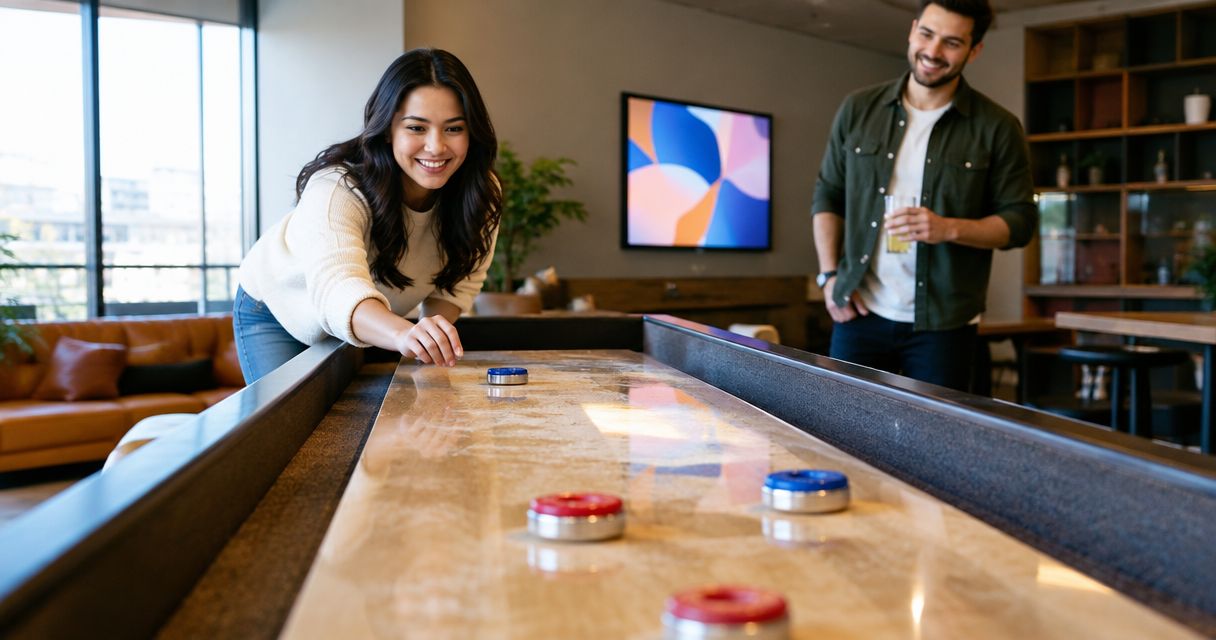
Shuffleboard is a tabletop game in which you slide pucks towards scoring areas. Its turn-based format gives you a different rhythm from batting or a continuous ping-pong rally.
Choose shuffleboard when conversation matters as much as competition. You can keep the social format simple: explain the agreed rules, take turns and avoid turning a casual gathering into a long elimination tournament.
Shuffleboard pros:
- Provides a shared game with a clear objective.
- Lets you build the social around individual turns.
- Suits a less physically active style of competition.
- Gives your group a reason to gather around the same activity.
Shuffleboard cons:
- Players spend part of the game waiting for their turn.
- Different rule assumptions can cause arguments unless you agree them first.
- Students seeking fast, continuous play should choose another game.
Best for: Flatmates, newly formed friendship groups and societies wanting relaxed competition.
For example, if you are organising for 8 students, propose 2 teams of 4 people as a social format, then ask whether the venue's arrangements suit that plan. Those figures are an organiser's example, not a stated table capacity or booking entitlement.
Verdict: Buy into shuffleboard when you want a game that supports the gathering; skip it when everyone wants constant action.
3. Ping-pong: best for head-to-head competition
Ping-pong puts the contest between players exchanging shots across a table. It suits friends who want their activity to revolve around rallies and direct opponents rather than a group watching one batting attempt.
The main organising challenge is matching enthusiasm and ability. If one student plays regularly and another has barely picked up a paddle, decide whether your aim is a serious match or a friendly hit-around.
Ping-pong pros:
- Creates a clear head-to-head contest.
- Lets you organise games around changing opponents.
- Suits students who enjoy an active tabletop game.
- Works as the focus of a friendly mini-tournament.
Ping-pong cons:
- A strong ability gap can make matches one-sided.
- Students not playing need a clear rotation.
- It is a poor main choice for friends who dislike racket games.
Best for: Friends who already enjoy ping-pong or want a direct sporting contest.
For a 2026 student night, avoid a winner-stays-on format if equal participation is your priority. Rotate both players instead. A confident player can still enjoy the challenge without keeping a less confident friend waiting through repeated games.
Verdict: Buy into ping-pong for willing opponents; skip it as the sole activity for a group with very different interests.
4. Foosball: best for team rivalry
Foosball uses rotating rods to control figures on a miniature football pitch. Choose it when your friends would rather compete together than take individual turns in the spotlight.
The team format gives you a straightforward way to mix friendship circles. Pair students who do not usually socialise together, then change the pairings instead of letting established teammates dominate the evening.
Foosball pros:
- Gives your social a team-based game.
- Lets you change partnerships between matches.
- Creates a clear shared objective: score against the other side.
- Suits friends who prefer table games to batting.
Foosball cons:
- Only the current players take part in each match.
- Experienced players can dominate casual opponents.
- A large group needs rotation rather than an open-ended winner-stays-on contest.
Best for: Students who want paired competition and friendly team rivalry.
A suggested format is 4 players per match, with 2 people on each side. Treat that as a way to organise your friends, not a promise about a particular venue setup. Confirm the practical arrangements first.
Verdict: Buy into foosball for team-minded friends; skip it as the only plan when your group wants individual challenges.
How this shortlist is ranked
Interactive baseball ranks first for a group seeking a distinctive shared challenge. Shuffleboard takes the relaxed-social slot, ping-pong takes the head-to-head slot and foosball takes the team-rivalry slot.
The ranking uses game format, social purpose and participation needs. It is not a claim about comparative venue costs, customer ratings or measured performance. Choose the use case that matches your group, then check the booking terms.
How to judge student value before committing
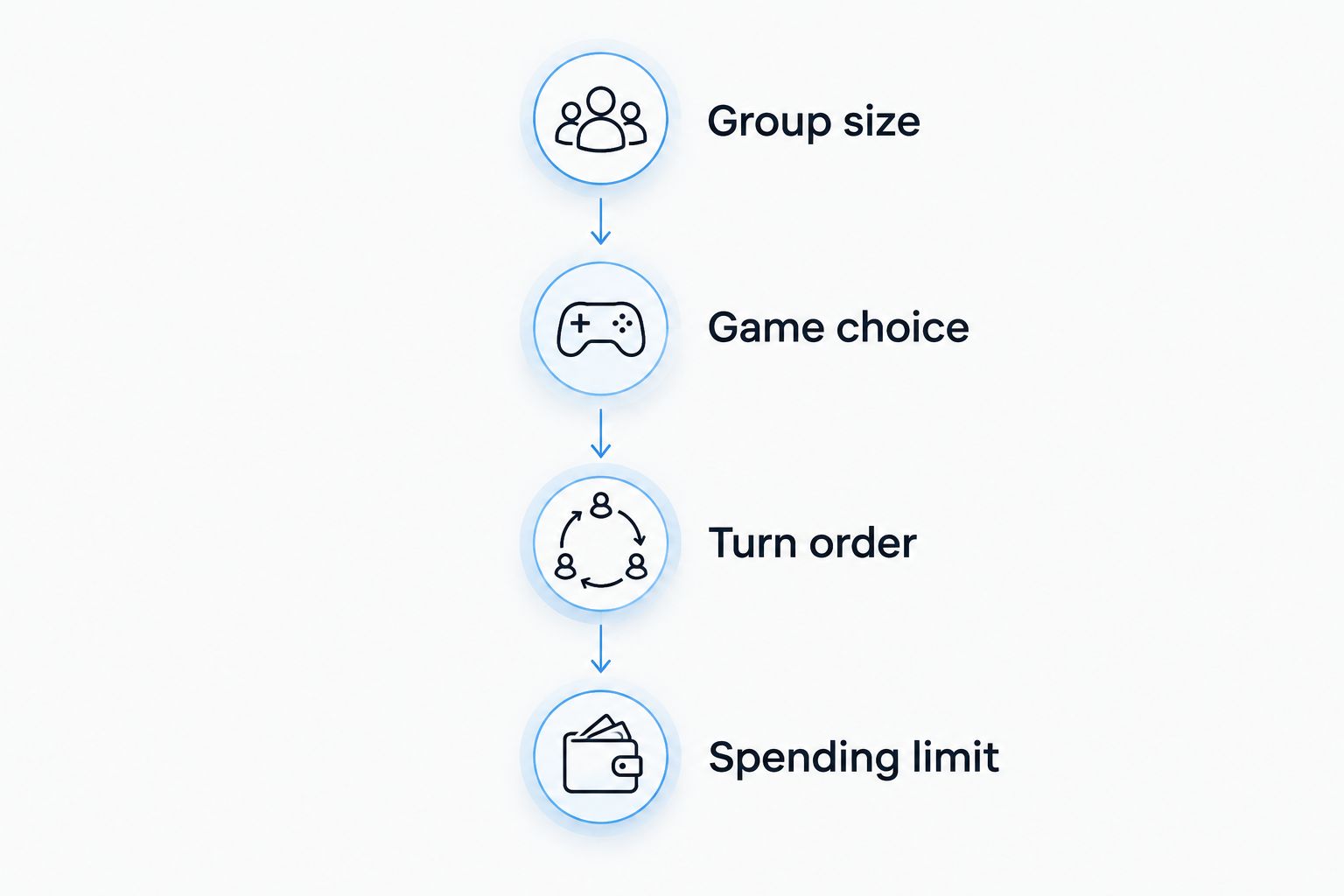
For your 2026 outing, make the decision in this order. It keeps the group agreement ahead of the booking and prevents the organiser from committing on behalf of people who have not decided.
Group size
Count confirmed attendees separately from interested friends. Ask everyone to reply clearly rather than interpreting a reaction in the group chat as agreement. Confirm what happens if the headcount changes before you collect contributions.
Game choice
Pick one main activity and identify any alternatives your group wants to discuss with the venue. At 1stbase, the stated mix includes baseball, shuffleboard, ping-pong and foosball, but that does not tell you how a specific booking combines them.
Turn order
Decide how you will rotate players before competitive friends take over. If you are planning a hypothetical 60-minute social, do not mistake that planning window for an advertised session length. Ask how the actual session works and build your rotation around the answer.
Spending limit
Agree each person's spending limit privately if necessary. Then check the total commitment, what it covers and any cancellation terms. Keep optional spending separate so nobody discovers that the group has agreed extras on their behalf.
Send the venue one clear enquiry with your intended date, confirmed headcount, preferred activity and any access needs. The guide to booking group reservations at activity bars gives you a related planning route without adding more choices to the group chat.
Plan your student games night
Explore the Southampton venue, then confirm the arrangements for your group and chosen activity.
Which student activity-bar experience should you choose?
Choose 1stbase for a Southampton student activity-bar night built around baseball and a choice of table games. Make interactive baseball your first enquiry when the group wants a new shared challenge.
Choose shuffleboard when your priority is a relaxed gathering. Choose ping-pong for direct opponents, or foosball for paired rivalry. These are different social formats, not interchangeable ways to fill time.
For 2026, the default recommendation is simple: pick the game first, confirm the terms second and collect commitments third. Do not select a venue solely because somebody assumes it has a student offer.
FAQ
What's the best activity bar in Southampton for students who want different games?
1stbase is a strong shortlist choice for students wanting interactive baseball, shuffleboard, ping-pong and foosball in Southampton city centre. Choose the main activity your group wants, then confirm how the booking works.
Which activity-bar game is best for a relaxed student social?
Shuffleboard is the pick in this shortlist for relaxed, turn-based competition. Agree the rules and rotation before playing so everyone gets a fair turn.
Is interactive baseball better than ping-pong for a student group?
Interactive baseball is the better fit for a group wanting a shared batting challenge; ping-pong is the better fit for head-to-head play. Choose according to your friends' interests rather than treating either game as universally better.
Does 1stbase offer a student discount in 2026?
Check directly with the venue for any current student terms. Do not include an assumed discount in your group's spending agreement.
What's the best game for students who want to compete in teams?
Foosball is this shortlist's pick for paired team rivalry. Change partnerships and rotate players so the same confident team does not control the evening.
Can we organise a student activity-bar night without drinking?
You can organise the social around games rather than drinking. Confirm the venue's entry conditions and your group's requirements before committing.
What should a university society check before booking an activity bar?
Confirm the headcount, chosen activity, booking commitment, cancellation terms and access requirements. Ask how player rotation works for your group rather than assuming everyone plays at once.
One last thing
The most competitive format is not always the fairest one. Winner-stays-on rewards success with more playing time, which conflicts with a social where everyone expects a turn.
Rotate players, not just opponents. Make that the rule before the first game and your student night has a clearer promise: everyone is there to take part, not audition for the next match.