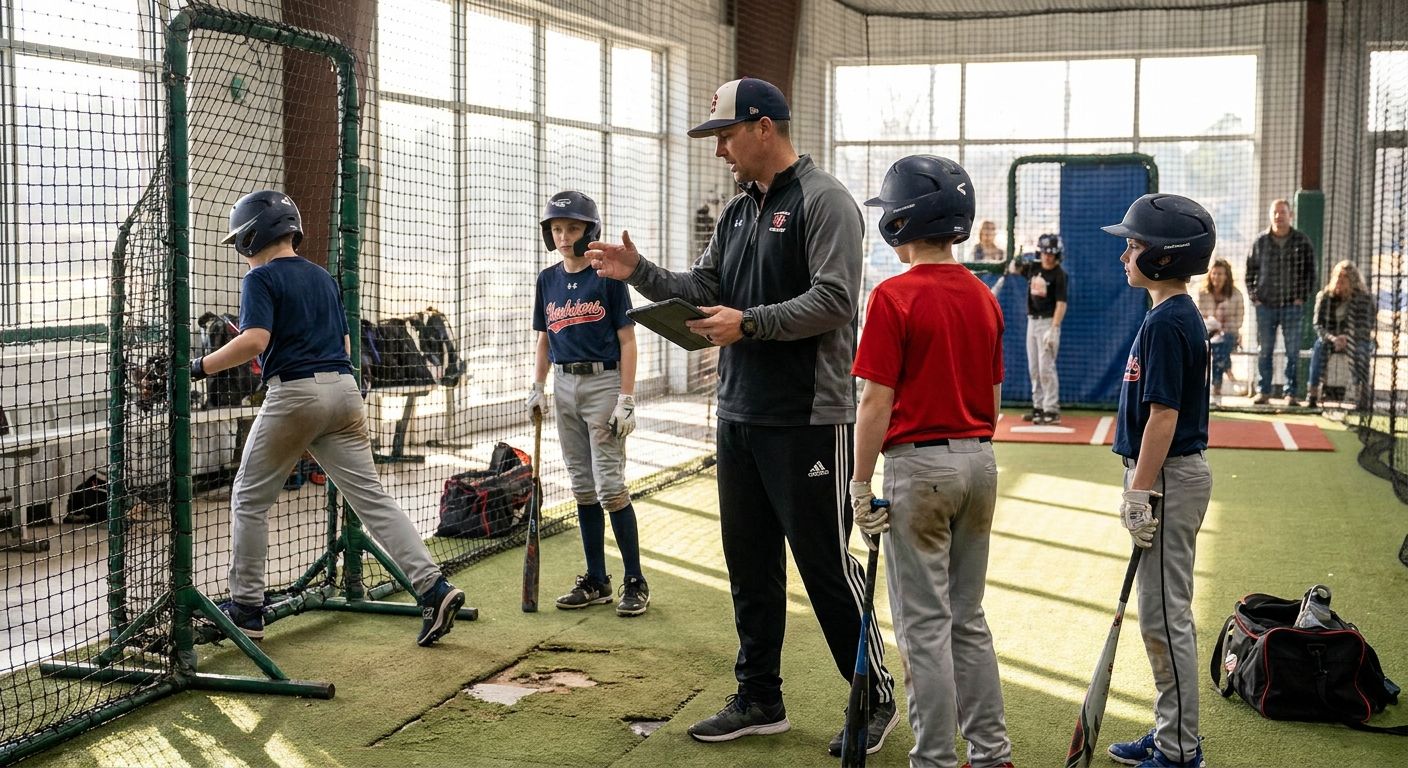
A batting cage group session works in three phases: you book a lane (or several) for a set time slot, the group checks in together, and everyone rotates through hitting turns against pitching machines set to match the group's mix of beginners and regulars. The one thing most first-timers miss: the clock starts at your booked time whether the whole group has arrived or not, so latecomers cut into swing time rather than extending it.
- A batting cage group session runs on a fixed time slot — book, check in together, rotate through hitting turns.
- Pitching machines get matched to skill level, so first-timers and regular batters share a lane without one side getting bored.
- 1st Base in Southampton pairs the cage with shuffleboard, ping pong and foosball so waiting turns doesn't mean standing around.
- Group size, skill mix and add-on games are what actually change how a session feels, not the venue's layout.
- Book ahead for weekend evenings in 2026 — overlap with bar traffic makes peak slots the first to fill.
Why this matters
Most people booking a batting cage group session for the first time assume it's a walk-in, swing-a-few-balls activity like a fairground game. It isn't. Group sessions are structured, timed, and built around rotation — which is exactly why they work for birthdays, stag and hen parties, corporate nights and university society socials where you need everyone doing something at once, not queuing.
Getting the structure right before you book means fewer surprises on the day: no confusion about who's hitting when, no argument over pitching speed, and no wasted time explaining rules once the clock's already running. Understanding how a batting cage group session works before you show up is the difference between a session that flows and one where half the group spends 20 minutes standing around waiting for their turn.
How does a batting cage group session work?
Here's the actual sequence, step by step:
- Book your slot and group size. Pick a time and confirm roughly how many people are coming — this determines how many lanes or how much rotation time your group gets.
- Arrive together, or close to it. Since the session is timed from the booked start, a group that trickles in over 15 minutes loses 15 minutes of collective hitting time.
- Get matched to pitching speed. Machines adjust so a group with mixed experience — a couple of regular batters, a few complete beginners — isn't stuck on a setting that's too fast for half the room.
- Rotate through batting turns. While one or two people hit, the rest of the group waits nearby, watches, or heads to other games if the venue has them.
- Fill the gaps with other activities. At an American-themed venue like 1st Base, that means shuffleboard, ping pong or foosball tables running alongside the cage, so nobody's just standing around between turns.
- Wrap and move on. Once the session ends, groups typically shift to the bar area for food, drinks, or a second game if the venue allows open access afterward.
The verdict: a batting cage group session works best when the whole group treats the booked time as the whole experience, not a warm-up before the "real" activity starts.
Why the group session experience varies
No two batting cage bookings feel identical, even at the same venue on the same week of 2026. The variables that actually change the experience:
- Group size — a tight group of 4-6 rotates through turns fast; a 15-person stag or corporate booking needs more planning around wait time.
- Skill mix — a lane full of first-timers plays very differently to one with a few regular batters who want faster pitching.
- Time slot — weekend evenings run busier and louder than a quiet weekday afternoon session.
- Add-on games — booking shuffleboard, foosball or ping pong alongside the cage changes how the group spends downtime between turns.
- Occasion type — a milestone birthday, hen do, or corporate team night each shape how much structure (games, timing, food) the group wants around the batting itself.
- Private hire vs shared slot — a private booking gives a group exclusive use of the space; a shared session means sharing lanes with other groups.
If you're booking for a specific occasion, it helps to see how other groups have structured similar sessions — the how to book a batting cage session in Southampton guide walks through group-size and timing decisions in more detail.
Do you need baseball experience to join?
No — a batting cage group session doesn't require any baseball background, since pitching machines adjust to whoever's stepping up. 1st Base pitches the batting cage as an activity for ages 8 to 80, built around casual competitive fun rather than genuine batting skill.
Can you combine a batting cage session with other bar games?
Yes, and at a venue like 1st Base that's the point — shuffleboard, ping pong and foosball run alongside the cage so a group can split into smaller clusters and rotate through everything rather than just queuing for one activity. Checking how to prepare for your first batting cage session in Southampton before you arrive covers what to expect if you're mixing games.
How many people can join one group session?
Group sizes for a batting cage session range from small friend outings of four or five people up to large stag, hen or corporate bookings — the exact capacity depends on how many lanes the venue can allocate to your slot, so confirm numbers when you book rather than assuming.
Booking a batting cage group session in 2026
A few practical notes worth knowing before you lock in a date this year:
- Peak weekend evening slots fill first, especially around birthday and stag/hen season.
- Corporate and university society bookings tend to run on weekday afternoons or early evenings, when the bar itself is quieter.
- Confirming your final group size closer to the date, rather than at the point of booking, avoids a mismatch between lane allocation and turnout.
Book your batting cage group session
Lock in a time slot for your group before peak 2026 weekends fill up.
FAQ
How does a batting cage group session actually work?
A batting cage group session runs on a fixed, timed slot where the group checks in together, gets matched to a pitching speed, and rotates through hitting turns. The session clock starts at the booked time regardless of who's arrived, so groups that show up together get the most out of it.
Do you need to book a batting cage group session in advance?
Yes, booking ahead is standard practice for a batting cage group session, especially for weekend evenings in 2026 when demand runs highest. Walk-in availability for larger groups is far less reliable than a scheduled slot.
Is a batting cage group session good for beginners?
Yes, pitching machines adjust speed to suit beginners, and venues like 1st Base pitch the activity as suitable from ages 8 to 80. No prior baseball experience is needed to join a group session.
What happens if someone in the group arrives late?
Late arrivals lose their share of the group's hitting time rather than extending the session, since most batting cage group sessions run on a fixed clock. Getting the whole group there close to the booked start protects everyone's turn.
Can a batting cage group session be combined with other games?
Yes, many venues pair the batting cage with games like shuffleboard, ping pong and foosball so groups can split up and rotate through activities during downtime. This works particularly well for larger groups like stag dos, hen parties or corporate teams.
Is a batting cage group session suitable for corporate events?
Yes, batting cage group sessions work well for corporate team nights and team-building events because the rotation format naturally breaks a large group into smaller, manageable clusters. Combining it with other bar games extends the activity beyond just the cage itself.
How many people fit in one batting cage group session?
Group sizes range from small friend outings of four or five up to large stag, hen or corporate bookings of well over a dozen, depending on lane availability. Confirm your exact numbers with the venue when booking rather than assuming capacity.
What should first-timers know before a batting cage group session?
First-timers should know the session runs on a fixed timer, pitching speed adjusts to skill level, and no baseball experience is required. Arriving as a group close to the booked start time makes the biggest difference to how much hitting time everyone actually gets.
One last thing
The detail most groups overlook when booking a batting cage group session isn't the pitching speed or the group size — it's the clock. Because the session is timed from the booked start rather than from "everyone's arrived," the single biggest lever a group has over how much hitting time they actually get in 2026 is showing up together, not picking the fastest pitching setting.